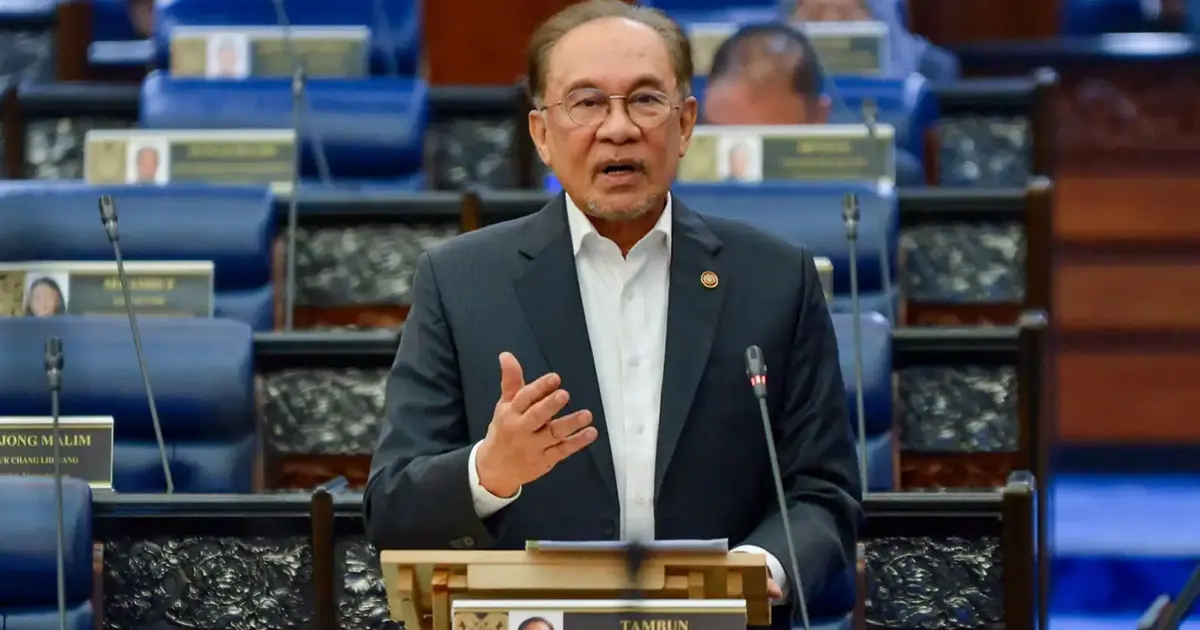
Prime Minister Anwar Ibrahim has once more pushed back against demands for an early dissolution of Parliament, framing his position around public expectations for steady governance and tangible economic improvements rather than electoral cycles. In remarks reflecting the political pressures his administration continues to navigate, Anwar contended that citizens are far more concerned with bread-and-butter issues than the constant churn of campaigning that precedes major electoral contests.
The renewed defence of his government's timeframe comes amid ongoing speculation about when the next general election might be called. Malaysia's political landscape has grown accustomed to frequent electoral conjecture, particularly following the relative instability that preceded and followed the 2022 general election. Anwar's insistence that his administration needs adequate time reflects a practical recognition that meaningful policy implementation requires runway beyond the compressed timescales typical of pre-election periods.
Economic growth sits at the heart of the Prime Minister's argument for continuity. Malaysia faces persistent challenges in job creation, wage growth, and the competitiveness of key industries. An early election would inevitably redirect government resources toward campaign machinery, messaging, and political positioning at the expense of ongoing economic initiatives. The cost of premature elections extends beyond simple ballot logistics—it represents lost months of policy execution during a period when regional economic headwinds demand focused attention rather than political distraction.
Stability, the second pillar of Anwar's reasoning, carries particular weight in Malaysia's context. The country's coalition politics remain fractious, with different factions jostling for position and advantage. A prolonged campaign season historically exacerbates these tensions, as parties manoeuvre to strengthen their positions and negotiate coalition arrangements. Sustained political noise undermines business confidence, complicates long-term planning for both public and private sectors, and risks diverting bureaucratic attention from implementation of existing commitments.
Yet the pressure on Anwar to call an election reflects deeper anxieties within Malaysia's political structure. Uncertainty about his government's durability—rooted in the narrow coalition arithmetic that sustains it—creates a perverse incentive for some actors to seek fresh electoral validation while conditions may favour them. From certain quarters, calls for an early election are less about democratic principle and more about tactical repositioning. This dynamic explains why such calls have persisted despite the Prime Minister's consistent rejection of them.
The Malaysian electorate itself presents a more nuanced picture than the simple binary of those demanding elections versus those opposing them. Many Malaysians do value stability, particularly those whose livelihoods depend on coherent economic policy and infrastructure investment. However, others view electoral uncertainty as itself a form of instability—a perpetual cloud of political ambiguity that prevents sustained confidence. This tension underlies much of the current debate and reflects genuine differences in how Malaysians prioritise competing values.
International observers have noted that Malaysia's pattern of frequent political turbulence distinguishes it negatively among regional peers, creating investor hesitation and complicated planning horizons for multinational companies evaluating the market. Anwar's emphasis on providing his government adequate time to deliver results aligns implicitly with this recognition. Demonstrable progress on inflation reduction, employment growth, and infrastructure completion would provide far stronger grounds for electoral confidence than premature elections called amid incomplete initiatives.
The government's reform agenda encompasses several substantial undertakings that genuinely do require sustained effort. Anti-corruption initiatives, civil service modernisation, and financial sector reforms cannot be compressed into pre-election sprints without losing effectiveness and credibility. These represent not merely administrative improvements but foundational work affecting how Malaysia competes and develops over coming decades. Interrupting such work through early elections carries genuine cost.
Anwar's repeated rejection of early-election calls also signals to his own coalition partners that he retains sufficient control to set the government's trajectory without yielding to pressure. Demonstrating this resolve strengthens his hand in coalition management, particularly with partners who might otherwise attempt to leverage election speculation as bargaining power. In Malaysia's factional political environment, a Prime Minister who appears responsive to every demand quickly becomes vulnerable to constant manipulation.
Looking ahead, the timeline Anwar has implicitly committed to—permitting his government to function through to the constitutionally permitted election window—suggests Malaysian voters should expect polling sometime between late 2024 and mid-2025. This provides roughly adequate time for several policy cycles to complete and for economic indicators to stabilise or improve. It also allows the political dust from recent coalitional rearrangements to settle somewhat before fresh electoral contests.
The broader question underlying this dispute concerns what Malaysians reasonably expect from government. Should administrations operate under permanent campaign conditions, perpetually positioning for the next election? Or should voters accept periods of genuine implementation, accepting that some electoral speculation is a reasonable price for coherent governance? Anwar's position implicitly endorses the latter view, betting that demonstrable results will prove more electorally valuable than premature fresh polling.
Ultimately, whether the Malaysian public agrees with this calculation will become clear when elections do arrive. If economic conditions have improved tangibly and major policy initiatives have borne fruit, Anwar's argument for patience will appear vindicated. Conversely, if conditions deteriorate or implementation stalls, the calls for early elections that he has spent months deflecting may seem prescient. For now, the Prime Minister is staking his political future on the proposition that Malaysians genuinely do prefer substance over spectacle.

