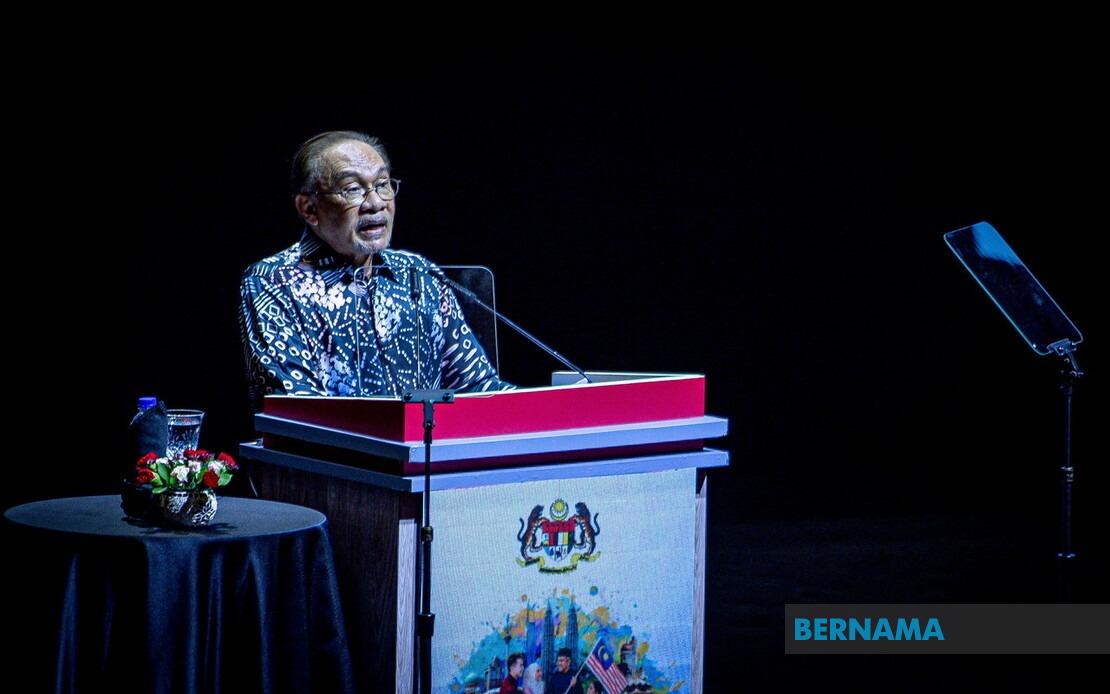
Prime Minister Datuk Seri Anwar Ibrahim has unveiled a six-pronged policy package designed to provide immediate financial relief to Malaysian households grappling with inflationary pressures. Announced at the Putrajaya International Convention Centre during the 2026 National Day Prime Minister's Address, the measures will take effect from September 1 and target multiple pressure points affecting household budgets across income levels.
The government's relief strategy encompasses fuel subsidies, educational facility maintenance, artificial intelligence integration, healthcare system digitalisation, electronic invoicing implementation, and microfinance expansion. Each component addresses distinct challenges faced by different demographic groups, from schoolchildren and young people to working mothers and entrepreneurs. The timing of the announcement, coinciding with National Day celebrations, underscores the administration's commitment to tangible economic support during a period of sustained affordability challenges.
Anwar acknowledged during his address that despite previous policy interventions, the government recognises ongoing economic hardship among ordinary Malaysians. His remarks reflected candid recognition that existing measures have not fully resolved the cost of living crisis, a political reality that shapes public sentiment and electoral calculations. Rather than characterising past efforts as comprehensive solutions, the Prime Minister framed the new package as an evolution of the government's response to persistent consumer pressure, emphasising renewed commitment to addressing daily financial struggles.
The fuel subsidy component represents the most visible element of the relief package, directly impacting transportation costs that cascade through the economy. Given Malaysia's historical reliance on petroleum subsidies as a mechanism for managing household expenses, this measure signals continuity with a core government social support framework. The preservation and potential expansion of fuel support mechanisms demonstrates political sensitivity to how energy costs influence broader inflation dynamics and household purchasing power in a region where transportation dependencies remain substantial.
Educational facility maintenance funding targets infrastructure that affects schoolchildren, suggesting attention to how educational quality intersects with family financial planning. Malaysian parents frequently balance education expenses against other household obligations, making school-related cost reductions meaningful contributors to family budget relief. The maintenance funding component ensures educational environments remain functional and accessible without imposing additional charges on already-stretched household finances.
The healthcare digitalisation initiative represents a longer-term structural reform within the immediate relief framework. By modernising healthcare delivery systems through digital technologies, the government aims to reduce transaction costs, minimise bureaucratic inefficiencies, and improve service accessibility for patients managing chronic health conditions. Digital health systems typically reduce out-of-pocket expenses through streamlined administrative processes and improved care coordination, particularly benefiting lower-income populations with limited healthcare navigation capacity.
E-invoicing implementation targets business-to-business transaction efficiency, with downstream effects on consumer pricing. Enhanced digital invoicing reduces administrative overhead for businesses, theoretical cost reductions that may eventually translate into lower consumer prices. However, the relationship between business cost reductions and retail pricing remains complex, dependent on market competition dynamics and business profit margin expectations. The initiative signals government intent to leverage technology for economic modernisation while pursuing cost containment.
Microfinancing expansion addresses credit accessibility for small entrepreneurs and informal sector workers, a segment comprising significant portions of Malaysia's workforce. Enhanced microfinance availability enables income-generating activities among populations excluded from traditional banking systems, potentially creating employment opportunities and supplementary household income. This component reflects recognition that cost of living pressures require not only direct subsidy mechanisms but also employment and income generation pathways.
Deputy Prime Minister Datuk Seri Dr Ahmad Zahid Hamidi, Communications Minister Datuk Seri Fahmi Fadzil, and Cabinet ministers present at the announcement represented a unified government position on the relief package. This ministerial alignment indicates coordinated policy implementation across relevant government departments and signals serious commitment to the September 1 implementation timeline. Chief Secretary to the Government Tan Sri Shamsul Azri Abu Bakar's presence reinforced bureaucratic readiness for policy execution.
The announcement occurs within Malaysia's complex economic context, where cost of living concerns persistently rank among public priorities affecting government popularity and electoral performance. Regional comparisons with Singapore, Thailand, and Indonesia highlight Malaysia's competitive position within Southeast Asia, yet domestic households experience tangible purchasing power constraints. The relief package targets this specific political space where public sentiment converges around expectations for government intervention in managing household economic pressures.
Implementation effectiveness will depend substantially on execution speed and coordination among government agencies responsible for distinct components. The September 1 commencement date provides limited preparation time for complex systems like healthcare digitalisation and e-invoicing platforms. Early implementation challenges could undermine intended relief benefits, while successful rollout would strengthen government credibility on economic management and consumer welfare.
The package's comprehensiveness reflects sophisticated understanding that cost of living challenges operate across multiple economic dimensions simultaneously. Rather than addressing single pressure points, the government simultaneously targets energy costs, education expenses, healthcare expenses, business transaction costs, and income generation opportunities. This holistic approach acknowledges that Malaysian households navigate interconnected financial obligations where relief in one area facilitates adjustment in others, potentially generating cumulative household budget improvements exceeding individual policy components' isolated effects.

