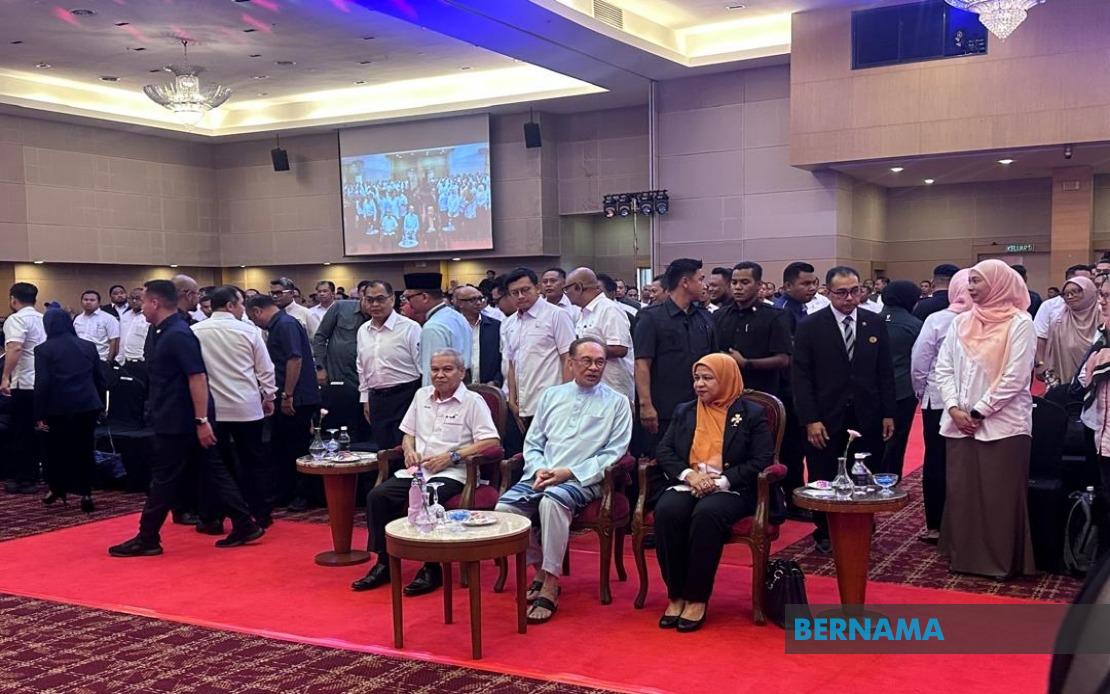
Prime Minister Datuk Seri Anwar Ibrahim has indicated that a comprehensive examination of the Federal Land Development Authority's operations is underway, with public disclosure planned once investigative work reaches completion. Speaking at Bangi following a session with FELDA leadership on August 21, Anwar emphasized the importance of allowing the specially-formed task force to finish its examination before drawing any formal conclusions. The investigation, which has already commenced, is expected to produce its findings within several months, after which the government intends to make the results available to the public.
The task force's remit encompasses a broad spectrum of governance and operational matters within FELDA, extending from historical management practices to contemporary administrative structures and future strategic directions. While Anwar acknowledged that the investigation would necessarily identify shortcomings from the past, he stressed that the primary focus must remain on evaluating current operational standards and charting an improved path forward for the institution. This balanced approach suggests the government views the exercise as both retrospective accountability and prospective institutional reform, rather than purely forensic examination of historical failings.
Anwar's cautious stance on pre-empting investigation conclusions reflects established practice within Malaysian government, where significant institutional reviews typically remain confidential until formally completed. By drawing comparison to the Royal Commission of Inquiry report on Tabung Haji, the Prime Minister signalled his intention to ensure full transparency once the FELDA investigation concludes. The Tabung Haji RCI, which examined governance failures at the Islamic pilgrimage fund manager, ultimately produced a voluminous public report detailing systemic weaknesses and institutional dysfunction, setting a precedent for comprehensive disclosure in this context.
FELDA has long occupied a significant position within Malaysia's developmental architecture, functioning as the mechanism through which the state distributes agricultural land to settlers, predominantly from rural and economically disadvantaged communities. The authority's historical importance in rural development and poverty alleviation means that questions about its management carry implications extending well beyond corporate governance into broader questions about the equitable distribution of national resources and effective service delivery to vulnerable populations. Scrutiny of FELDA's operations thus touches upon fundamental concerns about administrative competence and fiduciary responsibility in managing public assets earmarked for social benefit.
The initiation of this special task force investigation indicates that concerns about FELDA's management have reached a level requiring formal institutional review. Such concerns might encompass financial stewardship, operational efficiency, settler welfare, land allocation procedures, or administrative accountability, though the government has not specified the precise catalysts. The fact that FELDA leadership, including chairman Tan Sri Ahmad Badri Mohd Zahir and director-general Datuk Dr Suzana Idayu Wati Osman, participated in the Bangi session suggests the investigation operates with at least formal cooperation from current management, though this does not necessarily indicate uniformity of perspective on findings or recommendations.
The comparison Anwar drew to the Tabung Haji precedent carries particular significance for Malaysian institutional reform. The Tabung Haji RCI, released following sustained public concern about governance lapses and financial management, became a comprehensive examination document accessible to stakeholders and the public. By invoking this parallel, Anwar appears to be setting expectations that the FELDA investigation will similarly result in a substantive, published report rather than confidential recommendations to government alone. This approach acknowledges the legitimate public interest in how state institutions stewarding significant national resources are managed.
The timing framework Anwar provided—completion within several months followed by public release—establishes a concrete timeline within which Malaysians may anticipate disclosure. This specificity contrasts with vaguer commitments to eventual transparency and provides a measurable standard against which the government's actual conduct can be assessed. For stakeholders including FELDA settlers, agricultural sector participants, and citizens broadly concerned with public institutional governance, this timeline offers some assurance that revelations, whatever their nature, will not be indefinitely withheld from public scrutiny.
The establishment of a special task force rather than relying on FELDA's internal audit mechanisms or existing government oversight structures suggests concerns sufficiently serious to warrant independent investigation. Task forces typically operate outside routine bureaucratic channels, potentially permitting more candid examination than might occur within hierarchical departmental structures. This choice may reflect recognition that certain issues require investigation insulated from standard institutional pressures or loyalties, though it remains unclear whether the task force will operate with investigative powers beyond those available to ordinary government committees.
For the broader Southeast Asian context, Malaysia's approach to FELDA scrutiny reflects regional patterns whereby state-controlled or state-dependent institutions periodically require external examination when performance concerns accumulate. Land settlement schemes similar to FELDA operate throughout the region, managing significant national assets and serving vulnerable populations, making Malaysia's handling of institutional reform potentially instructive for neighboring governments. The willingness to pursue investigation and public disclosure may establish regional standards for institutional accountability in agricultural development authorities.
The political dimensions warrant consideration as well. An incoming or reformist government demonstrating willingness to investigate predecessor arrangements or existing institutional weaknesses can signal commitment to accountability and systemic improvement. The public commitment to releasing findings aligns with governance rhetoric increasingly central to Malaysian political discourse, where transparency and institutional reform feature prominently in political messaging and public expectations. Whether the investigation ultimately produces revelations of significant institutional failure or validates current management structures, the transparency commitment serves to reinforce broader narratives about responsible governance.
Looking forward, the FELDA investigation represents an opportunity for substantive institutional assessment that could yield valuable insights into how Malaysia's agricultural development infrastructure functions and where improvements might be implemented. The eventual report will likely address technical matters of financial management and operational efficiency alongside potentially more politically sensitive questions about resource allocation and governance accountability. For Malaysian readers invested in agricultural development, rural welfare, and institutional reform, the coming months will determine whether the investigation produces meaningful change or primarily validates existing structures.

