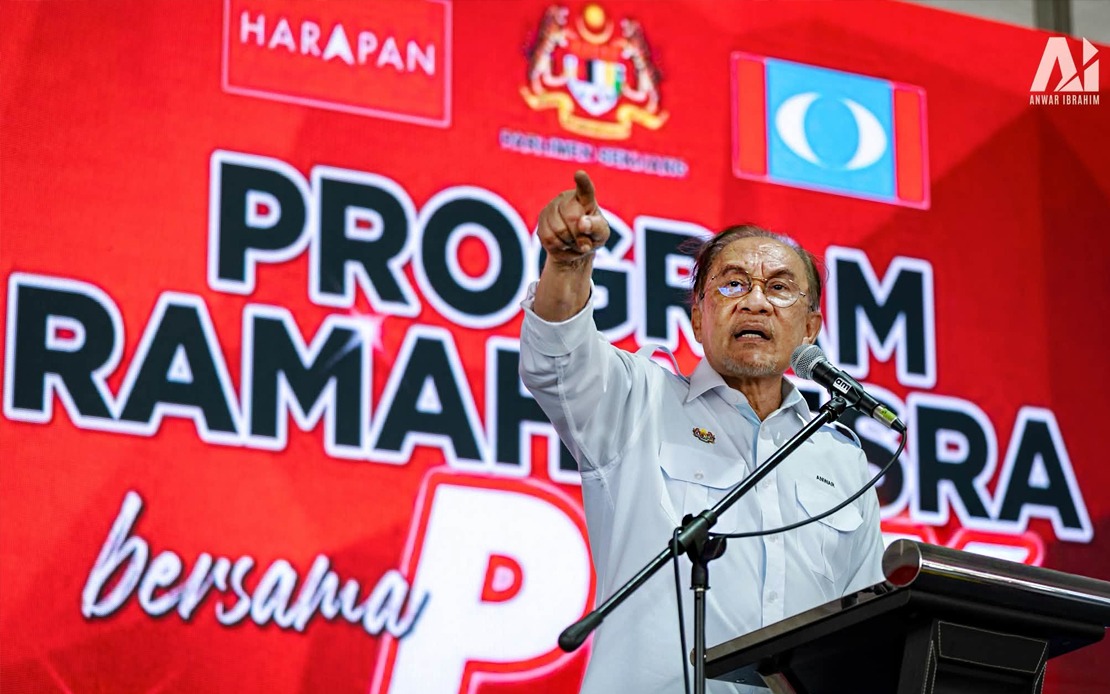
The precarious situation facing Malaysia's durian farmers has caught the attention of Prime Minister Datuk Seri Anwar Ibrahim, who has committed to addressing the commodity price crisis through high-level diplomatic engagement. Speaking at a community gathering in Tangkak, Anwar acknowledged the severe financial strain afflicting growers across Peninsular Malaysia, where a convergence of harvest seasons has triggered a sharp decline in durian valuations. The Prime Minister signalled his determination to tackle the issue directly with Chinese Premier Li Qiang during a scheduled visit to China next month, framing the engagement as an opportunity to unlock new export pathways for one of Malaysia's most valuable agricultural commodities.
The timing of the announcement underscores the political sensitivity of agricultural livelihoods in Malaysia, particularly in rural constituencies where farming communities represent substantial voter bases. By publicly committing to international negotiations on behalf of distressed growers, Anwar positioned himself as responsive to sectoral challenges while simultaneously highlighting the role of strategic bilateral relationships in resolving domestic economic problems. The durian sector holds particular significance for Malaysia's agricultural economy and international reputation; the nation has cultivated a premium market positioning that allows premium pricing in key destinations, particularly among affluent consumers in China and Southeast Asia.
Anwar's strategy focuses on leveraging the Malaysia-China relationship to create additional demand channels that could absorb excess supply and stabilise prices. The approach reflects recognition that Malaysia's oversupply problem cannot be solved domestically alone; expanding the addressable market requires diplomatic groundwork and assurances that Malaysian durian meets the exacting standards that Chinese regulatory frameworks demand. While China represents an enormous consumer market with rapidly growing middle-class purchasing power, agricultural exports face rigorous phytosanitary and quality certifications that necessitate government-to-government coordination and negotiation.
The Prime Minister acknowledged the complexity of these negotiations, noting that Chinese import requirements are exceptionally stringent. His willingness to personally advance the matter with Li Qiang signals the priority level the government assigns to agricultural support, particularly given the interconnected nature of trade, food security, and rural economic development in Malaysia's regional context. The durian price collapse represents the type of agricultural crisis that, if unresolved, could erode farmer confidence and incentivise abandonment of cultivation in favour of alternative livelihoods—outcomes with long-term consequences for domestic food resilience and rural employment.
Beyond the immediate durian discussion, Anwar used the Tangkak engagement to address broader economic management concerns, specifically the government's approach to fuel pricing amid volatile global energy markets. The Prime Minister articulated a deliberate policy choice to shield Malaysian consumers from international oil price fluctuations, positioning fuel price stability as a form of social protection rather than standard market economics. This framing reflects political calculation about household cost-of-living pressures, particularly relevant for rural and lower-income communities that consume fuel as an essential input for transport and agricultural operations.
Anwar emphasised Malaysia's exceptional position globally in maintaining artificially low fuel prices through government intervention. Under the BUDI MADANI initiative, consumers benefit from heavily subsidised rates—RON95 petrol at RM1.99 per litre and diesel at RM2.10 per litre—despite international retail prices substantially exceeding these levels. The gap between actual market rates (RM3.37 and RM3.97 respectively) and subsidised prices reveals the fiscal commitment required to maintain this policy, a reality that contextualises Anwar's rhetorical framing as a matter of political will rather than economic inevitability.
The Finance Minister's comments about fuel price management carry particular relevance for Southeast Asian observers, as energy subsidy policies remain contentious across the region. Malaysia's approach contrasts sharply with several neighbouring economies that have progressively reduced subsidies to enhance fiscal sustainability and reduce distortions in resource allocation. Anwar's insistence that the government refuses to pass through international price volatility suggests a prioritisation of immediate household welfare over long-term budgetary considerations, a calculus that may reflect either political pressures or distinctive assessments about the Malaysian economy's capacity to absorb subsidy costs.
The geopolitical context Anwar referenced—specifically Middle Eastern tensions and their impact on oil supply and pricing—remains an ongoing concern for energy importers throughout Southeast Asia. Disruptions in the Strait of Hormuz or broader regional instability could rapidly escalate global energy costs, putting sustained pressure on any government committed to price controls. Malaysia's substantial crude oil production provides some insulation against external shocks compared to purely import-dependent neighbours, yet the government's policy choice to subsidise domestically regardless of international conditions still carries significant fiscal implications during periods of elevated global prices.
The gathering in Tangkak itself merits consideration within Malaysia's broader political context. Anwar's presence alongside Pakatan Harapan figures including Johor Election director Datuk Seri Amirudin Shari and Deputy Natural Resources Minister Syed Ibrahim Syed Noh, combined with the introduction of the PH candidate for the Gambir state seat, indicated a coordinated political engagement strategy. Rural constituencies in Johor remain competitive political territory, and direct Prime Ministerial attention to sectoral challenges like durian pricing represents both genuine governance response and calculated political investment in community support.
The durian price crisis encapsulates broader vulnerabilities in commodity-dependent agricultural sectors, where production timing, weather patterns, and market dynamics can rapidly shift farmer fortunes. Malaysia's strategic position as a premium durian producer offers advantages that price-conscious competitors cannot replicate, yet those advantages only translate to farmer income if viable export markets remain accessible. Anwar's diplomatic engagement with China represents the government's acknowledgment that sectoral support sometimes requires interventions beyond domestic policy levers, extending into bilateral relationships and international trade frameworks that determine market access for Malaysian producers.
Looking forward, the outcome of Anwar's discussions with Premier Li Qiang will significantly influence whether this announced commitment translates into tangible market expansion or remains a rhetorical gesture. The challenge involves not merely opening channels but ensuring that expanded access generates sufficient additional demand to materially improve farmer returns. Simultaneously, the government's continued fuel subsidy commitment reveals trade-offs inherent in contemporary Malaysian economic management, balancing household welfare against fiscal sustainability in an environment of persistent global uncertainty. Both commitments reflect a governing approach that emphasises immediate relief and political responsiveness, though the long-term viability of these policies remains subject to international economic conditions beyond Malaysia's control.

