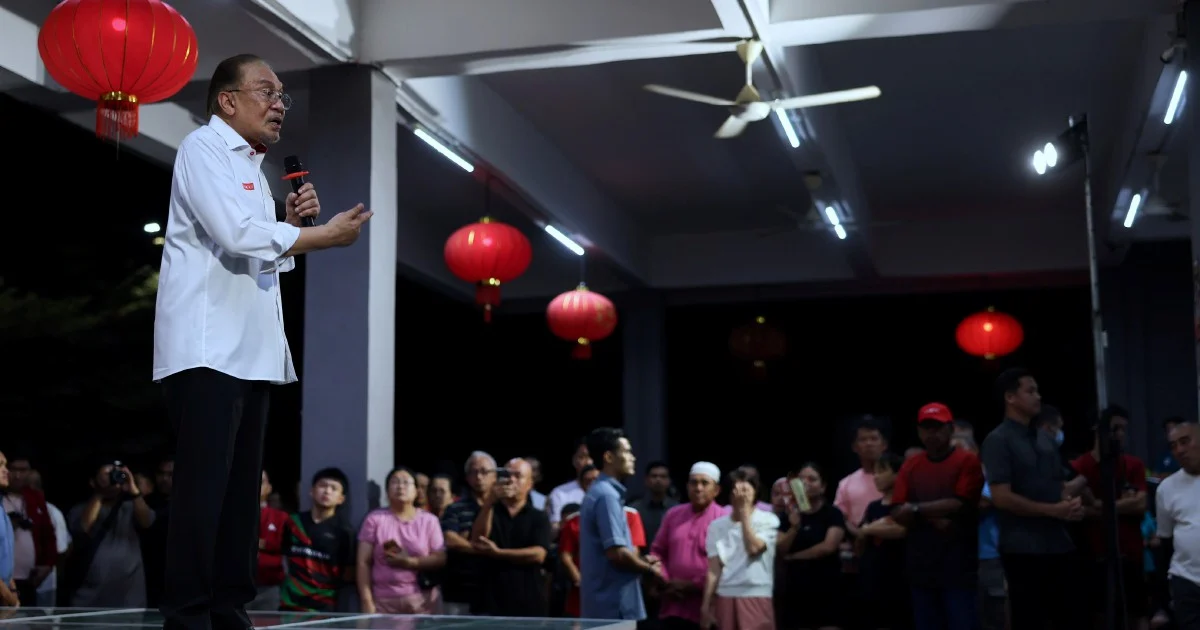
Prime Minister Datuk Seri Anwar Ibrahim has committed to putting Malaysia's durian crisis on the agenda during his forthcoming diplomatic mission to China, intending to negotiate solutions with Chinese Premier Li Qiang that could revive flagging export volumes and provide relief to farmers reeling from the effects of oversupply across the country.
The undertaking comes as Malaysia grapples with a significant surplus of durian production, a situation that has depressed farmgate prices and created financial hardship for cultivators dependent on export revenues, particularly to China, which remains the largest buyer of Malaysian durians by far. The timing of Anwar's proposed discussions reflects growing awareness within government circles that diplomatic engagement at the highest levels may be necessary to unlock new market opportunities or expand existing trade arrangements that could absorb excess inventory and stabilise the sector.
China's role as the primary destination for Malaysian durian exports cannot be overstated—the country has consistently absorbed the bulk of the nation's premium fruit output, making bilateral negotiations at premier level a logical step to address current market imbalances. The deterioration in prices has sent shockwaves through Malaysia's durian-producing regions, threatening the livelihoods of thousands of smallholder and commercial growers who have invested heavily in plantation development and infrastructure in anticipation of sustained demand. Anwar's commitment to champion the industry's concerns during high-level talks signals recognition of both the economic importance of the durian sector and the urgent need for intervention before the crisis deepens further.
The broader context of falling durian prices reflects a convergence of factors that have destabilised the market in recent months. Increased production capacity across major growing regions, coupled with improved harvesting and export logistics, has led to an unprecedented volume of fruit reaching Chinese markets simultaneously, overwhelming demand and forcing prices downward. Additionally, shifting consumer preferences, changing import regulations, and emerging competition from other Southeast Asian suppliers have further pressured Malaysian growers, who have traditionally relied on premium pricing to justify their cultivation investments and maintain profitability margins.
From Malaysia's perspective, discussions with Chinese Premier Li Qiang present an opportunity to explore multiple avenues for market stabilisation. These could encompass tariff reductions or removal of non-tariff barriers that facilitate easier market access, the expansion of quotas for duty-free or preferentially tariffed durian imports under existing bilateral or regional trade agreements, and coordinated strategies to manage supply volatility through joint planning between government bodies and industry associations. The Chinese government's influence over import flows and its ability to shape consumer behaviour through policy mechanisms make it an indispensable partner in any lasting solution to Malaysia's durian oversupply problem.
The Tangkak constituency, where Anwar made his commitment, is emblematic of Malaysia's durian-producing heartland, particularly in the southern states where the fruit has become economically and culturally significant. Growers in such areas have mounted increasing pressure on the government to intervene, and Anwar's pledge represents a political acknowledgment of that grassroots concern. However, the success of his diplomatic efforts will depend on whether China sees mutual benefit in accommodating Malaysian interests, whether through increased consumption stimulation, policy adjustments, or other mechanisms that enhance market accessibility for Malaysian exporters.
For Malaysian readers and industry stakeholders, the significance of Anwar's planned discussions extends beyond immediate price relief. A successful resolution could establish a framework for managing sector volatility in future, prevent the wholesale abandonment of durian farming by marginalised cultivators, and preserve Malaysia's competitive position in a global durian market increasingly characterised by regional competition. The outcome could influence investment decisions across the plantation sector and shape the trajectory of rural development in durian-producing areas for years ahead.
The durian sector's importance to Malaysia's broader agricultural and rural economy cannot be understated, representing significant export revenues, rural employment, and economic value in producing states. Addressing price collapse through diplomatic channels is therefore not merely a sectoral concern but a national economic priority that affects food security narratives, rural development goals, and Malaysia's standing as a major agricultural producer within Southeast Asia. Anwar's willingness to engage Premier Li Qiang directly on this issue underscores the gravity with which the government views the situation.
Regional observers note that Malaysia's approach—leveraging high-level political engagement to address commodity market imbalances—reflects recognition that durian trade dynamics extend beyond simple supply-and-demand mechanics. Chinese policy preferences, consumer behaviour influences, and regulatory frameworks all play crucial roles in determining market outcomes for Malaysian producers. By elevating the discussion to premier level, Anwar positions the durian challenge not as a sectoral problem but as a bilateral trade and development issue warranting senior-level attention and potentially more innovative solutions than conventional industry-only approaches might yield.

