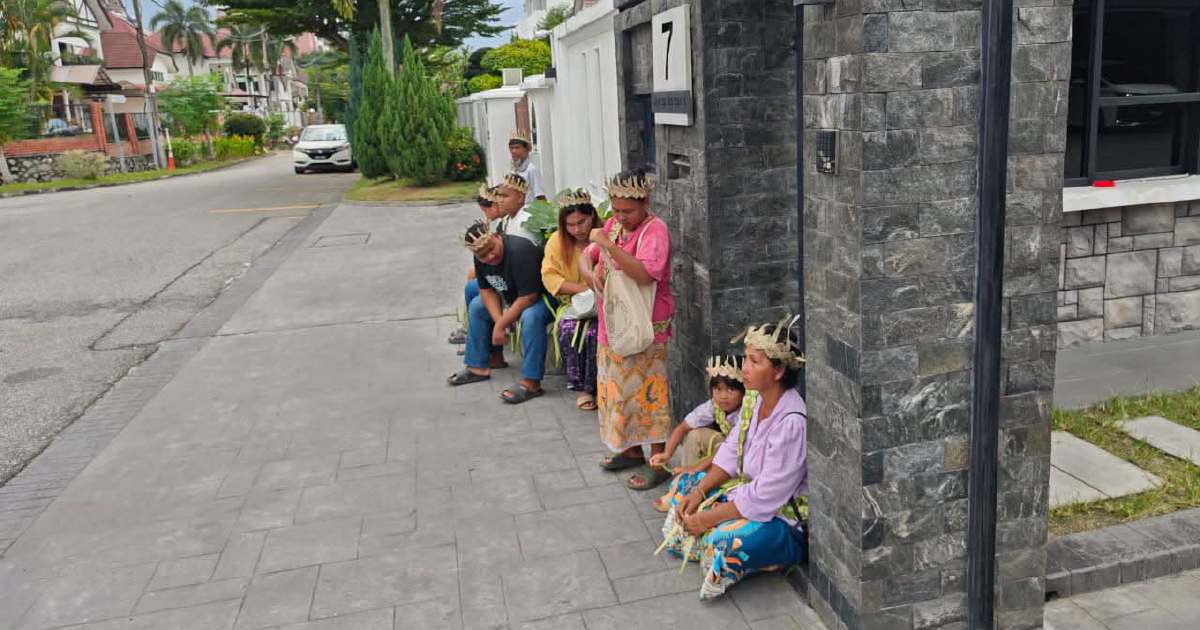
Prime Minister Datuk Seri Anwar Ibrahim has committed to addressing a long-standing land dispute affecting the indigenous Orang Asli settlement of Kampung Sungai Cot in Maran, Pahang. The premier's intervention signals renewed attention to indigenous land rights issues that have periodically surfaced across Malaysia's rural regions, particularly in states with significant Orang Asli populations.
The dispute centring on Kampung Sungai Cot represents one of several unresolved property conflicts involving Orang Asli communities, whose land rights remain a complex and often contentious issue within Malaysia's constitutional and administrative framework. These disputes typically involve questions of land ownership, usage rights, and the extent of state authority over territories traditionally inhabited by indigenous groups. Anwar's stated intention to raise the matter with Pahang's state government indicates that the federal level recognises the significance of these grievances and their potential impact on social cohesion and indigenous welfare.
The Orang Asli constitute Malaysia's original inhabitants, with documented presence across the peninsula spanning centuries. However, their relationship with the modern state apparatus has been marked by varying degrees of marginalisation, land dispossession, and limited access to resources and development opportunities. The communities remain among Malaysia's most economically vulnerable populations, and land security represents a critical foundation for their livelihoods, cultural continuity, and sense of belonging within the nation.
Kampung Sungai Cot's situation is emblematic of broader patterns observed across Pahang and other states, where indigenous communities face pressure from competing land claims, state development initiatives, or unclear legal status of their customary territories. These disputes often reflect the gap between formal legal systems recognising individual or corporate ownership and the collective, customary tenure systems historically practised by Orang Asli groups. The ambiguity has created fertile ground for disputes that can persist for years without clear resolution.
Anwar's approach of engaging the Pahang state government reflects the federalised nature of Malaysian governance, wherein land administration remains largely a state matter under the Ninth Schedule of the Federal Constitution. This distribution of powers means that while the federal government can facilitate dialogue and provide support, substantive resolution typically requires state-level cooperation and decision-making. The premier's intervention therefore aims to coordinate federal and state efforts to find a workable solution.
The land dispute carries implications extending beyond the immediate affected community. How Malaysian authorities address such cases influences perceptions of governmental responsiveness to indigenous grievances and sets precedent for handling similar disputes elsewhere. An equitable and transparent resolution could strengthen confidence in state institutions among Orang Asli populations, while unresolved or unsatisfactory outcomes risk deepening alienation and fuelling broader critiques of governance failures in addressing indigenous welfare.
Pahang, as Malaysia's largest state by area, contains significant Orang Asli populations distributed across various districts and settlements. The state has occasionally been at the centre of high-profile indigenous rights issues, reflecting both the demographic presence of these communities and the complexity of land administration across vast, demographically diverse terrain. Maran district, where Kampung Sungai Cot is located, falls within the broader Pahang region where such tensions have periodically surfaced.
The timing of Anwar's statement suggests heightened awareness of indigenous land issues within the current administration. Previous federal governments have grappled with similar disputes with varying degrees of success, and public commitment to addressing unresolved cases may reflect political calculation alongside genuine concern for indigenous welfare. Regardless of motivation, directing high-level political attention to these matters typically accelerates bureaucratic processes and elevates the issue's priority within state administration.
Resolution of the Kampung Sungai Cot dispute will likely require careful navigation of competing legal frameworks, stakeholder interests, and constitutional constraints. Options might range from formal recognition and demarcation of land boundaries, compensation arrangements, or negotiated agreements establishing usage rights and governance arrangements satisfactory to the community. Whatever approach emerges must balance indigenous aspirations with broader state development imperatives and legal clarity.
For Malaysia's Orang Asli communities more broadly, Anwar's commitment represents a potential opportunity to advance long-pending cases through federal-state coordination. However, translation of political promises into concrete outcomes remains uncertain, and observers will monitor both the trajectory of discussions with Pahang authorities and the eventual resolution of the Kampung Sungai Cot matter as indicators of genuine commitment to addressing indigenous land grievances at the national level.

