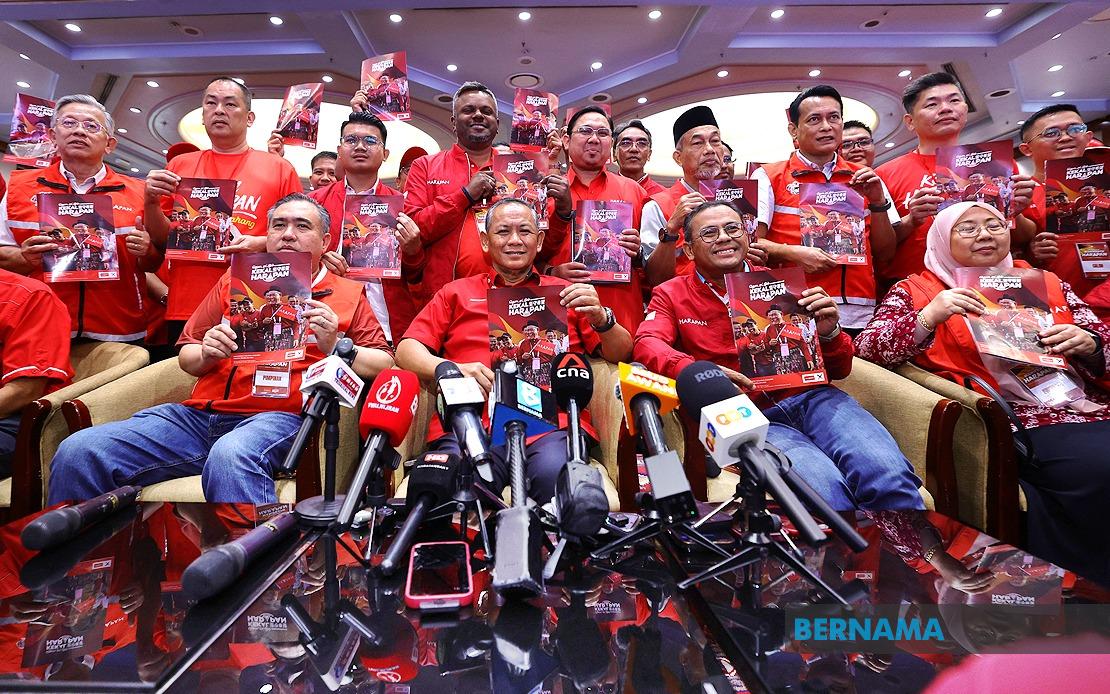
Prime Minister Datuk Seri Anwar Ibrahim is set to join the campaign push in Negeri Sembilan this coming Wednesday, according to Pakatan Harapan (PH) state leadership. The timing of his visit comes as the ruling coalition ramps up efforts ahead of the 16th Negeri Sembilan state election, with polling day scheduled for August 1.
PH Negeri Sembilan chairman Datuk Seri Aminuddin Harun confirmed that Anwar will participate in several major campaign events in the Sikamat and Paroi constituencies, where he will appear alongside senior party figures and local campaign machinery. The announcement was made following the coalition's manifesto launch on Sunday evening in Seremban, which drew prominent figures including DAP secretary-general Anthony Loke, Selangor Menteri Besar Datuk Seri Amirudin Shari, and representatives from other PH component parties.
Aminuddin acknowledged that Anwar's absence from the Sunday manifesto launch had generated some attention, but he framed it as a deliberate campaign strategy rather than a scheduling conflict. By concentrating Anwar's appearance for mid-week campaign events, PH aims to sustain momentum during the crucial phase leading into polling day, demonstrating the coalition's capacity to mobilise federal-level leadership in support of state-level races. This staggered approach to deploying the Prime Minister reflects the coalition's resource planning as it contests multiple electoral fronts simultaneously.
The Pakatan Harapan manifesto unveiled on Sunday articulates a comprehensive policy platform spanning eight key priority areas. Administrative effectiveness and fiscal responsibility form the foundation of the coalition's governance pledge, with particular emphasis on ensuring institutional efficiency at the state level. The economic dimension targets competitiveness and growth, positioning Negeri Sembilan as an attractive investment destination while supporting existing business sectors.
Educational advancement occupies a central position within the manifesto, reflecting broader Malaysian concerns about skills development and human capital accumulation. Closely linked is the housing plank, which addresses the persistent affordability challenges that affect young families and working-class communities across the peninsula. Youth engagement and empowerment initiatives are framed as essential to diversifying economic opportunities and reducing migration pressures that deplete state populations.
Gender-focused policies and family support mechanisms represent another substantial component, acknowledging the changing demographics and economic participation patterns in Malaysian society. Tourism development is pitched as a revenue driver and employment generator, particularly relevant given Negeri Sembilan's geographic positioning between Kuala Lumpur and Melaka. Heritage conservation and customary preservation are positioned alongside these economic objectives, reflecting commitments to cultural continuity and indigenous rights.
The manifesto also addresses agricultural modernisation, recognising that rural constituencies remain politically significant while facing structural challenges from shifting demographics and land use patterns. Infrastructure investment receives explicit attention as a prerequisite for regional connectivity and competitive advantage. Finally, social cohesion and communal harmony are presented as overarching principles undergirding all policy initiatives, tapping into longstanding Malaysian governance frameworks emphasising unity and stability.
Amiruddin Harun, who is standing as the PH candidate for the Linggi state seat, emphasised during the launch that the manifesto represents binding commitments rather than aspirational rhetoric. By framing the document as a solemn pledge subject to public accountability, the coalition attempts to rebuild voter confidence following previous election cycles. The phrase "insya-Allah, we will be able to deliver" carries particular weight in the Malaysian political context, invoking both religious obligation and institutional credibility.
The electoral timeline creates compressed urgency for campaign activities. Early voting commences on July 28, providing advance opportunities for civil servants and designated categories. This compressed schedule means that the final week before August 1 constitutes a critical window for persuasion and turnout mobilisation. Anwar's Wednesday appearance directly targets this decisive period, positioning him as personally invested in the Negeri Sembilan outcome.
The presence of Amirudin Shari, who serves simultaneously as Selangor Menteri Besar and PH's election director, signals coordinated strategic direction across state contests. His participation indicates that Negeri Sembilan is receiving priority treatment within PH's broader electoral calculations, suggesting the coalition views this contest as competitively significant. The involvement of PKR secretary-general Datuk Dr Fuziah Salleh and Amanah vice-president Datuk Dr Mohd Hatta Md Ramli demonstrates the full mobilisation of PH's component party apparatus.
For Malaysian political observers, this election represents an important indicator of ruling coalition stability and voter satisfaction following economic challenges and governance adjustments at the federal level. Negeri Sembilan's relatively moderate size permits intensive campaign engagement while its political trajectory in recent years has shifted significantly. The manifesto's detailed policy articulation reflects lessons learned from previous campaigns regarding voter expectations for specificity and demonstrated planning capacity.
The campaign dynamics unfold against a backdrop of Malaysian politics increasingly characterised by sophisticated regional targeting and demographic segmentation. Anwar's selective deployment to Sikamat and Paroi reflects data-driven prioritisation of swing constituencies and key demographic clusters. This represents a departure from older patterns of blanket state-wide appearances, instead concentrating presidential-level visibility where electoral mathematics suggest impact potential.

