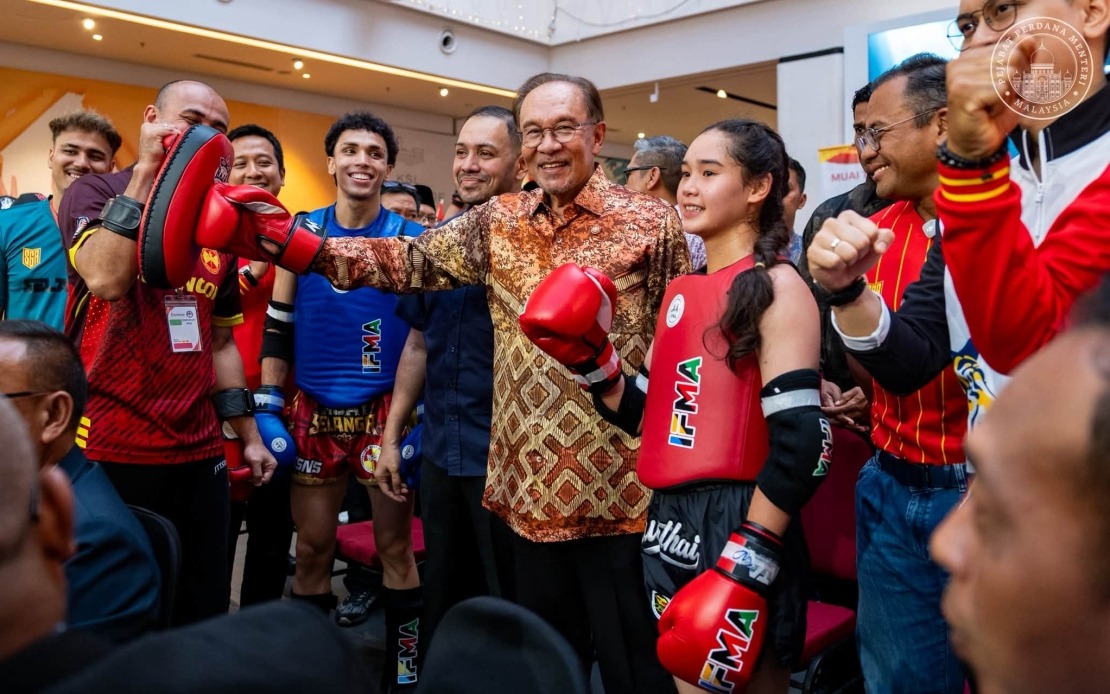
Prime Minister Datuk Seri Anwar Ibrahim has voiced optimism about the calibre of young athletes participating in the 2026 Selangor Malaysia Games (SUKMA), suggesting they represent a promising pipeline for Malaysia's future representation on the world sporting stage. During a recent visit to observe competition at the biennial event, Anwar took the opportunity to interact directly with competitors and witness Muay Thai matches, experiences that left him impressed by the qualities they displayed.
The Prime Minister's remarks, shared through a Facebook post, highlighted three defining characteristics he observed among the young participants: their competitive spirit, physical discipline, and personal courage. These observations carry particular significance coming from the nation's top political leader, signalling government attention to the development of grassroots sporting talent. Anwar expressed hope that many of these athletes would eventually receive opportunities to compete on behalf of Malaysia in international competitions, thereby elevating the nation's sporting profile globally.
Selangor's hosting of SUKMA represents a major undertaking for the state, marking the second time it has organised the games within living memory. The previous occasion was nearly three decades ago, demonstrating the significant gap between major hosting duties. This edition of the games has drawn unprecedented participation, with more than 5,000 young competitors from every corner of the country converging on Selangor to vie for supremacy across 37 different sports disciplines. The scale of competition reflects the breadth of Malaysia's sporting ecosystem and the deep reserves of athletic talent distributed across states and regions.
The medal structure of SUKMA, with 468 gold medals up for grabs, underscores the comprehensive nature of the competition. Young athletes compete not merely for individual glory but also to contribute to their respective state delegations, adding layers of motivation and pride to their performances. The intensity and calibre of competition during such events serve as crucial testing grounds where emerging talents can be identified, assessed, and potentially developed through national sporting frameworks and talent identification programmes.
Anwar's emphasis on observing Muay Thai specifically suggests attention to martial sports as part of Malaysia's competitive landscape. Traditional combat sports hold particular cultural resonance in Southeast Asia and have seen increasing international competitiveness, especially among younger athletes. By highlighting this discipline specifically, the Prime Minister drew attention to a sport where Malaysian competitors have shown capability on regional and international platforms, while also recognising the development potential within the current cohort of SUKMA participants.
The timing of Anwar's remarks during an active sporting competition reflects the government's engagement with grassroots development. Beyond ceremonial appearances, his direct observation of athletes and their conditions demonstrates an attempt to understand firsthand the environment in which Malaysia's future sporting representatives are being cultivated. This hands-on approach to engagement with youth sports can influence policy considerations regarding athletic development, funding, facilities, and coaching infrastructure.
For Malaysian athletes, the pathway from SUKMA participation to international representation remains a critical journey. The games serve as a vital stepping stone where young competitors gain experience managing pressure, dealing with elite-level competition, and performing in front of audiences. Success at SUKMA frequently translates into opportunities within national sporting bodies, which then facilitate progression to continental and global competitions. The quality of preparation and competition intensity at SUKMA therefore carries long-term implications for Malaysia's international sporting performance.
The five-day duration of the 2026 games running until August 24 represents an intensive schedule that tests not only athletic ability but also mental resilience and physical conditioning. Young athletes must manage fatigue, maintain focus across potentially multiple events, and handle the psychological demands of competing at peak intensity. These experiences build the maturity and professional attitude essential for international competition, where athletes from far larger or better-resourced nations demand exceptional dedication and mental fortitude to succeed.
Anwar's public endorsement of these athletes carries broader implications for how Malaysian society views grassroots sports development and youth talent cultivation. When senior government figures acknowledge and praise young competitors, it elevates the perceived status of athletic pursuits and signals that success in sports constitutes a legitimate and valued achievement pathway. This public recognition can motivate both current athletes and younger observers to pursue sporting excellence, potentially widening the talent pool from which Malaysia draws future champions.
Looking forward, the challenge for Malaysian sporting bodies lies in converting the energy, enthusiasm, and raw talent visible at SUKMA into sustained excellence at international level. The identification of promising young athletes must be accompanied by structured development programmes, appropriate coaching, and access to world-class training facilities. The Prime Minister's comments suggest awareness of this potential, indicating that political leadership recognises the importance of nurturing athletic talent as part of national development strategy and cultural pride.

