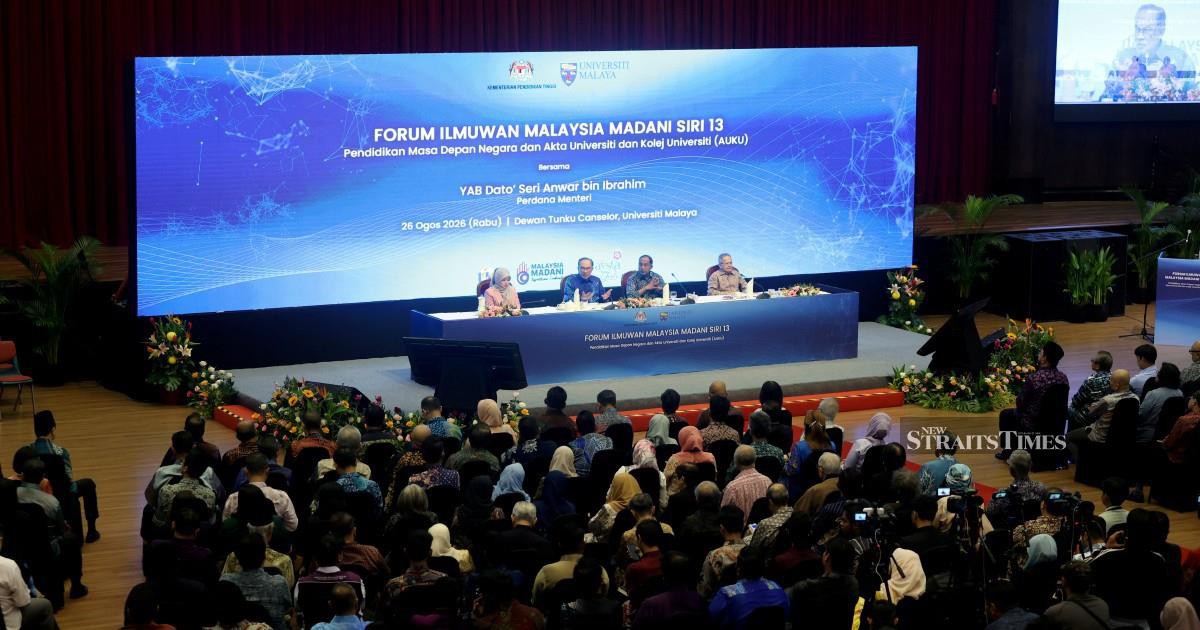
Prime Minister Datuk Seri Anwar Ibrahim has made a direct appeal to Malaysian university students and educational stakeholders for patience and trust as the government develops its strategy to address the controversial Universities and University Colleges Act (AUKU), the decades-old regulations that significantly restrict student political activity and expression on campus. Speaking to the aspirations of campus activists and reform advocates, Anwar acknowledged the need for substantive change while signalling that the process of dismantling or fundamentally restructuring these colonial-era restrictions would require a measured, deliberate approach rather than immediate legislative action.
The AUKU, formally known as the Universities and University Colleges Act 1971, represents one of the most contentious pieces of Malaysian legislation affecting civil liberties on campus. The regulation has long been criticized by student organizations, human rights groups, and academic freedom advocates for imposing sweeping prohibitions on student political participation, including restrictions on membership in political parties, participation in rallies and demonstrations, and editorial control over student publications. These restrictions have sparked repeated calls for repeal from university communities across the nation, with student leaders arguing that the provisions are incompatible with principles of democratic participation and fundamental freedoms guaranteed elsewhere in the Malaysian constitution.
Anwar's statement represents a significant engagement with a longstanding demand from campus activism circles that has periodically intensified over successive administrations. His acknowledgment that reform is necessary suggests openness to addressing grievances that have accumulated over decades of student organizing and advocacy. However, his emphasis on taking time and securing broader stakeholder consensus indicates that any legislative changes will be preceded by extensive consultation and policy development, likely involving multiple government departments, the Ministry of Higher Education, university leadership, and diverse voices within the academic community.
The government's apparent commitment to a comprehensive approach suggests that officials recognize the complexity involved in rewrites university governance frameworks. Simply repealing AUKU without establishing alternative regulatory structures could create institutional vacuums affecting campus management, disciplinary procedures, and the maintenance of academic standards. Anwar's framing implies that the administration is considering holistic reforms that might simultaneously address student freedoms while establishing clear parameters for university operations and institutional autonomy.
For Malaysian student activists, the Prime Minister's statement offers both encouragement and a test of political commitment. Campus organizations have grown increasingly vocal about AUKU restrictions in recent years, viewing the regulations as anachronistic remnants of a more authoritarian era of governance. The Promise of comprehensive reform, rather than piecemeal adjustments, aligns with longstanding demands from student unions and advocacy networks that have consistently argued for complete legislative overhaul rather than marginal modifications to existing provisions.
The broader context for this debate involves Malaysia's evolving democratic discourse and questions about institutional reform following recent political transitions. Younger voters and university-age Malaysians represent a demographic increasingly engaged with questions of civil liberties and democratic participation. Their expectations regarding freedom of association and political expression create pressure on the government to deliver substantive change rather than rhetorical commitments. Student communities have historically served as barometers of public opinion on governance issues and institutional accountability.
University leadership presents another important stakeholder group in this conversation. Campus administrators often maintain concerns about student unrest and institutional stability, and some institutional leaders may resist changes they perceive as threatening campus order or introducing regulatory uncertainty. The government's emphasis on comprehensive reform suggests an intention to secure administrative buy-in before implementation, potentially involving negotiations around balancing student freedoms with institutional management capacities and responsibilities.
Regionally, Malaysia's approach to university governance and student freedoms carries significance for Southeast Asian conversations about higher education autonomy and democratic participation in educational institutions. Several regional nations have grappled with similar questions about appropriate boundaries between student activism and institutional management. Malaysia's policy direction could potentially influence discussions in neighbouring countries regarding academic freedom and student rights.
The practical timeline for reform remains unclear based on Anwar's public statements. His appeal for patience suggests that legislative action may not occur in the immediate parliamentary session, and officials may require extended periods for consultation, drafting, and consensus-building among relevant agencies and stakeholders. This extended timeframe could test the patience of student organizations anticipating swifter action, particularly if momentum for reform builds during the consultation period.
For universities themselves, the prospect of AUKU reform creates both opportunities and uncertainties. Institutional leaders might use this period to develop alternative governance frameworks, consider international best practices in balancing student freedoms with administrative functions, and engage campus communities in conversations about what effective university regulations should accomplish in contemporary Malaysian society. Progressive institutions may view reform as an opportunity to strengthen campus culture and institutional reputation.
The government's positioning represents a notable shift from previous administrations' defensive stances on AUKU restrictions. Rather than resisting calls for repeal, Anwar's administration has engaged with reform advocates on substantive grounds, acknowledging that existing regulations warrant reconsideration. This rhetorical repositioning, even without immediate legislative action, signals potential evolution in official thinking about student rights and university autonomy within Malaysian higher education systems.

