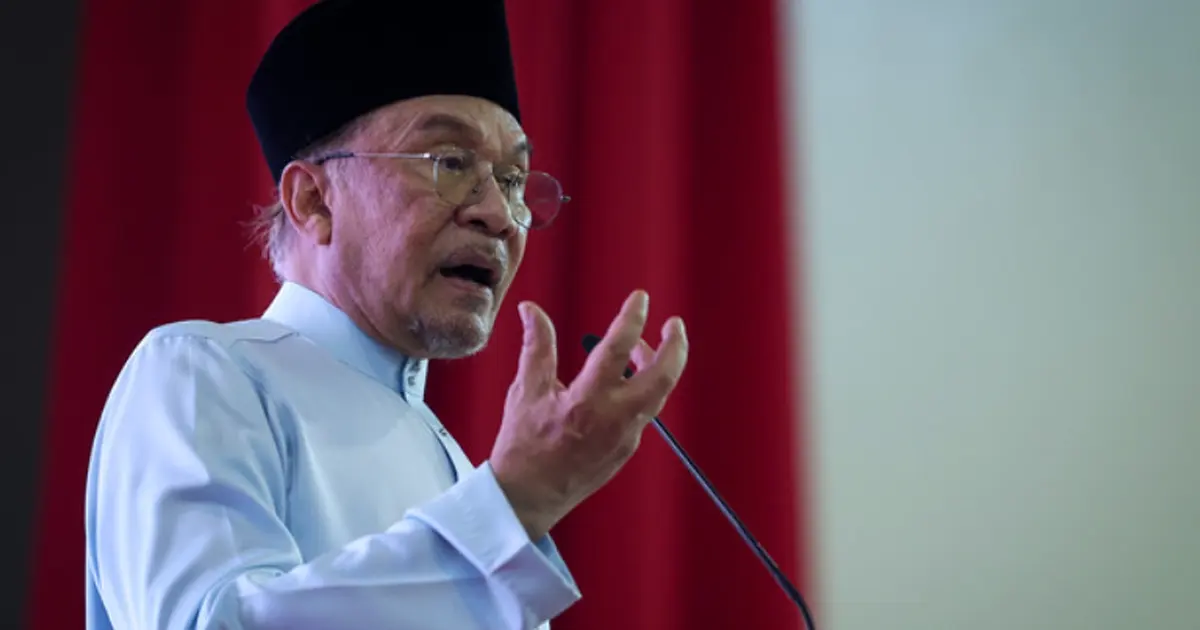
Prime Minister Anwar Ibrahim ought to be credited for rescuing Umno from political turmoil in the aftermath of the 2023 general election, according to PKR Youth leader Huraimi Husri, who has accused the dominant coalition partner of repaying that lifeline with betrayal. Speaking from the Federal Territories chapter of PKR Youth, Huraimi contended that the party president's pivotal role in stabilising the country's political landscape following GE15 deserves recognition, even as he laments what he characterises as Umno's subsequent ingratitude towards the government led by his own party.
The backdrop to this claim involves the complex aftermath of Malaysia's 2023 general election, when no single coalition secured a decisive parliamentary majority. This hung parliament scenario created significant uncertainty about governmental stability and potential political realignment. Anwar's ascension to the premiership came through an unprecedented unity coalition arrangement that drew support from multiple political blocs, including segments of Umno and other parties typically opposed to Pkr. For a nation accustomed to clear-cut electoral victories for either Barisan Nasional or the opposition alliance, this outcome represented genuinely uncharted constitutional waters, raising concerns about legislative gridlock and executive dysfunction.
Huraimi's framing positions Anwar as the statesman who shouldered the responsibility of constructing a workable governing arrangement when institutional chaos threatened. Rather than allowing Malaysia to descend into political stalemate or repeated no-confidence votes, the PKR president supposedly acted in the national interest by building bridges across traditional partisan divides. This narrative emphasises sacrifice and pragmatism—the implicit suggestion being that Anwar subordinated his party's narrower interests to ensure governmental continuity. For Umno, specifically, this meant the party retained ministerial portfolios and substantive influence despite finishing third in parliamentary seats behind Pkr and Perikatan Nasional, avoiding the fate of a lengthy sojourn in opposition.
The grievance articulated by the PKR Youth leader revolves around what he views as inadequate gratitude from Umno leadership for this rescue effort. Within Malaysia's coalition politics, maintaining party discipline and demonstrating loyalty to governing partners through critical parliamentary votes forms the bedrock of stability. When coalition partners make public statements or pursue legislative actions that undermine the prime minister's agenda or complicate his legislative maneuvering, this registers as betrayal within the calculus of coalition mathematics. Huraimi appears to suggest that Umno has engaged in such behaviour, using its parliamentary leverage to extract concessions or obstruct initiatives while simultaneously benefiting from ministerial office.
The relationship between Pkr and Umno has been a flashpoint within Malaysia's unity government since its inception. Umno commands the largest bloc within the governing coalition, making it indispensable for parliamentary majorities yet simultaneously granting it significant leverage over decision-making. This asymmetry creates constant tension, as Umno can simultaneously prop up the government while threatening to withdraw support if its demands are not met. For Anwar, leading a government dependent on former rivals creates perpetual vulnerability—a reality that PKR Youth's rhetoric appears designed to highlight and protest.
Regional observers watching Malaysian politics note that such tensions between coalition partners are not unique to this government, but their intensity reflects deeper ideological and institutional fractures. Umno's role as a party centred on Malay and Muslim interests sometimes conflicts with Pkr's broader multiethnic coalition-building approach. These philosophical differences, combined with Umno's historical dominance in Malaysian politics, create friction points over policies affecting religious affairs, bumiputera privileges, and majoritarian versus pluralistic governance models. When Huraimi invokes the idea of betrayal, he taps into these underlying tensions.
The PKR Youth leader's comments also serve a strategic political purpose within his own party. By vocally defending Anwar's decision-making and criticising Umno's responsiveness, younger party activists signal loyalty to the leadership while building a counter-narrative to any perception that Pkr has been sidelined or diminished within the coalition. This rhetorical positioning becomes important ahead of potential elections or coalition renegotiations, establishing that Pkr offered magnanimity that went unrewarded. Such framing can mobilise the party's base and provide justification for any future hardline positions Pkr might adopt.
For Malaysia's broader political landscape, these allegations reflect the inherent instability of a multi-party coalition government lacking a clear legislative supermajority. Successful coalition governance typically requires extensive pre-arrangement and trust-building between parties, or the presence of external pressures forcing unity. When either condition weakens, as appears to be the case here, coalition partners begin deploying public criticism as a negotiating tactic. This dynamic potentially destabilises the government further, as each party jockeys for position and attempts to improve its electoral prospects before the next general election.
The implications for Southeast Asia's political dynamics are noteworthy as well. Malaysia's experiment with unity government and cross-factional coalition-building offers lessons—both positive and cautionary—for other democracies in the region grappling with fragmented parliaments and polarised politics. The difficulty of sustaining such arrangements without underlying institutional trust or convergent policy objectives suggests that coalition governance requires not merely political calculation but genuine commitment to shared governance principles. Anwar's experience may inform how other regional leaders approach similar situations.
Looking forward, Huraimi's comments likely presage intensified political manoeuvring within the coalition as parties position themselves for advantage. The emotional vocabulary of friendship, loyalty, and betrayal that the PKR Youth leader employs frames political disagreement in personal and moral terms, potentially raising the temperature of coalition interactions. Whether Umno leadership responds publicly to these allegations will indicate whether such tensions are being managed privately or are escalating into open coalition conflict that voters will witness directly.

