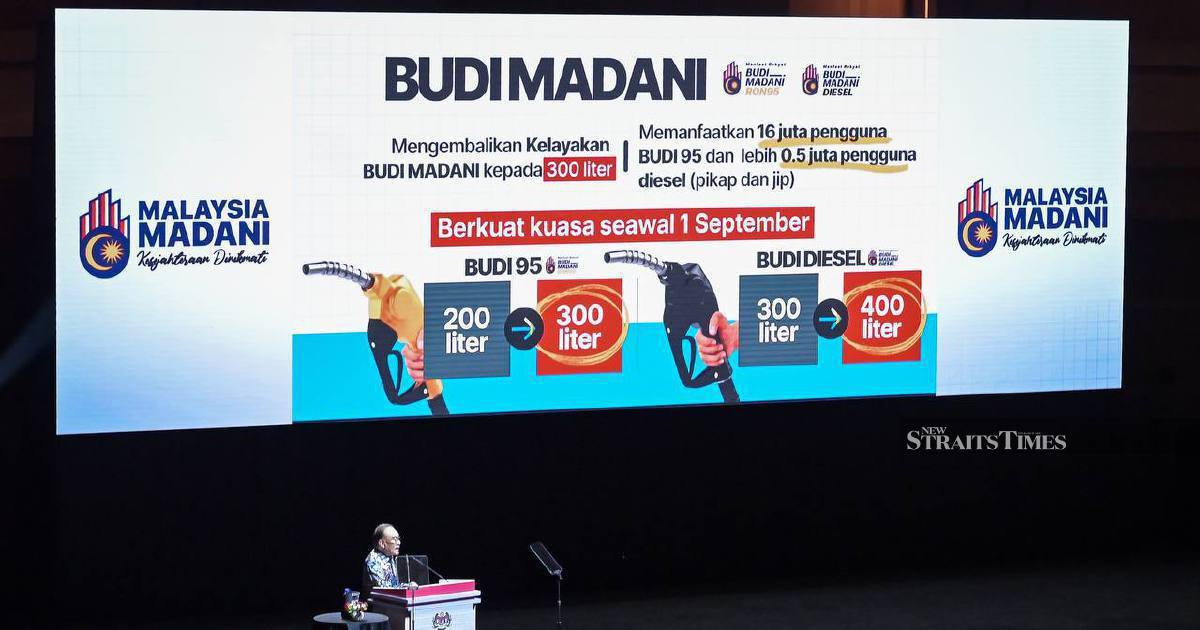
Signalling the government's intensifying focus on household affordability, Prime Minister Datuk Seri Anwar Ibrahim has unveiled a six-point intervention package designed to provide immediate relief from mounting cost-of-living pressures. The announcement, made during the National Day Eve address from Putrajaya, comes as the administration readies itself to table the 2027 Budget in October, suggesting these measures will form the strategic backbone of the administration's fiscal approach to household welfare over the coming financial year.
The timing of this disclosure is significant within Malaysia's broader economic narrative. Cost-of-living concerns have dominated public discourse for several years, with middle and lower-income households grappling with elevated food prices, transportation costs, and utility bills. By positioning these relief measures prominently during Malaysia's patriotic calendar moment, the Prime Minister has linked economic support to national progress and collective well-being, a rhetorical move that underscores the government's commitment to addressing citizen anxieties about purchasing power and financial stability.
The six measures represent a multi-faceted approach that extends beyond simple price controls or subsidy adjustments. By coupling relief for households with targeted business support and public service enhancements, the government signals recognition that cost-of-living challenges operate across interconnected economic segments. Weakened consumer spending affects business revenues, which constrains employment and investment, creating a negative spiral that undermines public revenues and service delivery capacity. The integrated approach suggests policymakers view the crisis holistically rather than as a purely demand-side phenomenon requiring isolated interventions.
Business support components within the package warrant particular attention for Malaysia's commercial ecosystem. Small and medium enterprises, which employ over two million Malaysians and contribute substantially to GDP, have faced margin compression as input costs have surged. By incorporating business-focused measures, the government acknowledges that consumer relief divorced from producer support could accelerate inflation if supply chains remain strained. This reveals sophisticated economic thinking that understands how cost shocks propagate through supply networks and how supporting producers ultimately protects consumer prices.
The emphasis on strengthening public services carries profound implications for Malaysia's development trajectory. As private consumption has been strained, public services—including healthcare, education, and transportation—become critical safety nets. Deteriorating public service quality during periods of household financial stress compounds citizen hardship and potentially widens inequality. Investment in public services therefore functions simultaneously as social protection and human capital development, laying groundwork for future productivity gains and more resilient labour markets.
Regionally, Malaysia's approach provides instructive contrast to neighbouring economies pursuing different cost-of-living strategies. While some countries have relied heavily on targeted subsidies or price controls, Malaysia's mixed approach combining household relief, supply-side business support, and service enhancement reflects lessons learned from past policy experiments. This pragmatism will likely inform regional discussions about effective inflation management, particularly as Southeast Asian nations navigate divergent monetary policies and external shocks to commodity and energy markets.
The October timing for the 2027 Budget represents a strategic calendar positioning. By announcing these measures beforehand, the government builds anticipation and demonstrates active crisis management during the intervening months. Citizens will observe implemented benefits before the formal budget presentation, potentially enhancing public reception of the October fiscal framework. This sequencing also allows the government to assess which measures prove most effective and adjust subsequent phases accordingly, creating space for adaptive policymaking rather than a rigid, one-off approach.
For Malaysian households, the question now concerns implementation specificity. Relief announcements carry political value, but execution determines material impact. The coming weeks will reveal concrete mechanisms: whether subsidies target specific commodities or income groups, how business support accesses affected sectors, and which public services receive prioritized funding. Each detail shapes distributional outcomes and determines whether measures reach intended beneficiaries or leak to unintended recipients through bureaucratic inefficiencies.
The broader economic context matters for interpreting these announcements. Malaysia's inflation has moderated from earlier peaks but remains elevated relative to historical averages. The labour market has shown resilience, but real wage growth remains constrained when adjusted for price increases. By addressing cost-of-living pressures now, the government aims to stabilize household finances and maintain consumption momentum, which comprises approximately 55 percent of Malaysian GDP. Supporting this consumption base underpins broader economic growth and employment sustainability.
Investor sentiment will likely respond to these measures based on their fiscal cost and inflation implications. Markets generally favour targeted, efficient interventions over broad-based subsidies that risk expanding deficits or reigniting inflation expectations. How the government finances these measures—through reallocation, borrowing, or revenue-raising measures—will significantly influence confidence in Malaysia's medium-term fiscal trajectory. The October Budget will provide crucial detail on this financing question.
For opposition and civil society actors, these announcements open space for policy debate about effectiveness and fairness. Some may argue measures insufficient relative to household hardship, while others may question whether particular business sectors receive unwarranted preferential treatment. Constructive engagement with these critiques will help refine implementation and build broader consensus around the government's economic direction heading into the critical 2027 fiscal year.
Ultimately, Anwar's six-point package reflects an administration determined to demonstrate responsiveness to citizen concerns about affordability and economic security. Whether these measures succeed depends equally on clear implementation, sufficient resourcing, and complementary monetary and exchange rate policies that contain inflationary pressures. The coming months will test whether announcement translates into genuine household relief.

