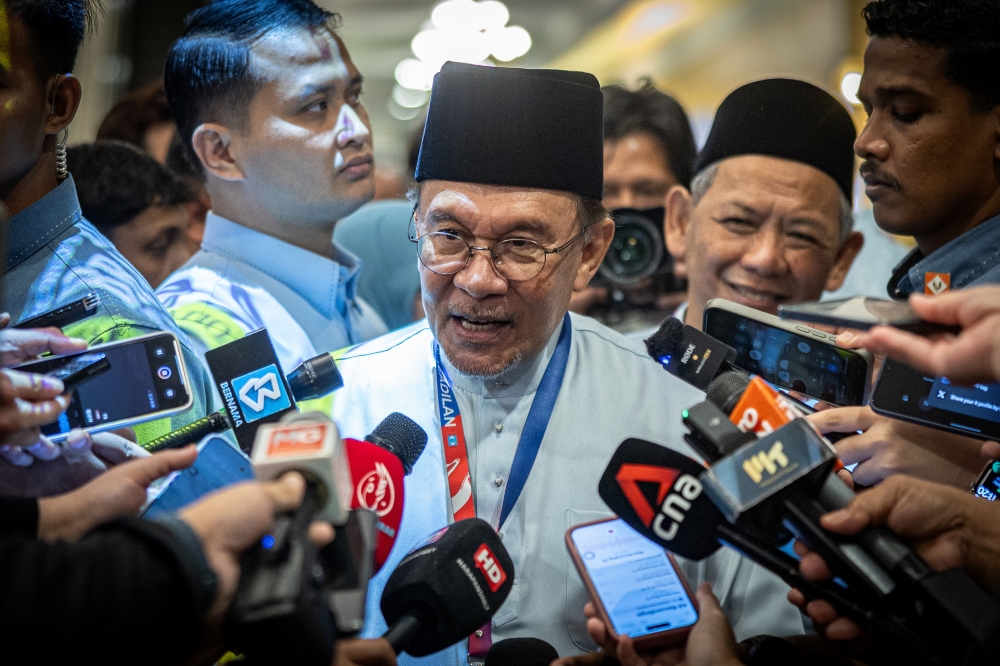
Prime Minister Datuk Seri Anwar Ibrahim has moved swiftly to dispel mounting speculation about cracks in Malaysia's governing coalition, declaring his steadfast commitment to maintaining cordial working relationships with all senior government figures. Speaking in Melaka on Thursday, Anwar responded directly to recent comments by Khairy Jamaluddin that had sparked fresh dialogue about potential tensions within the federal administration, signalling that he remains focused on building consensus rather than entertaining divisive narratives.
The Prime Minister's measured response reflects a deliberate strategy to project governmental stability at a time when regional and domestic economic pressures demand unified leadership. By publicly affirming his bond with Deputy Prime Minister Datuk Seri Zahid Hamidi, Anwar seeks to reassure both the investment community and ordinary Malaysians that his administration operates with clear direction and internal harmony. This posture matters considerably in a Southeast Asian context where investor confidence often hinges on perceptions of political coherence and institutional predictability.
Anwar's emphasis on the "peaceful path" carries deeper significance within Malaysia's recent political trajectory. The country has witnessed multiple coalition reshuffles, leadership transitions, and periods of acute governmental instability over the past decade. Against this backdrop, a Prime Minister who actively seeks to neutralise rumours of infighting and openly prioritises collaborative governance offers a stark contrast to previous patterns of fractious cabinet dynamics. His messaging attempts to anchor the government's narrative around functionality and purpose rather than personality clashes or factional manoeuvring.
The broader context for these remarks involves Khairy's position within the political ecosystem. As a senior figure with independent standing, Khairy's public observations about potential internal divisions carry weight and can influence media coverage and political discourse. Anwar's direct response, rather than permitting such commentary to fester unchallenged, demonstrates an understanding that silence on such matters can be interpreted as tacit acknowledgement of underlying problems. By actively refuting these claims, he attempts to control the narrative around his administration's internal operations.
For Malaysian observers, the exchange underscores an enduring challenge within coalition governance: managing personalities and political ambitions across multiple parties with sometimes competing interests. Anwar's administration represents an unprecedented gathering of parties across the political spectrum, from the Pakatan Harapan core to UMNO and GPS. This diversity, while offering breadth of representation, also creates natural pressure points where different factions may prioritise divergent objectives. The test for any Prime Minister lies in transforming this potential liability into effective governance.
Zahid's continued position as Deputy Prime Minister and his apparent alignment with Anwar's broader agenda remain central to the government's stability. Any genuine rift between the two would send immediate shockwaves through market sentiment and political calculations. International observers and institutional investors closely monitor such relationships as barometers of governmental durability. Anwar's public affirmation therefore serves multiple audiences simultaneously: reassuring coalition partners, stabilising market expectations, and reinforcing his own authority as a leader capable of maintaining institutional coherence.
The timing of these clarifications also matters. Emerging economies like Malaysia often face pressure during periods of uncertainty, with potential investors holding back commitments until political direction becomes clearer. By systematically addressing speculation about internal divisions, Anwar effectively removes an obstacle to economic decision-making and business confidence. In an environment where growth rates and job creation depend substantially on foreign direct investment, perceived stability becomes an economic asset rather than merely a political virtue.
Anwar's invocation of peaceful governance speaks to both his personal political philosophy and his understanding of Malaysia's contemporary needs. The country continues to navigate religious sensitivities, ethnic relations, and economic disparities that demand careful leadership. A Prime Minister who can model collaborative relationships across different constituencies sends an important signal about how Malaysian society should ideally conduct its affairs. This aspirational dimension to his leadership extends beyond mere tactical advantage into questions about national direction and social cohesion.
Moving forward, the administration's capacity to demonstrate tangible results through policy implementation will ultimately matter more than rhetorical reassurances about internal harmony. Malaysians and foreign observers alike seek evidence that governmental unity translates into effective action on pressing concerns including cost of living pressures, infrastructure development, and institutional reform. The next phase will reveal whether Anwar's emphasis on the peaceful path genuinely reflects a durable consensus within the coalition or represents an attempt to manage transitory tensions awaiting future resolution.

