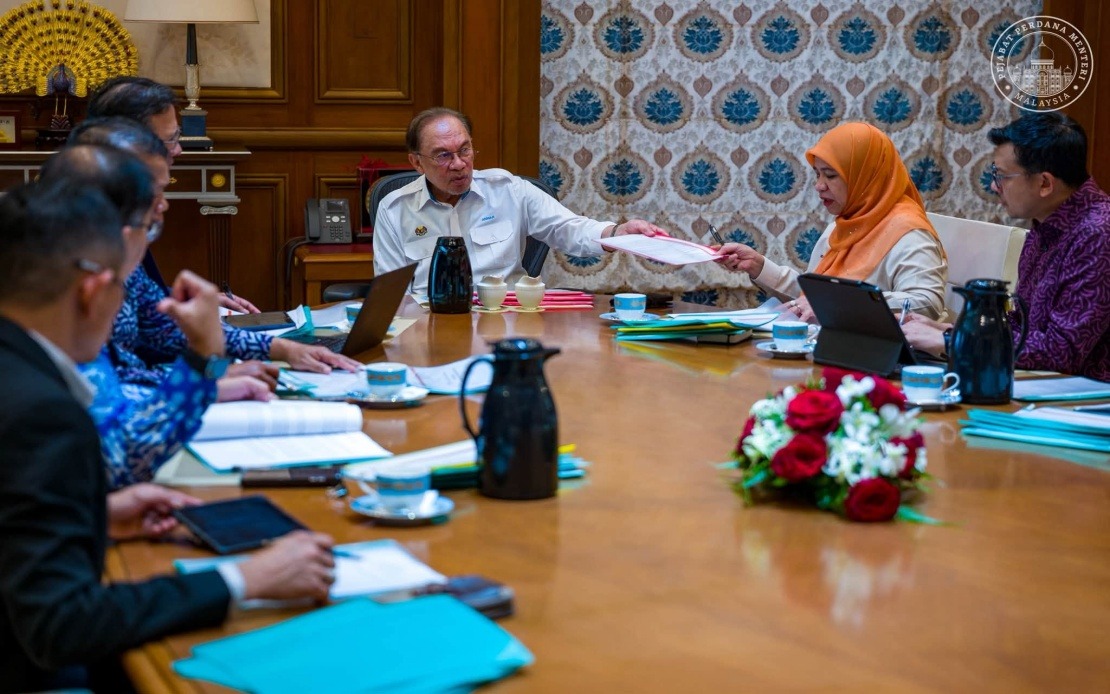
Prime Minister Datuk Seri Anwar Ibrahim has publicly demanded that the Federal Land Development Authority act with greater urgency to tackle persistent problems affecting FELDA settlers, particularly those relating to housing for second-generation residents and the contentious question of land ownership. His intervention, articulated through a Facebook post on July 6, signals renewed governmental pressure on the agency to move beyond prolonged inaction on matters that have festered within FELDA communities for years.
The issues affecting FELDA settlers represent a defining challenge for Malaysia's social policy framework. FELDA was established to resettle landless rural populations and provide them with agricultural opportunities, yet the scheme has evolved into a complex inheritance situation where original settlers' children now face uncertain prospects regarding both shelter and property rights. These second-generation concerns have become increasingly urgent as demographic succession raises questions about how FELDA plots and housing allocations will transfer between family members.
Anwar's intervention carries particular weight because it reflects the MADANI Government's broader commitment to addressing long-neglected grassroots issues. His statement that "every problem needs to be carefully examined and followed up with a clear solution plan" suggests the administration recognises that generic policy responses have failed FELDA communities. The emphasis on careful examination implies recognition that these matters involve competing interests—between settlers' aspirations for ownership security, FELDA's mandate as a development authority, and the broader public interest in how state land is managed.
The second-generation housing crisis specifically reflects demographic realities that FELDA's original design did not anticipate. As settlers aged and their children came of age, questions arose about whether young adults could access housing within FELDA schemes or whether they would be forced to seek accommodation elsewhere. Land ownership disputes, meanwhile, touch on fundamental anxieties about security of tenure—whether settlers and their heirs have genuine ownership rights or merely usufruct arrangements that can be revoked. These uncertainties have created social friction and economic insecurity within FELDA communities.
For Malaysian policymakers, FELDA's struggles illuminate broader challenges in land administration and settler welfare. FELDA schemes operate across multiple states, and their beneficiaries represent a politically significant constituency whose grievances, if unresolved, can crystallise into electoral discontent. The second-generation problem is particularly acute because it involves younger voters who may lack the loyalty to FELDA's historical mission that their parents possessed, making them potentially responsive to alternative political messaging centred on unresolved injustices.
The Prime Minister's call for immediate action suggests frustration with FELDA's previous pace of reform. FELDA has initiated various programmes to address settler concerns, but progress has been widely perceived as sluggish and insufficiently comprehensive. By demanding that issues be resolved rather than merely studied or debated, Anwar is attempting to shift institutional culture within FELDA toward implementation rather than deliberation. This reflects a pattern within the MADANI Government of attempting to translate policy commitments into tangible outcomes.
Regionally, FELDA's challenges echo similar issues across Southeast Asia, where land reform schemes and settlement programmes have struggled to adapt as original beneficiary populations aged and second-generation issues emerged. FELDA's experience offers cautionary lessons for other governments implementing land redistribution or rural development initiatives. The Malaysian case demonstrates how schemes that appear successful in their initial phases can encounter fundamental difficulties when inheritance and demographic succession occur.
The practical implications of resolving FELDA's second-generation issues are considerable. Clear frameworks for housing allocation to young settlers could unlock economic productivity by enabling younger residents to establish independent households and engage more fully in commercial agriculture or other enterprises. Similarly, clarifying land ownership rights would provide security for long-term investment in agricultural improvement and could unlock collateral value for credit access. These factors have macroeconomic significance beyond individual settler welfare.
Anwar's insistence that solutions must be "focused on the interests of FELDA residents" contains a subtle but important emphasis. It suggests that FELDA's institutional interests—such as maintaining administrative control or preserving revenue streams—should not take precedence over settler welfare. This reframing potentially opens space for more generous treatment of inheritance claims and ownership transfer than FELDA might prefer, though it also creates risk of policy inconsistency if different schemes receive different treatment.
The MADANI Government's commitment to strengthen FELDA while resolving longstanding settler grievances presents a genuine tension. Strengthening FELDA as an institution and prioritising settler interests may not always align. The government's challenge lies in reconfiguring FELDA's role—potentially moving it from a paternalistic land administrator toward something more resembling a settler cooperative or housing authority—in ways that both serve residents and maintain institutional viability.
For FELDA settlers themselves, the Prime Minister's intervention offers both promise and uncertainty. Promises of resolution are common in Malaysian politics, and settlers have heard previous commitments go unfulfilled. Yet Anwar's personal engagement and the specific nature of his demands—clear examination, solution plans, and urgency—suggest this may represent genuine governmental determination to move beyond symbolic gestures toward substantive change. Implementation will ultimately determine whether this intervention translates into genuine improvement in second-generation settler welfare.

