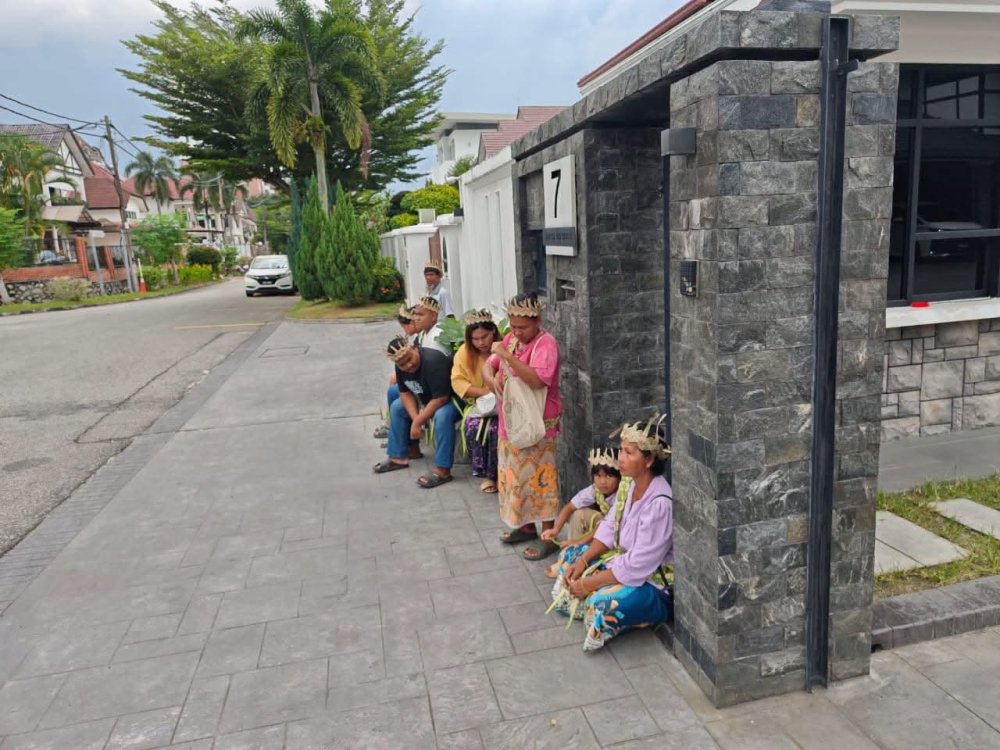
Prime Minister Datuk Seri Anwar Ibrahim has committed to escalating a contentious land dispute involving Orang Asli communities in Maran to the Pahang state government, following direct consultations with villagers affected by the disagreement. The pledge underscores the federal government's purported responsiveness to indigenous grievances and signals renewed attention to longstanding territorial conflicts affecting Malaysia's aboriginal populations, a demographic that has historically struggled to secure land recognition and resource rights in a nation dominated by competing commercial and development interests.
After meeting with residents in the affected area, Anwar indicated that the matter warrants intervention at the state administrative level, suggesting that resolution requires coordinated action between federal and state authorities. The Maran case exemplifies the complex jurisdictional challenges that characterise land disputes in Malaysia, where state governments retain significant constitutional authority over land matters whilst the federal government must navigate between development imperatives, indigenous claims, and administrative boundaries. This layering of governance structures frequently leaves indigenous groups caught between competing claims and bureaucratic processes that favour established property regimes over customary land rights.
Orang Asli communities across Peninsular Malaysia have long contended with land encroachment, development projects, and recognition challenges that undermine their tenure security and cultural preservation. The Maran dispute reflects broader patterns visible throughout the country, where indigenous territories face pressure from logging operations, agricultural expansion, infrastructure development, and privatisation schemes. For Orang Asli populations, land constitutes not merely an economic asset but the foundation of cultural identity, subsistence practises, and environmental stewardship accumulated through generations of habitation and resource management.
The Prime Minister's commitment to raise the issue with Pahang authorities reflects political acknowledgment that indigenous land grievances merit executive attention. However, the effectiveness of such pledges depends substantially on the Pahang government's receptiveness and willingness to prioritise indigenous claims against competing economic and political pressures. State administrations in resource-rich areas often face conflicting incentives, balancing indigenous land rights against revenue generation from development and extraction activities. The subsequent implementation of any agreement reached between federal and state levels will prove more consequential than the initial commitment itself.
Malaysian indigenous advocacy organisations have consistently documented how institutional mechanisms ostensibly designed to protect Orang Asli interests frequently fall short in practice. Land title recognition, consultation procedures, and compensation frameworks exist within formal structures, yet indigenous communities report inadequate access to justice, limited participation in decision-making processes affecting their territories, and insufficient remedies when violations occur. The Maran case will test whether elevated political commitment translates into tangible protections and meaningful resolution of underlying disputes.
For Orang Asli communities nationwide, the Maran situation carries symbolic significance beyond the immediate dispute. It signals that indigenous grievances are receiving high-level political consideration, potentially emboldening other communities facing similar challenges to articulate their claims more forcefully. Conversely, if the matter stalls in bureaucratic processes or results in inadequate resolution, it may reinforce indigenous communities' perception that political rhetoric frequently exceeds substantive action. The trajectory of this case will influence broader indigenous political engagement and confidence in federal commitments to address their concerns.
The involvement of the Prime Minister's office also highlights how land disputes involving indigenous populations increasingly intersect with national political calculations. Indigenous communities, whilst numerically small relative to Malaysia's overall population, represent growing voting blocs in certain constituencies and occupy significant symbolic territory within national identity narratives. Political attention to indigenous grievances thus reflects both genuine concern for vulnerable populations and strategic positioning within electoral and administrative contexts. Understanding these dynamics provides perspective on how land justice intersects with political opportunity.
Pahang, as Malaysia's largest state by area, encompasses vast tracts of territory with significant indigenous populations. The state's economy traditionally depended heavily on resource extraction and agricultural development, sectors often in direct conflict with indigenous land claims and environmental preservation. Raising the Maran dispute to state level therefore requires negotiation within a political economy where development interests have substantial influence. State leadership must weigh indigenous rights against perceived economic imperatives and existing commercial arrangements, a calculation that shapes negotiating positions and ultimate outcomes.
Moving forward, success in the Maran case hinges on several factors: the willingness of state authorities to accommodate indigenous claims, the adequacy of federal support and resources dedicated to implementation, the active participation and agency of indigenous communities throughout the resolution process, and the creation of sustainable mechanisms that prevent future disputes. These elements collectively determine whether the Prime Minister's pledge becomes a genuine turning point for indigenous land security or remains a symbolic gesture within an unchanged landscape of institutional constraints and competing interests that continue to marginalise indigenous populations in their dealings with Malaysian governance structures.

