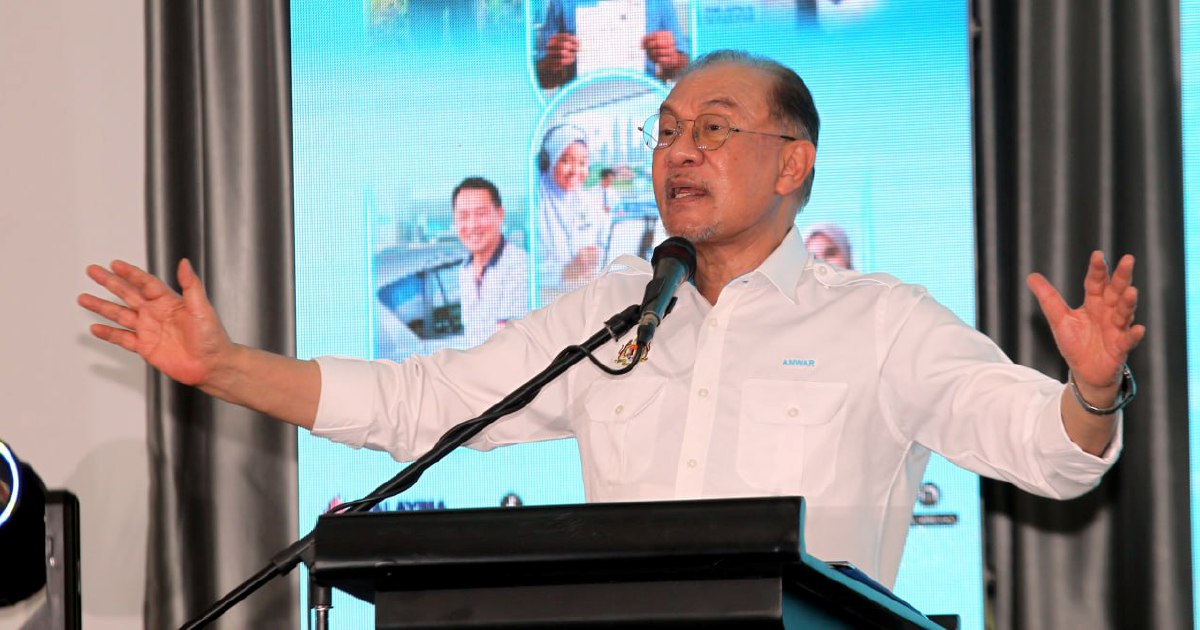
Prime Minister Datuk Seri Anwar Ibrahim has announced a RM15.3 million allocation directed towards enhancing religious and pondok educational institutions throughout Perak, underscoring the Madani government's strategic focus on developing Malaysia's Islamic education sector. The commitment, made in Ipoh, reflects the administration's broader vision to systematically strengthen and modernise the nation's network of traditional Islamic schools, which serve as crucial pillars of moral and spiritual development alongside the conventional education system.
The funding represents a concrete manifestation of government backing for pondok schools, which have long operated as independent religious institutions with substantial enrolments across Malaysia. These establishments, traditionally funded through a combination of community contributions, philanthropic donations, and limited government support, have faced increasing pressure to meet modern educational standards whilst maintaining their core Islamic teachings. The RM15.3 million injection into Perak signifies recognition of the financial challenges these institutions navigate whilst delivering education to thousands of students in the state.
Perak's allocation forms part of a nationwide initiative to upgrade religious schooling infrastructure and capacity. The Madani government has positioned Islamic education as integral to national development, reflecting the administration's commitment to providing pathways for students seeking faith-based learning alternatives to mainstream schooling. This strategic approach acknowledges that pondok schools fulfil a distinct educational niche, often attracting families seeking rigorous Islamic curriculum combined with secular academic subjects.
The timing of this announcement carries significance within Malaysia's evolving educational landscape. Authorities have increasingly recognised that pondok schools require adequate resources to modernise facilities, enhance teaching methodologies, and attract qualified educators who can deliver both traditional Islamic knowledge and contemporary curricula. Without sustained investment, these institutions risk falling behind in infrastructure and staffing capabilities, potentially compromising their educational quality and competitiveness.
For Perak specifically, the funding addresses longstanding resource disparities between well-equipped urban schools and rural pondok institutions. Many traditional Islamic schools in the state operate from modest facilities, lacking modern laboratories, libraries, and technological infrastructure necessary for comprehensive education. The RM15.3 million provides opportunities for targeted improvements that could substantially elevate the learning environment for students across the state's religious school network.
The Madani government's emphasis on religious education also reflects broader social and political considerations within Malaysian governance. Islamic education has traditionally commanded strong community support and constitutes a significant portion of the student population in certain states. By demonstrating fiscal commitment to this sector, the administration signals alignment with communal values whilst advancing practical educational objectives that resonate with many Malaysian families.
Beyond financial allocation, the announcement highlights the government's recognition that comprehensive national development encompasses diverse educational pathways. Rather than channelling resources exclusively through secular institutions, this multi-sectoral approach acknowledges that students possess varying educational aspirations and that a robust education system accommodates religious and traditional learning preferences. This inclusive strategy potentially strengthens social cohesion by validating different educational choices within Malaysia's pluralistic society.
The pondok school sector has undergone considerable evolution in recent decades, with many institutions now incorporating modern academic curricula alongside traditional Islamic studies. Progressive pondok schools increasingly employ qualified teachers, maintain accreditation standards, and equip facilities with contemporary learning resources. Government funding directly supports this modernisation trajectory, enabling institutions to compete effectively for student enrolments whilst preserving their distinctive religious character and pedagogical approaches.
Implementing the RM15.3 million allocation will require coordinated efforts between state authorities, school administrators, and educational planners to ensure efficient resource distribution. Successful deployment of these funds towards tangible infrastructure improvements—whether facility upgrades, equipment procurement, or teacher professional development—will determine the initiative's ultimate impact on educational quality and student outcomes within Perak's religious schools.
The announcement also carries implications for other Malaysian states, potentially establishing precedent for similar funding commitments in Sabah, Sarawak, and peninsular states. As the Madani government continues developing its educational policy framework, resource allocation patterns established in pilot initiatives like Perak may inform broader national strategies for supporting the estimated hundreds of pondok schools operating throughout Malaysia.

