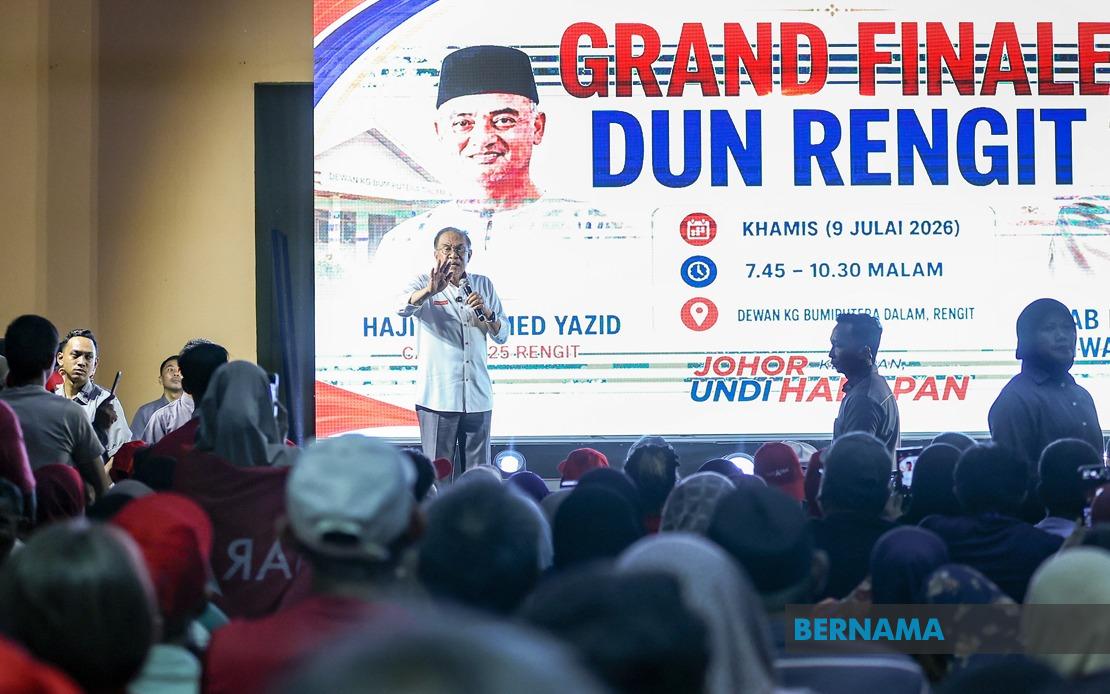
Prime Minister Datuk Seri Anwar Ibrahim has committed to tackling the deteriorating healthcare infrastructure and persistent water supply problems that have plagued residents in Rengit, positioning basic utilities as essential components of Johor's development trajectory. Speaking at a Pakatan Harapan campaign event in Batu Pahat, Anwar framed access to healthcare and clean water not merely as conveniences but as fundamental rights that demand immediate governmental intervention, underscoring the incompatibility between a state claiming developed status and communities lacking reliable essential services.
The Prime Minister's remarks carried particular weight given the symbolic value of his appearance in Johor, where the federal coalition has invested considerable political capital ahead of Saturday's 16th state election. By zeroing in on tangible infrastructure complaints rather than abstract policy platforms, Anwar sought to demonstrate that Pakatan Harapan could translate electoral promises into concrete improvements affecting daily life. His observation that clinics should treat the sick rather than themselves requiring medical attention served as a pointed critique of the current state of medical facilities serving Rengit residents, suggesting systemic neglect rather than isolated problems.
The campaign event, dubbed the 'Serumpun Kasih Sejiwa Harmoni Grand Finale' programme, represented one of three separate engagements Anwar conducted across Johor on the evening, reflecting the coalition's strategy of intensive late-campaign mobilization. Alongside Anwar were Sri Gading MP and Johor Amanah chairman Aminolhuda Hassan, alongside Rengit's Pakatan Harapan candidate Yazid Abu Bakar, signalling coordinated messaging across party affiliates. The presence of multiple senior figures underscored the constituency's perceived importance within the broader electoral landscape.
Water supply and healthcare represent chronically contested governance issues across Malaysia, particularly in constituencies where incumbent authorities have struggled to maintain infrastructure adequately. Rengit's documented problems with both services exemplify broader challenges facing several Johor communities, making the Prime Minister's specific acknowledgement strategically significant. By naming precise grievances rather than offering generic development promises, Anwar attempted to reframe Pakatan Harapan as responsive to localized concerns, a positioning that carries particular resonance among voters fatigued by decades of infrastructure underinvestment.
Anwar's emphasis on accountability and ethical governance constituted a secondary campaign theme throughout his remarks. He explicitly cautioned government officials and community leaders against exploiting their positions for personal enrichment, framing integrity as inseparable from effective service delivery. This rhetorical move sought to differentiate Pakatan Harapan's approach from longstanding perceptions of administrative corruption or mismanagement, suggesting that improved infrastructure flows naturally from honest governance rather than mere resource allocation.
The Prime Minister additionally stressed that securing representatives ideologically aligned with the federal government would facilitate smoother implementation of developmental initiatives. This argument carries particular salience in Johor, where potential PH control of state government would create unified governance across federal and state levels. Such alignment theoretically eliminates bureaucratic friction stemming from competing political jurisdictions, though this rationale also implicitly questions the efficacy of opposition-controlled state administrations in coordinating with federal bodies—a contested assertion in Malaysian political discourse.
Pakatan Harapan's electoral strategy in Johor encompasses contesting all 56 state seats through a defined coalition structure. The distribution assigns 20 seats to PKR, 19 to Amanah, and 17 to DAP, reflecting both party strengths and negotiated power-sharing arrangements. This tripartite configuration requires careful coordination to avoid internal competition that might fracture the anti-incumbent vote, particularly in constituencies where coalition members maintain overlapping support bases. The comprehensive slate approach signals determination to secure outright majority control rather than playing a secondary opposition role.
The broader electoral context involves 172 candidates competing across all 56 constituencies, indicating competitive three-way or four-way contests in numerous seats. This fragmented candidacy landscape potentially favors parties commanding strong grassroots mobilization and coherent messaging, advantages that Pakatan Harapan has sought to consolidate through high-profile campaign appearances and targeted local issue addressing. Anwar's Rengit visit exemplifies this strategy, concentrating senior leadership attention on constituencies presenting both electoral opportunity and clear governance problems amenable to coalition messaging.
For Johor's electorate, the election represents an opportunity to evaluate competing visions of state governance and resource allocation priorities. Pakatan Harapan's emphasis on infrastructure rehabilitation and administrative integrity directly confronts voter frustrations with inadequate service delivery, translating abstract political competition into recognizable developmental consequences. Whether such campaign commitments prove translatable into actual policy implementation remains subject to post-election scrutiny, but the strategic decision to foreground infrastructure grievances reflects coalition understanding of voter priorities.
Regional implications extend beyond Johor itself, as developments in Malaysia's most economically significant state influence broader configurations of federal-state relations and intra-coalition dynamics within Pakatan Harapan. An election victory would substantiate the coalition's claims to renewed viability following previous electoral setbacks, while defeat would intensify questions about coalition sustainability and component party positioning. Anwar's personal investment in the campaign underscores his assessment of the election's importance to his leadership agenda and broader national political trajectory.

