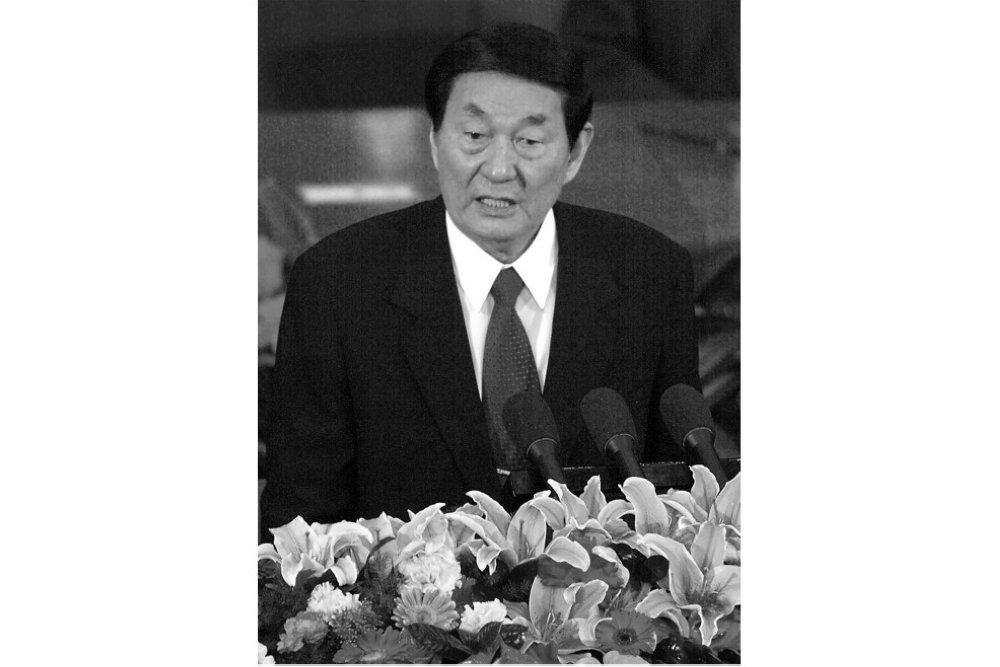
Prime Minister Datuk Seri Anwar Ibrahim extended his sympathies to the family of Zhu Rongji, the former Premier of China, who has recently passed away. The Malaysian leader's gesture underscores the enduring personal connections between top officials of both nations and the respect paid to figures who shaped bilateral diplomatic ties across decades.
Zhu Rongji served as Premier of China from 1998 to 2003, a pivotal period when the Chinese government was intensifying its economic reforms and expanding its international engagement. His tenure coincided with critical years for Malaysia-China relations, and Anwar's recollection of their interactions suggests that the former Chinese Premier played a meaningful role in facilitating understanding between Kuala Lumpur and Beijing during those formative years.
The recognition of Zhu Rongji's contribution to Malaysia-China ties carries particular significance for Southeast Asia, where China's economic and diplomatic influence has grown substantially. During the late 1990s and early 2000s, China was transitioning from a largely inward-focused economy to an increasingly outward-looking power. Diplomats and business leaders from the region, including those from Malaysia, were building frameworks for engagement that would later underpin the extensive trade and investment relationships seen today.
Anwar's characterisation of Zhu Rongji as a "good friend" reflects a diplomatic tradition in which personal relationships between leaders often serve as a foundation for state-to-state cooperation. This informal network of trust has historically facilitated smoother negotiations on trade agreements, cultural exchanges, and security matters that benefit both nations. Malaysian policymakers of that era understood that cultivating genuine relationships with Chinese counterparts would yield dividends as the region's geopolitical landscape evolved.
The bilateral relationship between Malaysia and China has flourished considerably in the intervening two decades, expanding well beyond the era when Zhu Rongji held office. Today, China ranks among Malaysia's largest trading partners and investors, particularly in infrastructure, technology, and resource extraction sectors. Educational exchanges, tourism, and people-to-people connections have deepened substantially, reflecting the institutional momentum that earlier diplomatic groundwork established.
Zhu Rongji's legacy extends beyond his official functions as Premier. He was widely regarded within international circles as a pragmatist and an economic reformer who championed policies aimed at modernising China's state enterprises and integrating the country more fully into global economic systems. His efforts to promote transparency and efficiency in government administration earned him respect from many international leaders, including those in Southeast Asia who valued stability and predictability in their dealings with Beijing.
For Malaysia specifically, the relationship with China during Zhu Rongji's tenure represented a critical juncture. Malaysia was navigating the aftermath of the 1997 Asian financial crisis, a period of considerable economic hardship and uncertainty. Supportive bilateral relations with major powers, including China, were essential to regional stabilisation efforts. Zhu Rongji's pragmatic approach to diplomacy likely facilitated Malaysian access to investments and trade opportunities during this vulnerable phase.
Anwar Ibrahim's tribute also reflects Malaysia's broader diplomatic posture, which has long emphasised balanced and constructive engagement with major powers. This non-aligned approach requires maintaining warm relations with numerous countries across different regions and political systems. Acknowledging the contributions of respected international figures, even after they have left office, reinforces Malaysia's commitment to continuity and stability in foreign relations.
The passing of Zhu Rongji marks the end of an era for many Southeast Asian leaders who worked directly with him. As the generation of officials who built the modern Malaysia-China relationship gradually moves on, their successors inherit both the diplomatic infrastructure and the underlying trust that was painstakingly constructed during the 1990s and 2000s. This institutional memory is invaluable, as it provides a foundation upon which future initiatives can be built.
Current Malaysian-Chinese relations encompass areas far more diverse than those of the Zhu Rongji era, ranging from high-speed rail projects to semiconductor manufacturing to digital economy collaboration. However, the fundamental commitment to deepening ties that was evident in interactions between Anwar and Zhu Rongji remains central to how both governments approach bilateral matters today. The former Premier's role in establishing this trajectory deserves acknowledgement as Southeast Asia continues to navigate its relationship with an increasingly influential China.

