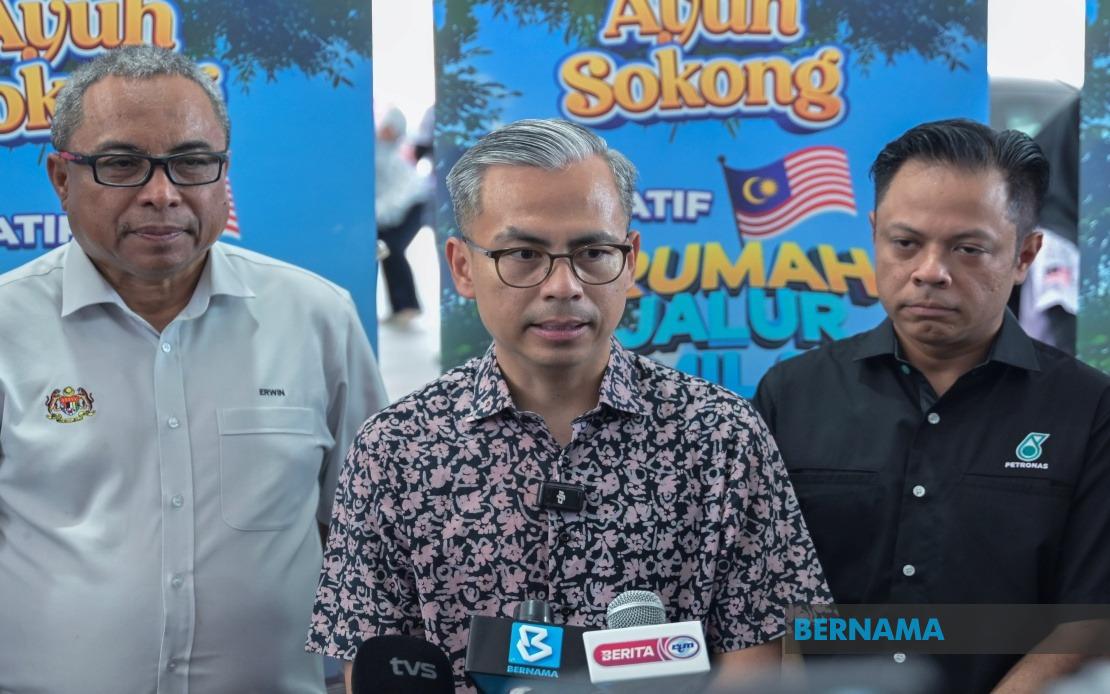
Prime Minister Datuk Seri Anwar Ibrahim has reaffirmed the Federal Government's commitment to expanding the Sarawak State Legislative Assembly and has instructed the Election Commission to furnish an updated report on the redelineation initiative. The announcement came through Communications Minister and MADANI Government spokesman Datuk Seri Fahmi Fadzil, who disclosed that the matter featured prominently in a recent Cabinet deliberation where the Prime Minister outlined the procedural steps required for implementation.
The proposed redelineation seeks to increase the Sarawak State Legislative Assembly from its current 82 seats to 99 seats by adding 17 new constituencies. This expansion represents a significant restructuring of the state's electoral architecture and reflects efforts to improve parliamentary representation in the East Malaysian state. The Sarawak State Legislative Assembly (Composition of Membership) Bill 2025, which would formalize this expansion, was tabled last July, signalling the administration's determination to advance the proposal through the legislative process.
Fahmi explained that while the Prime Minister's commitment to proceed remains unwavering, the specific implementation timeline has not yet been communicated to Cabinet. The delay stems from administrative dependencies, with the government awaiting critical information and recommendations from the Election Commission before finalizing the rollout schedule. This measured approach reflects the complexity of electoral redelineation, which requires careful coordination between federal and state authorities to ensure smooth execution.
The initiative had previously been championed by Minister of Women, Family and Community Development Datuk Seri Nancy Shukri and Minister of Works Datuk Seri Alexander Nanta Linggi, who raised the matter during Cabinet proceedings. Their advocacy underscores the cross-party and cross-portfolio support for enhancing Sarawak's legislative representation, suggesting broad consensus within the government on the necessity and benefits of the expansion. Such seat increases are typically justified on grounds of demographic shifts, population growth in underrepresented areas, and ensuring equitable distribution of electoral power.
For Sarawak, a state with significant geographical expanse and dispersed population centres, redelineation carries particular importance. The addition of 17 seats would provide opportunities for improved representation in remote and growing constituencies that have experienced demographic changes since the last electoral mapping. This could strengthen local governance and ensure that resource allocation and policy implementation better reflect the needs of all communities across the state.
Beyond the Sarawak development, Fahmi also provided updates on the government's readiness for the forthcoming Melaka state election. Preparations are advancing systematically, with officials identifying suitable venues for media operations and ensuring comprehensive internet infrastructure at polling locations. These logistical preparations draw from lessons learned during recent state elections in Johor and Negeri Sembilan, where digital connectivity and media accessibility proved essential for smooth conduct of the ballot.
The Malaysian Communications and Multimedia Commission has been tasked with collaborating closely with the Election Commission to verify that all polling centres in Melaka will have adequate internet facilities. This coordination reflects the increasing importance of digital infrastructure in modern electoral management, enabling real-time communication, result transmission, and transparency mechanisms. By proactively addressing connectivity requirements, the government aims to prevent technical bottlenecks and ensure that the election proceeds without disruption.
The Melaka election assumes significance as a barometer of public sentiment and the ruling coalition's standing among voters. By demonstrating meticulous preparation and technical competence, the government seeks to project efficiency and voter-centricity. The emphasis on learning from previous state elections indicates a professional approach to electoral management and a commitment to incrementally improving processes with each iteration.
Sarawak's redelineation also carries broader political implications for Malaysia's federal structure and Centre-State relations. East Malaysia, comprising Sabah and Sarawak, has long advocated for greater recognition of its constitutional status and enhanced participation in national governance. Expanding legislative capacity in Sarawak responds to these sentiments and reinforces the federal government's responsiveness to regional concerns. The move also acknowledges demographic realities and ensures that the state's voice in its own legislative assembly remains proportionate to population growth.
The timing of both initiatives—the Sarawak redelineation and meticulous preparations for the Melaka election—reflects a government focused on democratic consolidation and institutional strengthening. Rather than rushing processes or cutting corners, the administration appears committed to executing electoral changes methodically and maintaining public confidence in the integrity of ballot management. This approach, while potentially extending timelines, builds legitimacy and reduces post-election disputes.
For Malaysian observers and stakeholders in East Malaysia, the Prime Minister's explicit commitment and the directive for a comprehensive Election Commission report signal that redelineation is no longer merely a proposal but an agenda item with clear executive backing. The next phase will involve the Election Commission's findings and recommendations, which will likely shape the implementation framework and timeline. Malaysian and regional analysts will watch closely to assess how efficiently these mechanisms proceed and whether other electoral constituencies nationwide receive similar expansions to reflect changing demographics and growth patterns.

