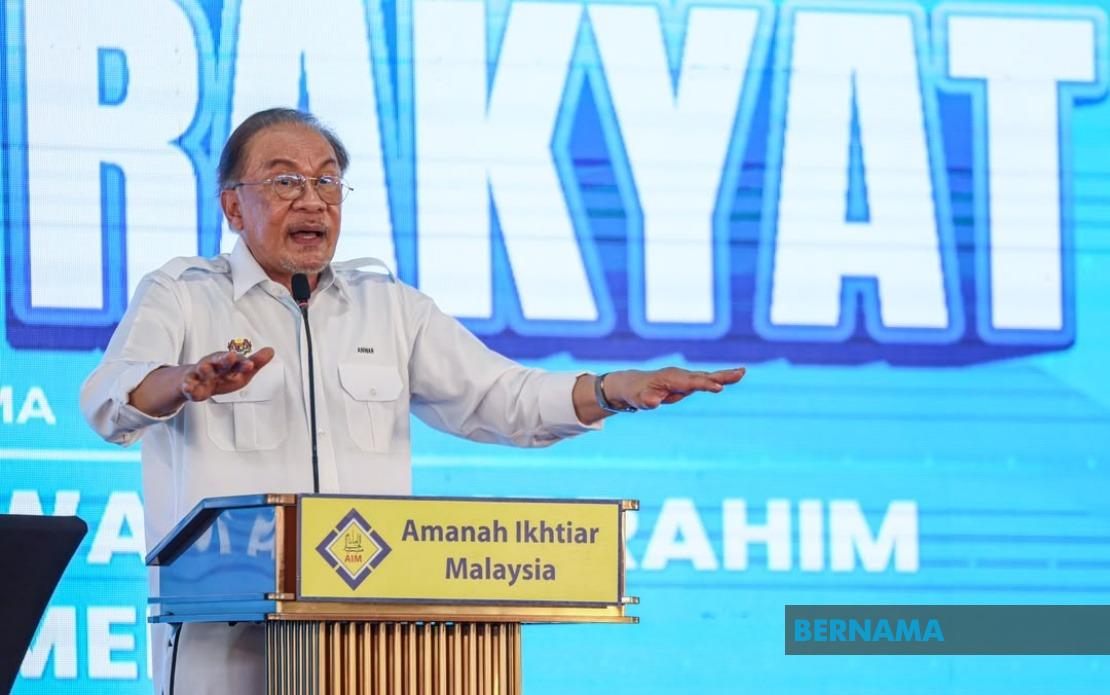
Prime Minister Datuk Seri Anwar Ibrahim has attributed mounting political pressure against his administration to its resolute commitment to rooting out corruption and preventing the abuse of public office. Speaking at a campaign event in Batu Pahat during Johor's state election campaign, the Pakatan Harapan chairman argued that his government's unwavering stance against those who misappropriate public funds or exploit their positions for personal enrichment has provoked significant opposition from various quarters. This interpretation of escalating political attacks as a backlash against integrity measures reflects how the administration frames its governance challenges within the broader narrative of institutional reform.
Anwar emphasised that the MADANI Government's approach remains fundamentally unchanged: leaders must not be permitted to utilise their offices to acquire property, secure lucrative contracts, obtain corporate shares, or accumulate personal wealth through state resources. Rather than viewing the coalescence of opposing forces as a threat to his political survival, the Prime Minister framed such opposition as validation of his government's effectiveness in enforcing accountability standards that had previously been absent or unenforced. This strategic reframing transforms adversity into evidence of principled governance, a rhetorical technique designed to strengthen his standing with voters concerned about institutional integrity.
The Prime Minister reinforced his personal commitment to these principles by citing his extensive travel to Johor since assuming office. Anwar asserted that despite numerous visits to the state, he had refrained from acquiring land, projects, or shareholdings—a claim intended to demonstrate that his anti-corruption rhetoric extends to his own conduct. By personalising the principle and presenting himself as a model of restraint, he sought to establish credibility for the broader institutional changes his administration advocates. This appeals particularly to voters who have witnessed persistent allegations of misconduct among political figures across the region, fostering scepticism about politicians' ability to adhere to ethical standards.
The Prime Minister's remarks carry significant implications for Johor specifically, a state election held on July 11 with 172 candidates competing for 56 seats. Anwar called upon Johor voters to grant Pakatan Harapan the opportunity to govern the state, positioning such a result as essential for implementing transformative change aligned with federal initiatives. He argued that alignment between state and federal governments would enable more efficient delivery of development projects and welfare programmes, a pragmatic appeal to voters' material interests. This coordination argument addresses a fundamental governance challenge in Malaysia's federal system, where divided government between states and the centre can create administrative friction and duplicate efforts.
Despite billions of ringgit invested in Johor's development infrastructure, Anwar highlighted persistent welfare challenges that continue to affect ordinary residents. Housing affordability remains a critical concern, with property prices outpacing wage growth across the region—a challenge affecting not only Johor but Malaysian cities nationally. Additionally, basic infrastructure including roads, religious facilities such as mosques and surau, and places of worship for other communities require sustained investment. The Prime Minister's implicit criticism suggested that the current state government has failed to translate economic wealth into equitable distribution of benefits, a theme that resonates across Malaysia where rapid development often concentrates gains among specific demographics while leaving large segments of society financially vulnerable.
Anwar's defence of Pakatan Harapan's partnership with the Democratic Action Party (DAP) represents an important clarification in the Malaysian political context, where religious and communal sensitivities often generate resistance to multiethnic coalitions. Over three and a half years of his premiership, the Prime Minister asserted that DAP representatives serving in the Cabinet have never opposed initiatives benefiting Malays or Islam. By itemising this historical record, Anwar addressed a persistent criticism from rivals who have questioned whether non-Malay, non-Muslim political parties would subordinate communal interests to coalition imperatives. This assertion serves to reassure Malay-Muslim voters, a critical demographic in Johor, that political cooperation across communal lines does not necessitate compromising specific community benefits.
The enthusiasm demonstrated by Pakatan Harapan supporters at the Senggarang meet-and-greet event, with attendees enduring intense heat to participate, suggested tangible grassroots mobilisation for the coalition's campaign. Anwar characterised this participation as remarkable and rare, implicitly suggesting that such energy reflects genuine voter enthusiasm rather than orchestrated turnout. In Malaysian electoral contexts, visible crowd sizes and demonstrated commitment often translate into campaign momentum and enhanced media coverage, factors that influence undecided voters. The timing of these remarks—shortly before early voting scheduled for July 7 and principal polling on July 11—positioned them strategically within the compressed campaign calendar typical of Malaysian state elections.
The Prime Minister specifically appealed to voters in three state constituencies—Senggarang, Rengit, and Penggaram—to support Pakatan Harapan candidates, targeting districts likely to be competitive or potentially swingable. These localised appeals represent standard electoral strategy, but their deployment by the sitting Prime Minister elevates their prominence and signals federal attention to outcomes in specific areas. Such emphasis can mobilise additional campaign resources and volunteer efforts, potentially influencing outcomes in races decided by narrow margins.
Broader implications of Anwar's remarks extend beyond Johor's state election to reflect his administration's positioning ahead of the subsequent federal general election, constitutionally required by 2025. By repeatedly emphasising anti-corruption efforts and principled governance, Anwar establishes a competitive distinction premised on institutional integrity—a domain where his government can differentiate itself from previous administrations associated with the 1Malaysia Development Berhad scandal and related controversies. For Southeast Asian observers, Malaysia's experiences with systematic corruption and its ongoing efforts to establish accountability mechanisms offer instructive lessons about the political economy of institutional reform in the region.

