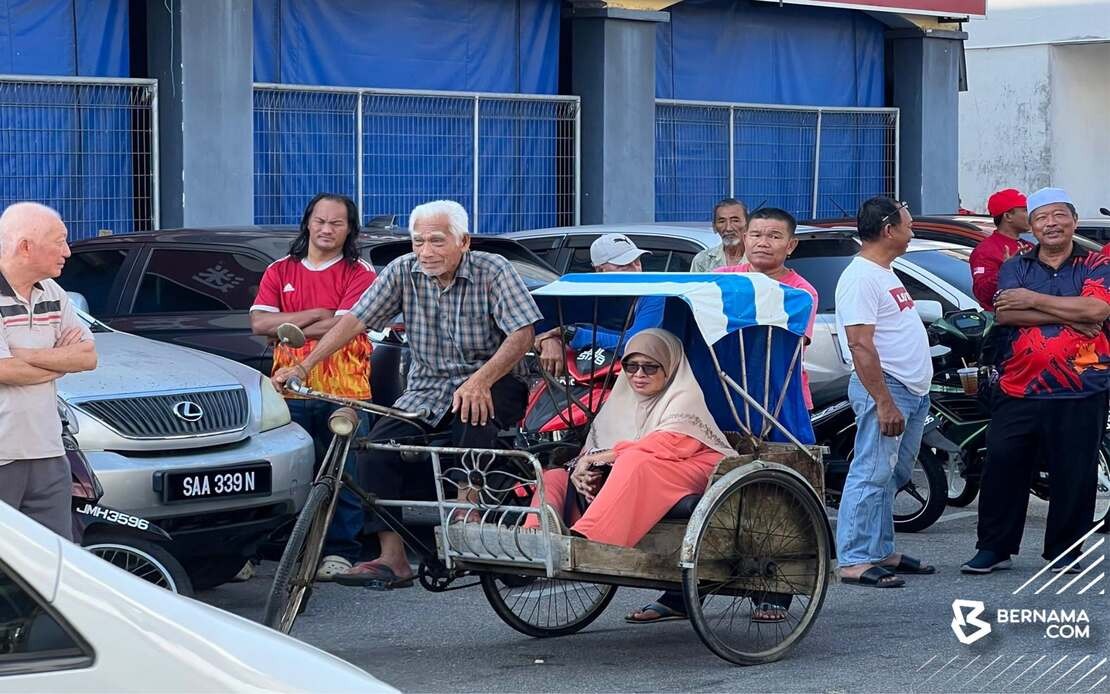
Prime Minister Datuk Seri Anwar Ibrahim has publicly expressed his gratitude towards an 86-year-old man who made a determined journey by trishaw during the premier's recent visit to Johor, highlighting the kind of personal dedication that occasionally touches political figures across the region. The incident occurred during Anwar's campaign stopover in Senggarang, Batu Pahat, where he spent approximately 50 minutes at a local coffee shop meeting residents as part of activities connected to the Johor State Election. What might have otherwise been a routine campaign event took on deeper significance when news emerged of Abdul Razak Pelangga's earnest effort to bring his wife to witness the country's leading politician in person.
Abdul Razak, at 86 years of age, chose to transport his wife Jamilah Samsudin, 64, from their home in Kampung Parit Bugis to Kedai Kopi Hailam Sri Medan by pedalling a trishaw across nearly a kilometre of distance. The couple's motivation was straightforward—they had learned the previous day that Anwar would be visiting their area and wanted to seize the opportunity to see him. Despite having access to more convenient transportation options including a car and motorcycle, Abdul Razak deliberately selected the trishaw journey, believing this approach would help him avoid the complications of locating parking space in the crowded town centre during the premier's visit.
The gesture reveals something about how political leadership resonates at the grassroots level in Malaysia, particularly among older citizens who remember different eras of the nation's political landscape. Abdul Razak serves as the imam at Masjid Raudhatul Jannah Parit Bugis, suggesting he occupies a position of community respect and religious responsibility. His willingness to exert physical effort to facilitate his wife's wish demonstrates the kind of personal commitment that political parties often cite when discussing voter engagement and support. The incident also underscores how campaign visits, which political operatives view primarily through metrics of attendance and media coverage, can carry genuine emotional weight for ordinary citizens.
Anwar's response through a Facebook post acknowledged the couple's efforts with evident sincerity, though he simultaneously expressed regret at missing the opportunity to meet them directly. He noted in his statement that the pair had shown "encouragement and support," framing their action within a broader narrative of public backing for his administration. The prime minister offered both an apology and an invitation for future engagement, saying "InsyaAllah, we will meet another time." This conventional but courteous response reflects the diplomatic approach expected of Malaysia's top political leader when responding to such incidents, maintaining warmth while accepting the practical limitations of campaign scheduling.
The couple's journey took place against the backdrop of Johor State Election activities, a significant political moment for the state that has historically been a crucial battleground in Malaysian electoral contests. Anwar's campaign stops across the state represent efforts to consolidate support ahead of voting, with personal encounters and breakfast meetings designed to build connection with voters. The visit to the small-town coffee shop was structured as a meet-and-greet programme specifically targeting the Senggarang constituency, one of several stops the prime minister was making to engage directly with residents and understand local concerns.
From a broader perspective, incidents like this one highlight the continuing importance of face-to-face political engagement in Malaysia despite the rising prominence of digital campaigning and social media-based outreach. Older voters in particular demonstrate strong motivation to attend in-person encounters with political leaders, viewing such moments as meaningful engagement with democratic processes. The trishaw journey, though modest in scale, represented significant personal effort for an octogenarian and reflects how political campaigns can inspire action among citizens who might otherwise remain passive observers of electoral cycles.
The story also touches upon generational dynamics within Malaysian politics and society. Abdul Razak's generation has witnessed the nation's entire post-independence trajectory and brings historical perspective to their political choices. His decision to involve his wife in the experience suggests family-level political consciousness, where voting and civic participation are treated as shared household activities rather than individual actions. Such patterns of family-based political engagement remain powerful forces in Malaysian electoral behaviour, particularly in semi-rural areas like Senggarang where community bonds remain tight and traditional social structures persist.
Anwar's public acknowledgment of the couple's gesture through social media served multiple purposes simultaneously. It demonstrated the premier's accessibility and appreciation for supporters, generated positive coverage of his campaign activities, and showed respect for older citizens—a demographic group whose participation and satisfaction carry significant weight in Malaysian politics. The response aligns with the broader messaging around Anwar's leadership style, which has often emphasised connection with ordinary Malaysians and attentiveness to public sentiment across various constituencies and communities.
The incident, while seemingly minor in the grand scheme of national politics, reflects enduring patterns within Malaysian political culture. Campaign visits remain ritualistic occasions where politicians attempt to demonstrate commitment to local communities and understand grassroots concerns. Citizens, particularly older ones, continue to place value on direct encounters with political leaders despite the availability of digital alternatives. The missed connection between Anwar and the couple, paradoxically, generated more attention and emotional resonance than a brief handshake or photograph would likely have achieved. The trishaw journey transformed what could have been a simple campaign stop into a memorable narrative about dedication, family commitment, and the persistent human desire for political leaders to acknowledge their constituents' efforts and support.

