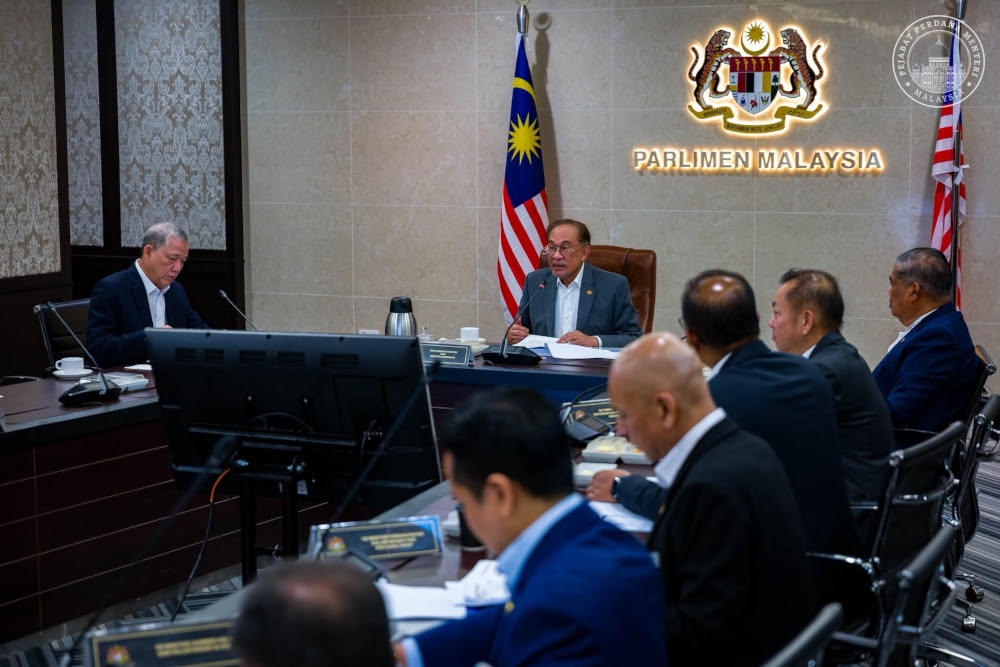
Prime Minister Datuk Seri Anwar Ibrahim has triggered a national mobilisation to fortify Malaysia's food security infrastructure ahead of a potentially severe Super El Niño episode, signalling deep concern about the climate phenomenon's capacity to destabilise regional agricultural systems and domestic supply chains. The directive channels through the Ministry of Agriculture and Food Security, tasking officials with developing and executing comprehensive contingency strategies before weather disruptions materialise across key farming regions.
El Niño cycles, which occur when ocean temperatures in the central and eastern Pacific warm significantly above historical averages, typically produce drought conditions across Southeast Asia. A Super El Niño variant intensifies these effects, creating prolonged dry spells that devastate conventional crop cycles and livestock operations. Malaysia's agricultural sector, which depends substantially on monsoon rainfall patterns and maintains limited irrigation infrastructure across many regions, faces particular vulnerability when such meteorological events strike. The current alert reflects meteorological forecasts indicating heightened probability of stronger-than-average conditions emerging in coming months.
The Prime Minister's intervention underscores how climate-related food security challenges now occupy central position within Malaysia's governance agenda. Unlike natural disasters that strike with sudden violence, El Niño unfolds across months, theoretically allowing governments sufficient lead time to implement protective measures. Yet historical experience across the region demonstrates that preparedness often lags despite advance warning, leaving agricultural communities and consumers exposed to sudden price spikes and availability shortages. Anwar's directive attempts to break this pattern through advance action rather than reactive crisis management.
The Ministry of Agriculture and Food Security must now evaluate domestic production capacity across critical staples including rice, vegetables, and livestock products, identifying which segments face greatest disruption risk should rainfall decline sharply. Malaysia imports substantial quantities of food—approximately 70 to 80 percent of total consumption originates overseas, with significant dependence on regional suppliers in Thailand, Vietnam, Indonesia, and India. When El Niño strikes multiple supplier countries simultaneously, as occurs during Super El Niño events, Malaysia's import-dependent model faces acute pressure. Prices for regional commodities typically surge while availability tightens, creating dual supply and affordability challenges for consumers.
Government storage facilities require urgent assessment and replenishment to build strategic reserves capable of buffering supply disruptions extending several months. Current reserve levels for critical commodities remain inadequate to sustain the population through extended import difficulties. The Ministry must simultaneously work with private sector partners—grain traders, food manufacturers, and retail chains—to coordinate voluntary stockpiling and maintain transparent communication about supply situations, preventing panic buying that artificially constrains availability. Coordination mechanisms between federal and state agricultural authorities need activation to ensure consistent policy application across Malaysia's varying geographic and climate zones.
International engagement constitutes another crucial dimension of the government's response strategy. Malaysia's agricultural ministers should proactively engage counterparts across Southeast Asia and beyond, negotiating supply agreements and priority export arrangements that secure Malaysia's food access during shortage periods. Bilateral relationships with major suppliers including Thailand, Vietnam, and India require cultivation at diplomatic and commercial levels. Regional cooperation through the Association of Southeast Asian Nations framework could facilitate more equitable distribution of available supplies during crisis periods, preventing some countries from absorbing excessive scarcity while others maintain relative abundance.
Domestic agricultural productivity simultaneously demands enhancement through accelerated adoption of climate-resilient farming techniques and expanded irrigation capacity. Modern drip irrigation systems, drought-resistant crop varieties, and soil moisture conservation methods can substantially reduce reliance on rainfall during dry periods. Investment in agricultural research and extension services to disseminate these technologies throughout farming communities requires acceleration. Mechanisation of production processes and value chain efficiency improvements could reduce waste and enhance output from existing farmland, stretching available resources further during shortage scenarios.
The livestock sector requires particular attention given its resource intensity and vulnerability to feed supply disruptions. Cattle, poultry, and aquaculture operations depend heavily on imported feed ingredients, creating cascading supply vulnerabilities when El Niño disrupts global grain availability. Exploring domestic alternative feed sources, including agro-industrial byproducts and seaweed-based supplements, could reduce import dependence. Selective herd management policies during drought periods, though economically painful for farmers, might prove necessary to balance feed availability against livestock population.
Consumer communication and price management mechanisms need designing before conditions deteriorate. Government must prepare the public psychologically and practically for potential food price increases, explaining the meteorological basis for anticipated disruptions while detailing protective measures being implemented. Targeted subsidy programmes protecting lower-income households' food access may require expansion. Regulation preventing excessive speculation and hoarding in wholesale markets protects vulnerable consumers from artificial price escalation beyond actual scarcity justification.
The Super El Niño threat arrives at a moment when Malaysia's broader economic resilience faces testing from multiple directions. Food price inflation, should it materialise substantially, compounds existing cost-of-living pressures affecting middle and lower-income households. The political implications of constrained food availability extend beyond pure economics into public confidence and social stability. Anwar's directive reflects understanding that agricultural security represents fundamental governance responsibility, not peripheral policy concern. Success in this instance establishes template for addressing other climate-related threats looming across Malaysia's future.

