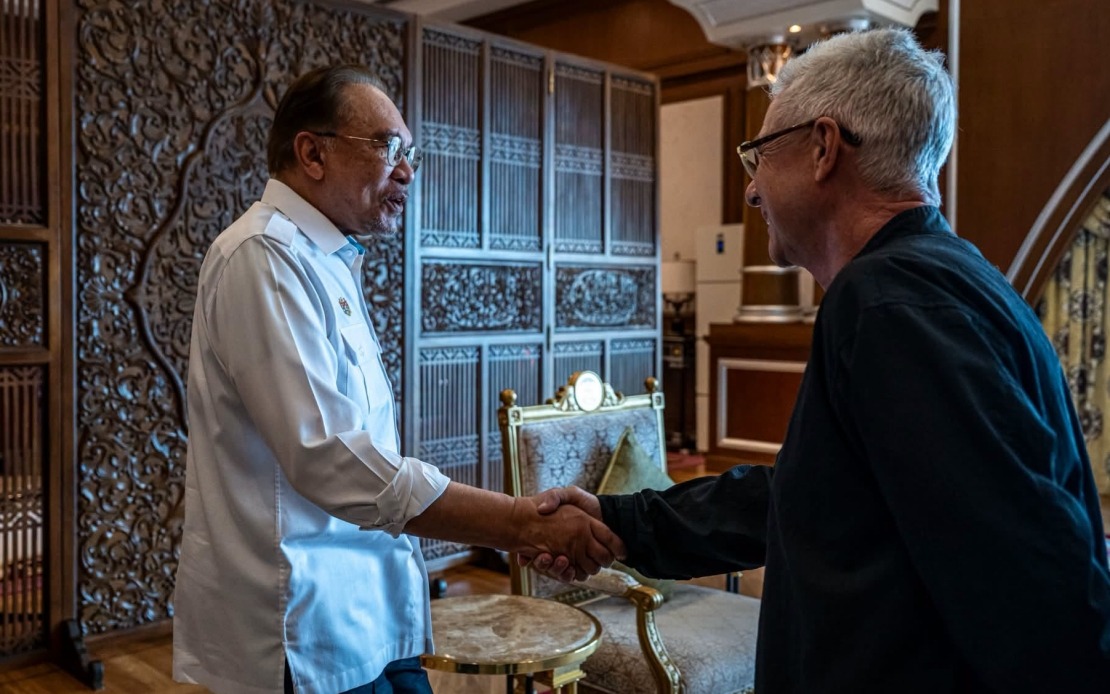
Prime Minister Datuk Seri Anwar Ibrahim has signalled Malaysia's commitment to reclaiming its place as a premier motorsports destination in Asia through knowledge-sharing with Singapore's motorsports leadership. The engagement saw Anwar meet with Michael Roche, Executive Director of the Singapore Grand Prix, in Kuala Lumpur on August 5 to discuss operational frameworks and organisational strategies that have made Singapore's Formula 1 event a regional success story. The timing of this diplomatic exchange underscores Kuala Lumpur's determination to maximise the opportunity presented by hosting the 2026 Formula 1 Bahrain Grand Prix at Sepang International Circuit from October 2 to 4.
The meeting represents a pragmatic approach to event hosting in Southeast Asia, where neighbouring countries have accumulated decades of experience managing complex, high-stakes international competitions. Singapore's Grand Prix, held annually on the challenging Marina Bay street circuit, has become a benchmark for successful motorsports event management in the region. By engaging directly with its organisational leadership, Malaysia signals awareness that hosting a Formula 1 event involves far more than securing the racing licence—it requires meticulous planning across infrastructure, security, hospitality, and logistics. Anwar's involvement at the prime ministerial level emphasises the strategic importance attached to this endeavour, transcending typical sporting event considerations to encompass broader national development objectives.
The return of Formula 1 racing to Sepang carries profound symbolic significance for Malaysia's sporting aspirations. The venue previously hosted the Malaysian Grand Prix annually from 1999 to 2017, a tenure that ended amid escalating financial pressures, including substantial licensing fees and infrastructure maintenance costs that ultimately proved unsustainable under the existing funding model. The 18-year presence of Formula 1 at Sepang had established the circuit as a world-class facility and positioned Malaysia prominently within the global motorsports calendar. The interval since 2017 has represented a gap in Malaysia's profile as a motorsports nation, one that the 2026 hosting opportunity now presents a chance to address through renewed engagement with international audiences and investors.
According to Anwar's public statements, Malaysia's hosting strategy for the event targets substantial economic multiplier effects. Tourism arrivals are anticipated to surge, capitalising on international visitor flows drawn by the high-profile nature of Formula 1 racing. Employment opportunities will emerge across hospitality, transportation, security, event management, and ancillary service sectors. The broader business ecosystem stands to benefit through supply chain activity, from catering and accommodation to automotive and engineering services. Crucially, successful execution of this event contributes to Malaysia's tourism brand positioning, reinforcing the Visit Malaysia 2026 campaign that seeks to establish the country as a preferred destination across multiple attractions and experiences. The convergence of sporting, tourism, and economic objectives creates a comprehensive rationale for significant governmental commitment to the event's success.
The geopolitical context surrounding the 2026 event adds a layer of complexity to Malaysia's hosting role. The Formula 1 and International Automobile Federation initially scheduled the Bahrain Grand Prix for April at the Bahrain International Circuit but postponed it to October at Sepang following escalating regional tensions in West Asia. This rescheduling reflects geopolitical considerations that affected the original host nation's capacity to stage the event, presenting Malaysia with an unexpected but strategic opportunity. Malaysia's acceptance of this arrangement positions the country as a reliable, stable alternative venue within the global motorsports calendar—a designation that carries reputational weight and demonstrates regional stability to international sporting bodies and corporate partners.
The collaborative arrangement between Malaysia and Bahrain represents an innovative approach to managing disrupted international sporting calendars. Rather than cancellation, the two nations worked with Formula 1 and the FIA to relocate the event geographically while maintaining its calendar position, demonstrating pragmatic problem-solving at the highest levels of motorsports governance. This partnership model may serve as precedent for future accommodations between nations and sporting bodies facing logistical or security impediments. For Malaysia specifically, the arrangement signals its emergence as a trusted partner capable of hosting major international events on short notice, a credential that enhances its attractiveness for future sporting, cultural, and commercial gatherings.
Singapore's experience provides instructive lessons directly relevant to Sepang's preparation. The Marina Bay Grand Prix, held since 2008, operates within an urban environment presenting unique organisational challenges distinct from traditional circuit racing. Street circuit management requires extraordinary coordination with municipal authorities, resident management, traffic control, and security protocols. While Sepang operates as a permanent circuit facility rather than a temporary street installation, Singapore's expertise in hospitality logistics, international visitor management, broadcast coordination, and safety protocols offers transferable knowledge. Anwar's consultation with Roche reflects Malaysian recognition that competitive advantage in hosting prestigious sporting events derives not primarily from physical facilities but from organisational competence, stakeholder coordination, and service quality.
The emphasis on achieving international standards, as articulated by the Prime Minister, addresses a critical dimension of Malaysia's ambition. Formula 1 events operate within strict governance frameworks established by the FIA, encompassing track specifications, safety protocols, medical facilities, security arrangements, and broadcast infrastructure. Meeting these standards simultaneously serves multiple objectives: it ensures competitor and spectator safety, facilitates global broadcasting reaching hundreds of millions of viewers, and projects an image of Malaysian institutional capability and professionalism. Failure to meet international standards would not merely disappoint attending spectators but would generate negative impressions of Malaysian competence that could undermine other national development initiatives. Conversely, successful delivery establishes precedent for Malaysian capacity to host comparable international events across sporting, cultural, and business domains.
The concept of Malaysia as a regional motorsports hub extends beyond the single 2026 event to contemplate longer-term positioning within Asian motorsports infrastructure. Sepang possesses established facilities, technical expertise among circuit personnel, and organisational memory accumulated over nearly two decades of Formula 1 hosting. Rather than allowing these capabilities to atrophy during the post-2017 period, the 2026 event provides opportunity to revitalise the ecosystem and potentially attract additional motorsports activities. Regional motorsports governance increasingly recognises the need for multiple hosting venues distributed across Asia to accommodate growing calendar demand and distribute infrastructure investment. Malaysia's successful 2026 execution positions Sepang as candidate for future Formula 1 hosting, as well as alternative international motorsports championships that select venues based on demonstrated capability and track record.
The infrastructure and human capital investments required to deliver the 2026 event generate lasting national benefits beyond the racing weekend itself. Circuit upgrades, hospitality facilities, transportation networks, and security systems constructed or enhanced for the event remain available for future use. Similarly, the training and employment experience gained by Malaysian personnel involved in event organisation establishes competencies applicable to subsequent international gatherings. The partnership approach adopted by Anwar's government, evident in consultation with Singapore and coordination with Bahrain, reflects sophisticated understanding that modern event hosting succeeds through collaborative networks rather than isolated national efforts. This collaborative model strengthens Malaysia's relationships within regional sporting governance structures while demonstrating commitment to international standards and best practices.

