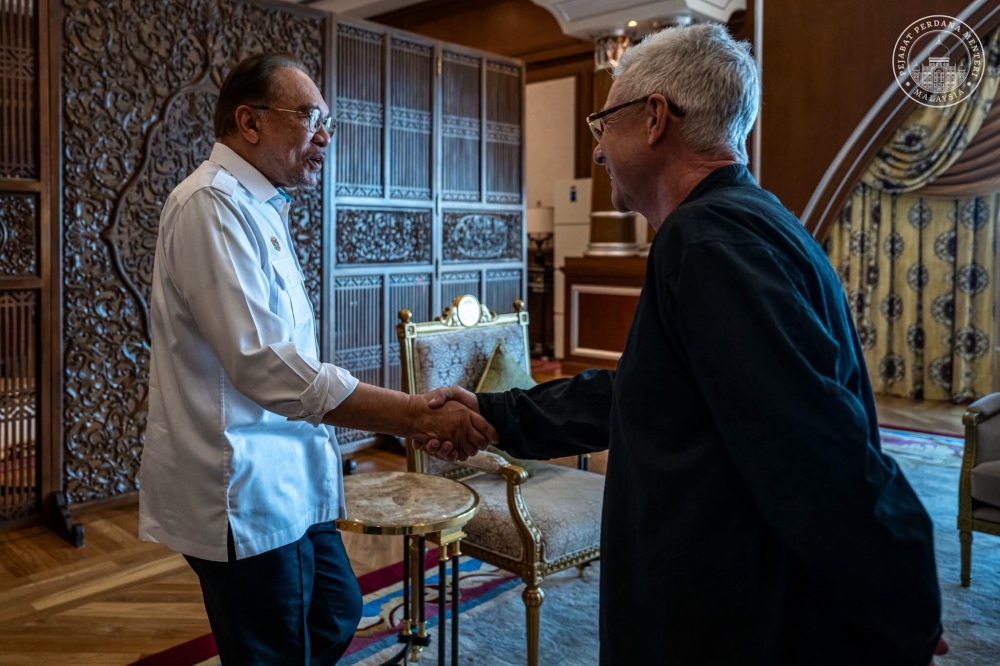
Prime Minister Datuk Seri Anwar Ibrahim has held discussions with leadership from the Singapore Grand Prix, underlining Malaysia's determination to bring Formula 1 racing back to the Sepang International Circuit after a prolonged absence from the sport's global calendar. The meeting, which took place during a high-level engagement, reflects the government's commitment to reviving one of Asia's most prestigious motorsport events and represents a significant diplomatic and sporting initiative at the highest levels of Malaysian governance.
The Malaysian Grand Prix was discontinued following the 2017 season, when organisers suspended the event citing financial pressures and changing global racing dynamics. For nearly five years, Malaysia has been absent from the F1 circuit—a marked departure from the nation's two-decade history as a regular host of the world championship. The Sepang circuit, which held championship-level racing since 1999, had hosted 19 consecutive Formula 1 races, establishing itself as an essential fixture on the international motorsport calendar and a source of national pride for Malaysia.
Anwar's direct engagement with Singapore Grand Prix representatives signals that Malaysia is pursuing a comprehensive strategy to negotiate F1's return, rather than adopting a passive stance. The involvement of the Prime Minister at this stage demonstrates that the initiative carries substantial political weight and institutional backing. Malaysia is not merely seeking to reclaim its place among F1 hosts but is positioning itself within the broader Asian motorsport context, where competitions between regional nations for prestige events remain keenly contested.
The timing of these discussions is strategically significant. Formula 1 has been expanding its global footprint, with new venues joining the calendar while established races face periodic challenges. Asian markets remain increasingly important to F1's commercial and strategic interests, particularly with the sport's growth in the region. Singapore's own Grand Prix, held annually since 2008, has established itself as one of F1's most distinctive events, featuring night racing through Marina Bay's street circuit. Malaysia's efforts to return suggest confidence that there remains commercial and competitive space for multiple Asian F1 venues within the championship schedule.
The Sepang circuit itself represents a substantial infrastructure asset. The facility underwent significant upgrades over its two decades of hosting F1, with modifications made to meet evolving safety and technical standards. The track's design and its location within the Kuala Lumpur metropolitan area provide infrastructure advantages that remain relevant to contemporary F1 operations. Restoring the Malaysian Grand Prix would therefore capitalise on existing facilities rather than requiring entirely new construction, a consideration that weighs favourably when Formula 1 evaluates potential host venues against their development costs and operational requirements.
Beyond the sporting dimension, hosting Formula 1 carries substantial economic implications for Malaysia. The championship attracts international media coverage, tourism, and associated commercial activity. The Grand Prix weekend generates employment across hospitality, transportation, security, and service sectors. For a nation seeking to strengthen its position as a regional economic and tourism hub, motorsport events of F1's magnitude serve as catalysts for infrastructure development, international visibility, and investment attraction. The absence of the Malaysian Grand Prix has consequently represented not merely a sporting loss but an economic consideration as well.
The diplomatic layer of these discussions deserves attention. F1 negotiations involve complex stakeholder arrangements—circuit operators, government authorities, commercial partners, and the sport's governing bodies all maintain distinct interests. Anwar's personal involvement elevates Malaysia's positioning within these discussions, signalling governmental resolve and potentially facilitating the resolution of regulatory, financial, or contractual obstacles that may have contributed to the race's initial suspension. Prime ministerial engagement can expedite decisions that might otherwise become prolonged through routine bureaucratic channels.
Regionally, Malaysia's pursuit of F1's return carries implications for Southeast Asia's positioning within global motorsport. The region has limited representation on the championship calendar relative to its economic development and population. Thailand has hosted F1 races historically, while Vietnam briefly entered the calendar before geopolitical considerations led to its removal. Malaysia's restoration would reinforce Southeast Asia's motorsport profile and demonstrate the region's capacity to sustain elite sporting events through sustained institutional commitment and investment.
The financial framework for F1 hosting has evolved considerably since 2017. Teams, broadcasters, and commercial partners have restructured their arrangements, while the championship's own commercial model has shifted. These changes affect how host nations negotiate their agreements and determine the financial viability of staging the event. Malaysia's discussions with Singapore counterparts likely encompass learning from Singapore's successful ongoing partnership with F1, understanding how that arrangement operates, and identifying models that might work within Malaysia's budgetary and operational context.
Moving forward, the success of Malaysia's initiative will depend on sustained commitment across multiple fronts. Government backing, as evidenced by Anwar's engagement, provides essential political foundation. However, converting diplomatic intent into a confirmed F1 calendar slot requires alignment with circuit operators, securing commercial sponsorship, and negotiating competitive terms with F1 management. The Sepang circuit operators and Malaysian commercial entities must demonstrate financial capacity and operational readiness to meet contemporary F1 standards and expectations.
The restoration of the Malaysian Grand Prix would represent validation of Malaysia's sporting infrastructure and governance capacity. It would contribute to national reputation internationally and provide tangible economic benefits domestically. However, it would also require sustained investment and political will throughout what may be an extended negotiation period. Anwar's meeting with Singapore Grand Prix leadership suggests that Malaysia is approaching this challenge with strategic seriousness and high-level commitment, positioning the nation competitively within the complex landscape of contemporary Formula 1 hosting.

