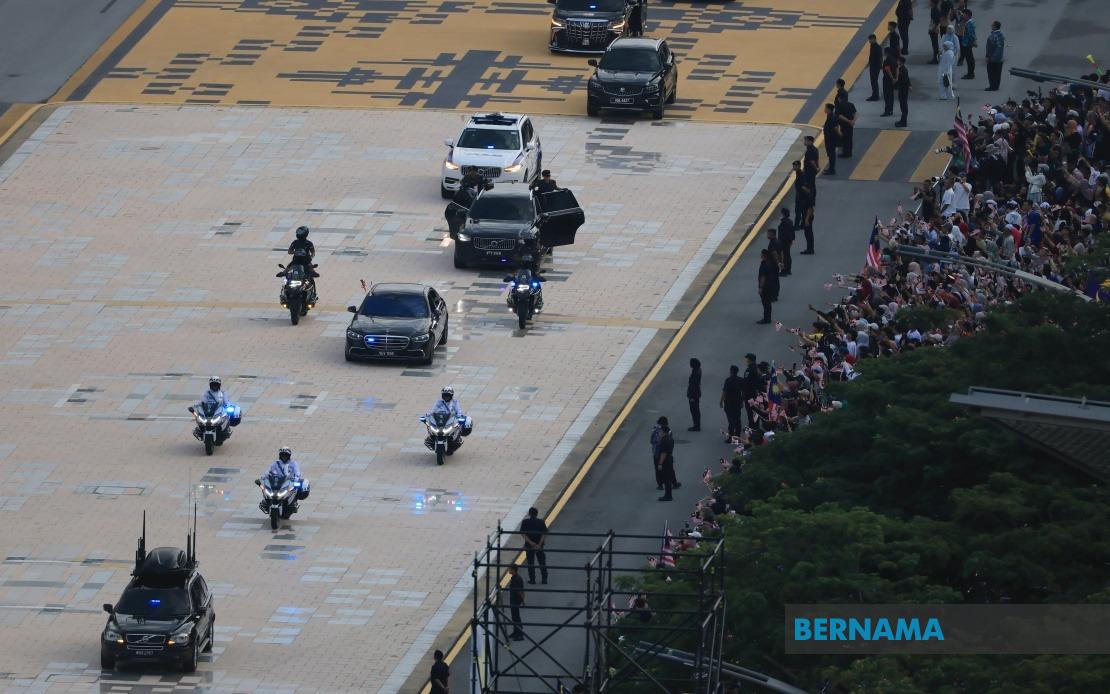
Prime Minister Datuk Seri Anwar Ibrahim and members of his Cabinet participated in Malaysia's 69th National Day commemoration at Dataran Putrajaya on August 31, standing alongside thousands of citizens in what remained the nation's flagship independence celebration. Anwar, who concurrently serves as Finance Minister, arrived at the royal stage at 7.53 am alongside his wife Datuk Seri Dr Wan Azizah Wan Ismail as the national anthem Hormat Perdana resonated through the venue. The occasion brought together the highest echelons of Malaysia's political leadership to reaffirm the country's continued commitment to its founding principles on this milestone anniversary.
Deputy Prime Minister Datuk Seri Dr Ahmad Zahid Hamidi reached Dataran Putrajaya eight minutes before the Prime Minister, helping to facilitate the ceremonial proceedings. The assembly of senior ministers underscored the Government's emphasis on presenting a united front during major state events. Beyond the Prime Minister and his deputy, the celebration attracted numerous Cabinet-level officials, including Communications Minister Datuk Seri Fahmi Fadzil, whose ministry also chairs the central organising committee for the 2026 National Day and Malaysia Day festivities. This dual responsibility signals the administration's forward-thinking approach to national commemoration planning.
Home Minister Datuk Seri Saifuddin Nasution Ismail and Defence Minister Datuk Seri Mohamed Khaled Nordin were among the additional senior portfolios represented at the event. Their presence reflected the multi-sectoral coordination required to stage such a large-scale national gathering. The attendance of multiple deputy ministers, government dignitaries and foreign diplomatic representatives added further dimension to the occasion, demonstrating Malaysia's positioning as a nation welcoming international observers to witness its democratic traditions and constitutional milestones.
The 2024 National Day celebrations embraced the overarching theme of "Malaysia MADANI: Kesejahteraan Dinikmati" (Malaysia MADANI: Shared Prosperity Enjoyed), which serves as the contemporary framework for the Government's governance philosophy and policy direction. This thematic anchor positioned the independence day observance not merely as historical commemoration but as an active endorsement of the administration's socio-economic vision for the nation. The emphasis on shared prosperity resonates particularly in the Malaysian context, where economic inclusivity and equitable development remain central political concerns.
The spectacle itself demonstrated the logistical sophistication required to orchestrate such national events. The parade featured 10,819 participants drawn from 76 distinct contingents, suggesting broad representation from military units, civil defence organisations, youth groups, and civic associations across the country. Twenty-two marching bands provided musical accompaniment, transforming Dataran Putrajaya into a vibrant tableau of national pride. The inclusion of eleven specially decorated vehicles added visual symbolism to the procession.
The deployment of military and civilian assets underscored Malaysia's operational capabilities and defence posture. The programme incorporated 328 land, sea and air assets, providing a comprehensive display of the country's armed forces machinery and equipment. This exhibition element, common to National Day parades across Asia, serves dual purposes of national celebration and strategic messaging to both domestic and international audiences regarding Malaysia's security apparatus.
Animal contingents added a distinctive dimension to the proceedings. One hundred and twelve working animals participated in the parade, representing traditional and contemporary roles within Malaysian security and civic organisations. These included police horses, military dogs and other trained animals that demonstrate both heritage connections and modern operational relevance. Such inclusions appeal particularly to younger audiences and create memorable imagery for broadcast media coverage.
The integration of electric vehicle assets into the parade reflected Malaysia's gradual transition toward sustainable transport infrastructure and climate-conscious governance messaging. The twenty-two EV assets represented a deliberate symbolic gesture toward environmental responsibility, aligning the National Day celebration with global sustainability imperatives. This inclusion indicates how contemporary independence day observances increasingly intertwine patriotic commemoration with forward-looking policy commitments.
The attendance of foreign diplomatic representatives acknowledged Malaysia's international standing and the significance attributed to the country's continued political stability and constitutional governance. In a regional context where political predictability remains valued by international partners, the hosting of foreign dignitaries at National Day ceremonies reinforces Malaysia's position as a reliable and institutionally stable nation within Southeast Asia. The welcoming of international observers to witness Malaysia's democratic traditions and ceremonial practices contributes to the country's soft power projection.
The scale and coordination of the August 31 celebrations reflected substantial preparation by government agencies, particularly the communications ministry and defence establishment. Successfully assembling ten thousand-plus participants, managing hundreds of military assets, and coordinating security protocols for a public gathering of this magnitude demands months of advance planning. The smooth execution of such events bolsters public confidence in governmental administrative capacity while providing a platform for demonstrating national unity and institutional effectiveness.
Beyond the immediate pageantry, the National Day gathering served important social functions within Malaysian civic culture. For ordinary citizens who attended, the occasion provided opportunity for collective expression of national identity and shared belonging across ethnic and religious lines. The celebration affirmed Malaysia's continued commitment to the constitutional framework established at independence, even as the nation navigated contemporary challenges in economic performance, political cohesion and social development. The participation of the highest political leadership transmitted clear signals regarding governmental investment in maintaining traditional institutional channels for national solidarity.

