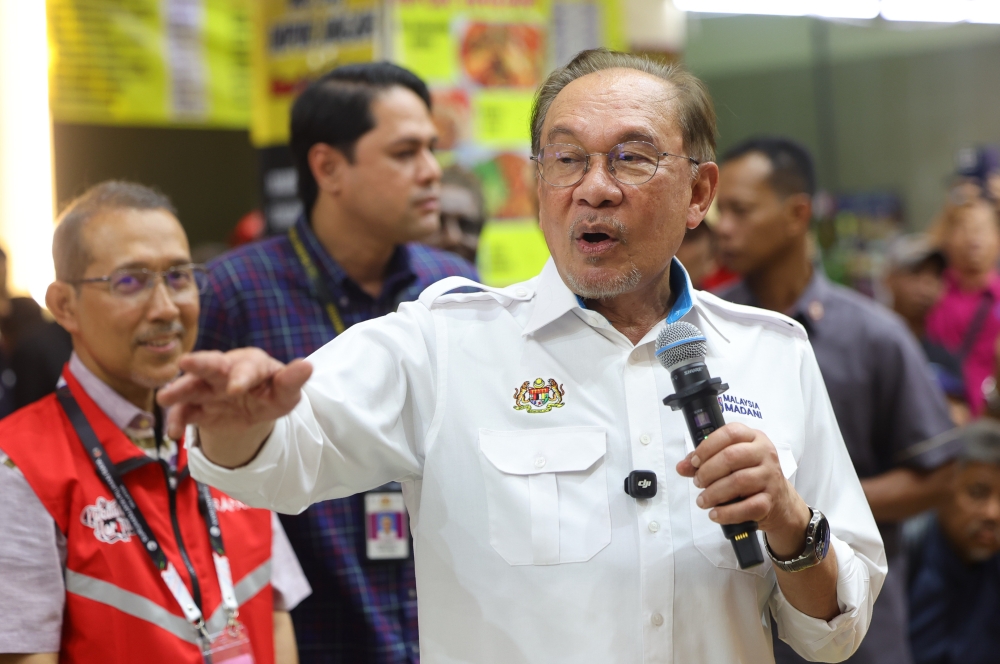
Prime Minister Datuk Seri Anwar Ibrahim is mounting a sustained electoral offensive in Negeri Sembilan, deploying his high-profile presence across the state in what analysts view as a critical final push to shore up support for his ruling coalition. The intensity of the Prime Minister's schedule reflects the strategic importance of the state, which has become a focal point for both government and opposition camps seeking decisive momentum in the closing days of campaigning.
The decision to concentrate high-level political firepower in Negeri Sembilan underscores how contemporary Malaysian elections often hinge on voter sentiment in swing regions and marginal constituencies. While some states lean predictably toward particular political blocs, Negeri Sembilan has historically demonstrated volatility, making it fertile ground for persuasion efforts. The presence of a sitting Prime Minister on the campaign trail carries symbolic weight beyond mere vote-counting, conveying to both supporters and undecided voters that the leadership views the contest as consequential.
Anwar's campaign strategy mirrors patterns observed throughout Southeast Asia, where executives lean on personal visibility and direct engagement during election endgames. The compressed nature of his final-week itinerary—covering multiple constituencies and attending numerous public events—reflects the assumption that face-to-face encounters generate voter enthusiasm and media coverage that cascades through social networks. For a Prime Minister, such campaigns also serve as platforms to recount governance achievements and articulate policy visions directly to constituents without filtering through news organisations.
Negeri Sembilan's political composition presents distinct challenges and opportunities for the ruling coalition. The state encompasses both rural constituencies with traditional support bases and increasingly urbanised areas where voter preferences have shifted. Young professionals commuting to Kuala Lumpur and surrounding regions bring metropolitan political sensibilities, while older rural communities maintain deeper attachments to established political structures. Anwar's extensive schedule likely involves tailored messaging for these divergent demographic segments, addressing concerns ranging from economic opportunity to social policy.
The coalition's emphasis on Negeri Sembilan reflects broader strategic calculations about which states offer the most favourable return on political investment. Elections in Malaysia are ultimately contests for parliamentary majorities, meaning that victories in closely-contested states frequently determine overall government composition. A strong performance here could meaningfully shift the balance, whereas losses might signal broader erosion of support heading toward subsequent electoral contests. The stakes therefore justify the concentration of top-tier political resources.
Opposition parties have naturally responded by intensifying their own ground campaigns in Negeri Sembilan, setting the stage for genuine electoral competition rather than predetermined outcomes. This contestation benefits democratic processes by forcing political actors to engage substantively with constituents, explain policy positions, and defend records. When elections genuinely remain uncertain until voting concludes, political participation rates typically rise and public interest in campaign messaging deepens.
The regulatory environment surrounding Malaysian campaign activities permits such high-profile leadership participation within defined frameworks. Election Commission guidelines establish parameters for permissible campaigning, timing, and use of government resources, attempting to balance freedom of political expression with concerns about incumbency advantage. The Prime Minister's Negeri Sembilan schedule presumably operates within these boundaries while maximising permissible campaigning opportunities.
From a regional perspective, Malaysia's electoral dynamics carry implications for political stability across Southeast Asia. The country's relatively mature democratic institutions and peaceful transfer of power mechanisms contrast sharply with authoritarian alternatives elsewhere in the region. When Malaysian elections proceed smoothly and reflect genuine popular preferences, they reinforce regional norms around democratic legitimacy and peaceful political competition. Conversely, contested or disputed outcomes could reverberate through regional politics and investor confidence.
The timing of Anwar's intensive push reflects campaign calendars that compress massive political mobilisation into relatively brief periods. Unlike some democracies with extended campaign seasons, Malaysia concentrates most intensive electioneering into the final weeks after official campaigning begins. This compressed timeframe creates urgency for political campaigns to maximise their message penetration and voter contact during available windows. Leaders like Anwar therefore face demanding schedules attempting to cover as much ground as possible within constrained periods.
For Malaysian voters in Negeri Sembilan, the concentration of prime ministerial attention presents opportunities to assess leadership quality directly and to signal their preferences regarding national direction. Engagement with campaigning leadership allows constituents to pose questions, observe responsiveness to local concerns, and form judgements about whether incumbent governance deserves continuation. These interactions, multiplied across constituencies and voter conversations, ultimately determine electoral outcomes and shape which leaders and parties exercise governing authority.
The energy invested in final-week campaigning across Negeri Sembilan demonstrates that Malaysian political actors regard elections as genuine contests requiring sustained effort rather than ceremonial exercises. This approach benefits democratic health by demonstrating that power remains genuinely contestable and that political outcomes depend on voter choices rather than predetermined arrangements. Such competitive dynamics, while demanding for candidates and parties, reinforce the legitimacy and resilience of Malaysia's electoral system within Southeast Asian politics.

