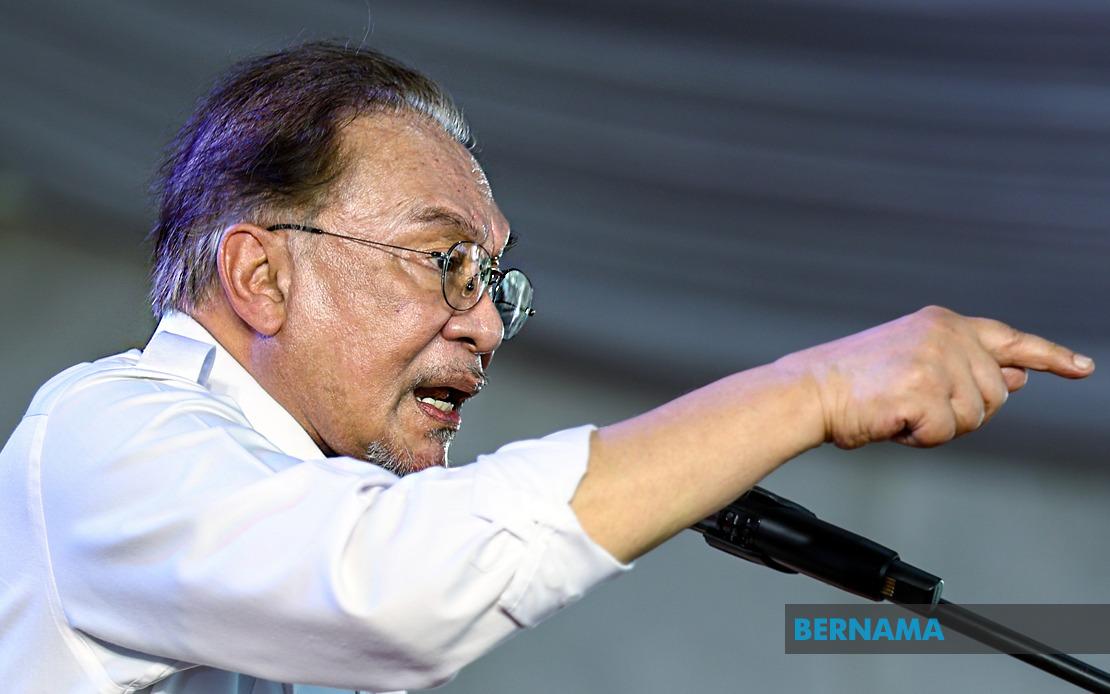
Prime Minister Anwar Ibrahim is accelerating Pakatan Harapan's push to secure support in Johor, embarking on a marathon campaign day that will take him across eight constituencies in the northern portion of the state. The intensive schedule reflects PH's determination to mobilise voters and reinforce organisational networks as the election enters its critical second week, with polling day set for July 11.
Anwar's itinerary spans eight separate engagements across Layang-Layang, Senggarang, Semerah, Bukit Naning, Pemanis, Gambir, Serom, and Palong Timur, territories that feed into the broader Buloh Kasap state legislative assembly district. The ambitious schedule begins in the early morning with a casual breakfast gathering at a local warung, signalling PH's strategy of connecting with ordinary voters through accessible, community-focused events rather than purely formal political rallies.
The campaign calendar reveals a strategic approach to voter engagement throughout the day. A neighbourhood meet-and-greet in Senggarang precedes a communal feast in Semerah, allowing Anwar to demonstrate accessibility to diverse community groups. The schedule then shifts to more structured political activities, including a formal meeting and volunteer mobilisation event in Muar during the midday hours, suggesting careful sequencing between grassroots connection and party organisational activities.
The afternoon and evening portions of Anwar's schedule maintain momentum through additional community sessions and targeted visits to residential areas. A focused campaign programme at a federal settlement targets the rural electorate, while evening sessions in commercial areas such as food courts indicate efforts to reach traders and service workers. The final event at a shopping complex in Sungai Mati extends the campaign into the night, attempting to capture voters across different schedules and lifestyles.
This aggressive campaign schedule comes as Pakatan Harapan pursues comprehensive coverage of Johor's electoral landscape. The coalition is contesting all 56 state seats, representing a significant show of strength and organisational capacity. The candidate distribution reflects internal coalition mathematics, with PKR fielding 20 candidates, Amanah contributing 19, and DAP presenting 17, suggesting relatively balanced power-sharing within the alliance.
The broader Johor state election context shows an intensely contested political environment. A total of 172 candidates are competing across the 56 seats, indicating strong competition from multiple political parties and independent candidates. Early voting is scheduled for July 7, providing a mechanism for particular voter groups to participate ahead of the main polling day, while the concentrated campaign period means remaining weeks are critical for all contesting parties to secure maximum visibility and support.
Anwar's personal involvement in the campaign reflects the strategic importance of Johor to national politics. As Prime Minister, his direct participation lends weight to PH's campaign and signals the coalition's commitment to winning this significant state. His ground-level engagement through breakfast sessions and community events also counters potential perceptions of distance between national leadership and voters, a messaging challenge that affects ruling coalitions across the region.
The repetition of community engagement events across multiple constituencies suggests PH's recognition that Johor voters require sustained, visible engagement rather than occasional high-level visits. The early morning start and late evening conclusion indicate organisational discipline and an attempt to maximise coverage, though the physical demands of such schedules raise questions about campaign sustainability over the coming weeks.
For Malaysian political observers, this campaign intensity reveals several underlying dynamics. First, the coalition clearly views Johor as genuinely competitive territory rather than a secured stronghold, justifying the Prime Minister's direct intervention. Second, the emphasis on grassroots engagement through accessible community events reflects lessons learned from previous campaigns about voter preferences for direct interaction over media-driven politics. Third, the comprehensive candidate fielding across all 56 seats signals PH's intention to compete seriously rather than conceding districts to opponents.
The timing of this escalated campaign activity, occurring in the second week of campaigning with less than a week until early voting, suggests PH believes momentum and visibility in the final campaign period critically influence voter decisions. Political campaigns in Malaysia typically see intensity increase as election day approaches, with senior leaders intensifying their involvement to maximise impact during the final voting stretch.
For voters in affected constituencies, the proliferation of campaign events represents both opportunity and noise. Residents in Layang-Layang, Senggarang, and other targeted areas will encounter sustained political messaging across different settings and times of day. Whether such saturation strengthens voter connection to the coalition or creates campaign fatigue remains a perennial question in Malaysian electoral politics.
The Johor state election carries implications extending beyond the state itself. As Malaysia's second-largest state by population and a significant economic contributor, Johor's political complexion influences national political calculations and coalition dynamics. Packatan Harapan's performance here will offer early signals about the coalition's electoral prospects in other state contests scheduled throughout 2024 and 2025.
As Anwar's constituency-level campaign unfolds, both PH and its opponents will be closely monitoring voter responses and measuring campaign effectiveness through grassroots feedback and polling data. The coming week will prove decisive in shaping voter sentiment heading into early voting and the final push toward July 11.

