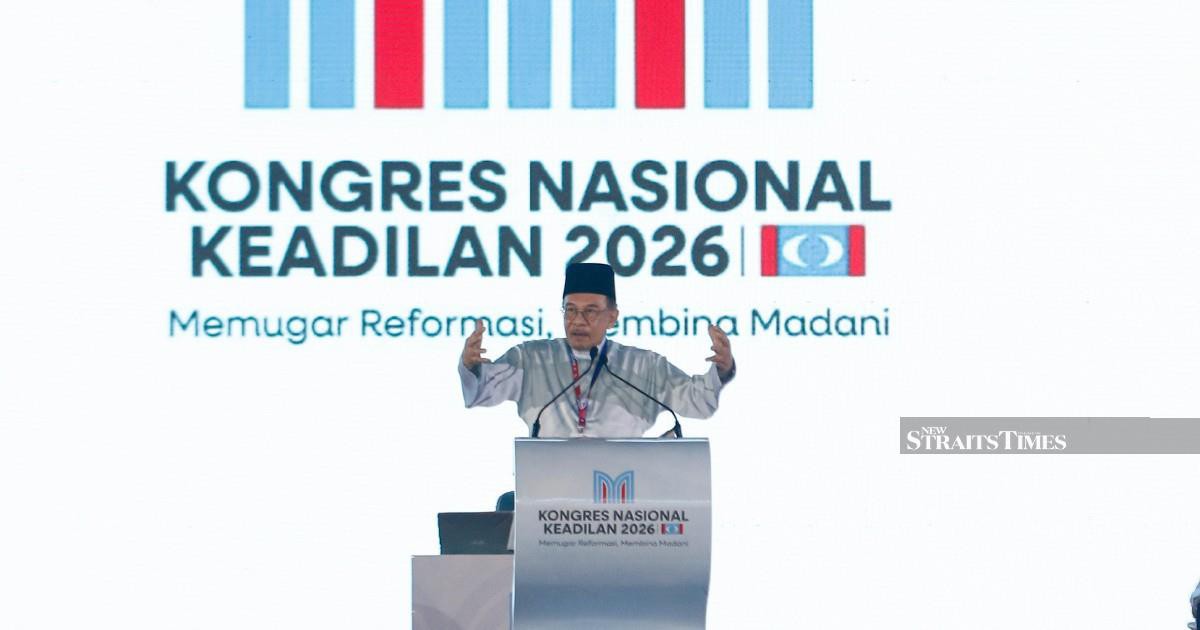
Prime Minister Datuk Seri Anwar Ibrahim has declared his administration's commitment to repealing the Universities and University Colleges Act 1971, marking a watershed moment in Malaysia's approach to higher education governance. The announcement, made at Ayer Keroh, signals a fundamental departure from a legislative framework that has underpinned the operations of public universities and university colleges across the nation since the early 1970s.
The decision to abolish Act 30, as the legislation is commonly referred to, represents one of the most substantial institutional reforms contemplated by the current government. The Act has long served as the primary regulatory instrument governing the establishment, administration, and oversight of public universities and affiliated institutions. Its removal would necessitate a comprehensive restructuring of how Malaysia's tertiary education system is legally structured and administered, touching everything from institutional autonomy to student grievance mechanisms.
This move arrives at a moment when Malaysia's higher education sector faces mounting pressure to enhance its global competitiveness and responsiveness to evolving economic demands. Universities across Southeast Asia have increasingly advocated for greater institutional autonomy, modernised governance structures, and flexibility in academic and administrative operations. The potential repeal of Act 30 suggests the government recognises these pressures and believes existing legislative frameworks may be constraining institutional development.
The 1971 Act has been in place through multiple administrations and has weathered numerous attempts at reform. Its longevity reflects both its foundational importance and the challenges inherent in rewriting higher education law. The legislation addresses fundamental questions about university governance, the relationship between institutions and the state, and the mechanisms through which academic freedom is balanced against accountability requirements. Any replacement framework will need to address these same tensions while adapting to contemporary realities.
For Malaysian universities seeking enhanced international standing, the abolition could facilitate greater operational flexibility. Restrictions on institutional governance, hiring practices, and strategic decision-making embedded in the current Act have sometimes frustrated university leaders attempting to compete globally for talent and research funding. A modernised legislative approach might permit faster adaptation to changing academic landscapes, including emerging fields and interdisciplinary collaboration models that contemporary Act 30 provisions may inadequately address.
Student welfare protections represent another critical dimension of this prospective legislative change. The current Act contains provisions governing student conduct, disciplinary procedures, and certain welfare safeguards. Any successor legislation must ensure that institutional autonomy gains do not come at the expense of student protections. The mechanism for handling student grievances and appeals will require particularly careful consideration to maintain equity while reducing bureaucratic impediments.
The announcement also carries implications for academic freedom and institutional independence from political interference. While Act 30 has sometimes been criticised for constraining academic independence, it has also provided certain protections and defined parameters for university operations. Replacement legislation will need to strike a careful balance between granting institutions greater autonomy and establishing clear governance boundaries that prevent mission drift or arbitrary institutional decisions.
For the broader Southeast Asian context, Malaysia's higher education sector competes directly with universities in Singapore, Thailand, Indonesia, and beyond. Regulatory modernisation could enhance the attractiveness of Malaysian institutions to international students and scholars. However, the transition period during legislative reform typically creates uncertainty that may temporarily disadvantage recruitment and research collaboration efforts.
The timing of this announcement suggests the government intends to proceed deliberately with consultation and legislative drafting. Crafting replacement legislation will require engagement with university leadership, academic staff, students, and relevant ministerial departments. International benchmarking against comparable legislation in other high-performing tertiary education systems will likely inform the process.
Implementation of any new framework will determine whether this reform genuinely enhances institutional performance or merely creates regulatory confusion. Clear transitional provisions, adequate stakeholder consultation, and careful attention to unintended consequences will be essential. Malaysian universities and students have substantial interest in ensuring that legislative modernisation translates into tangible improvements in educational quality, research capacity, and institutional responsiveness.
The abolition of Act 30 also signals broader questions about regulatory philosophy in Malaysia's governance approach. Whether future legislation will emphasise greater deregulation and market-driven competition among institutions or maintain significant state oversight mechanisms remains to be determined. The outcome will shape Malaysian higher education's trajectory for decades to come.
As the government develops this reform, regional higher education trends suggest that successful modernisation requires balancing institutional autonomy with quality assurance mechanisms, safeguarding academic freedom while ensuring accountability, and maintaining equity of access while enhancing competitiveness. How Malaysia's legislative framework ultimately addresses these tensions will influence whether universities can effectively serve both national development goals and the aspirations of students and scholars across Southeast Asia.

