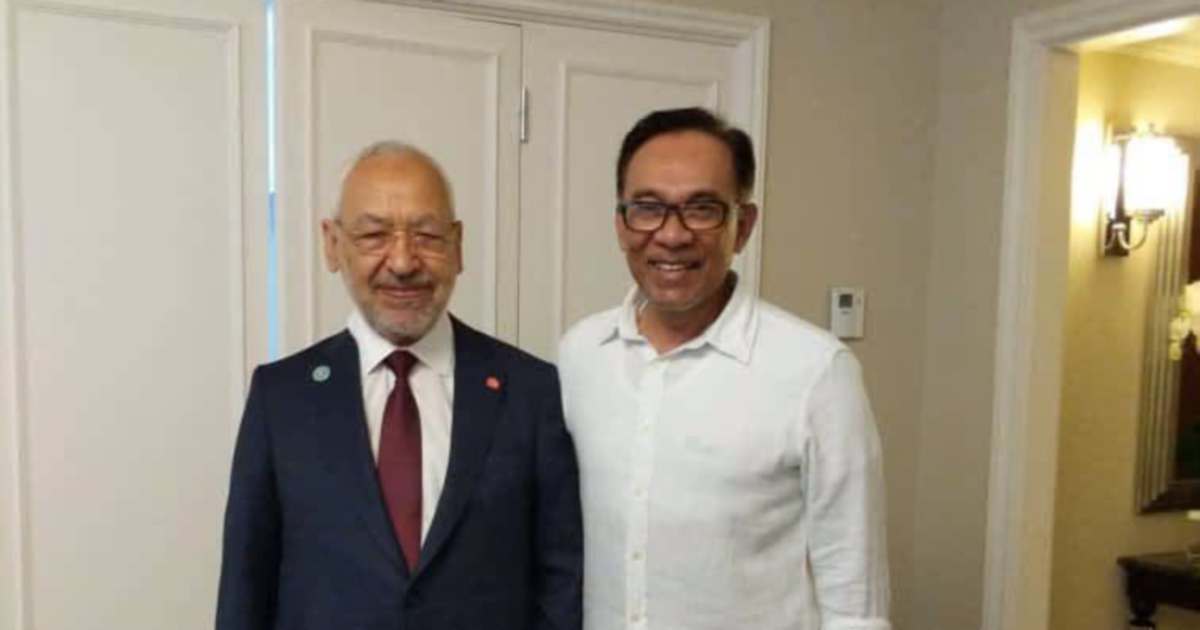
Prime Minister Datuk Seri Anwar Ibrahim has stepped into a delicate political situation by appealing directly to Tunisian President Kais Saied for the release of senior political figure Sheikh Rached Ghannouchi, framing his request around humanitarian rather than purely political grounds. The move reflects Malaysia's ongoing diplomatic engagement with Middle Eastern and North African nations whilst highlighting the broader regional and international concern surrounding Ghannouchi's detention and the circumstances surrounding his imprisonment.
Ghannouchi, a prominent Tunisian politician and long-standing leader of the Ennahda Movement, has become a focal point in Tunisia's turbulent political trajectory over recent years. His case encapsulates the tensions between judicial processes and international humanitarian standards that have drawn scrutiny from various quarters including human rights organisations, friendly governments, and regional observers concerned about the trajectory of governance in the North African nation.
Anwar's diplomatic intervention carries particular weight given Malaysia's standing within the Muslim-majority nations bloc and the Association of Southeast Asian Nations. As a leader who has himself experienced political imprisonment and navigated complex judicial proceedings, Anwar brings a distinct perspective to discussions concerning detention and due process. His personal history lends credibility and moral authority to appeals anchored in humanitarian considerations rather than partisan political positioning.
The timing of the letter underscores Malaysia's commitment to principled diplomacy that balances respect for national sovereignty with concern for individual welfare and adherence to international humanitarian standards. By choosing the humanitarian avenue rather than explicit political advocacy, Anwar's approach demonstrates diplomatic sophistication, reducing the likelihood of defensive reactions whilst keeping channels for dialogue open with the Tunisian administration.
Tunisia's political landscape has experienced significant upheaval in recent years, marked by constitutional changes, parliamentary dissolution, and shifting power dynamics between executive and legislative branches. Against this backdrop, the treatment of figures like Ghannouchi has attracted international attention as an indicator of Tunisia's commitment to rule of law, pluralism, and the protection of political freedoms. How Tunisian authorities respond to such appeals from fellow Muslim-majority nations carries implications for Tunisia's international standing and its relationships with regional and global partners.
Ghannouchi's detention represents a broader narrative about political transitions in the Arab world and the challenges facing nations attempting to balance stability with inclusive governance. Tunisia, long regarded as a relative success story in terms of democratisation within the region, faces scrutiny regarding its treatment of political opponents and the boundaries between legitimate security concerns and political suppression. International pressure, particularly from respected voices like Malaysia's prime minister, contributes to the global conversation about these standards.
Anwar's intervention also reflects Malaysia's pragmatic approach to foreign policy under his tenure as premier. Rather than issuing public condemnations that might be dismissed as interference, the personal letter to President Saied represents a quieter but potentially more effective form of engagement. This approach respects Tunisia's sovereign decision-making whilst making clear Malaysia's values and concerns regarding humanitarian treatment of detainees and political figures.
The appeal touches on universal humanitarian principles that transcend sectarian or national boundaries. Issues of health, access to legal representation, family contact, and conditions of detention are matters that international humanitarian law and numerous UN conventions address. By grounding his request in these universal considerations, Anwar positions the appeal beyond partisan politics and in the realm of shared human values that most nations formally espouse.
For Malaysia specifically, this diplomatic gesture reinforces the country's identity as a voice for developing nations and Muslim-majority countries in international forums. It demonstrates that Malaysian foreign policy under Anwar's leadership seeks to balance domestic priorities with meaningful engagement on issues of global significance, particularly those affecting fellow Muslim nations and their citizens' fundamental rights and wellbeing.
The response from Tunisia to such a high-level appeal will be closely monitored by diplomatic observers and human rights advocates alike. It will signal Tunisia's openness to international dialogue, its assessment of Ghannouchi's case, and the broader trajectory of political freedoms within the country. Whether Anwar's appeal influences Tunisia's decision remains to be seen, but the act of making such an intervention publicly known ensures that international attention remains focused on Ghannouchi's situation and conditions.
From a Southeast Asian perspective, Anwar's engagement with Tunisian affairs exemplifies how regional leaders increasingly extend their diplomatic reach beyond traditional bilateral partnerships to address matters of principle affecting the wider Muslim world and international community. This interconnected approach to diplomacy reflects the modern reality where leaders must balance regional concerns with broader global humanitarian commitments.

