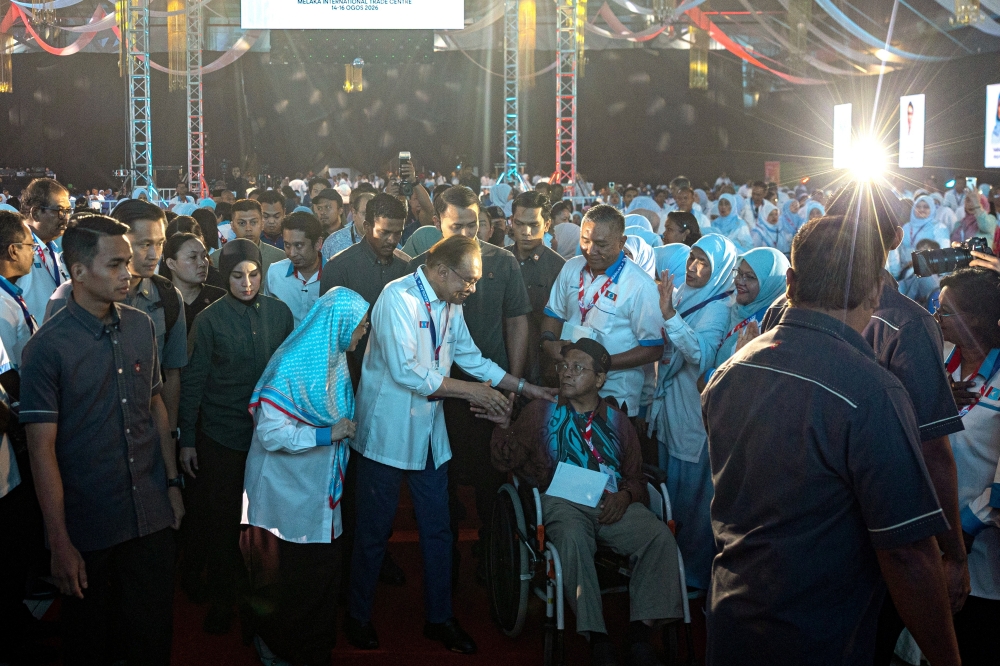
Prime Minister Datuk Seri Anwar Ibrahim has instructed PKR party delegates that future decisions regarding Umno must be anchored in the interests of ordinary Malaysians rather than driven by sentiment or historical grievances. Speaking to the party faithful in Melaka, the PKR president emphasised that political decisions of such magnitude cannot afford to be shaped by anger, however justified that emotion might feel in the context of Malaysia's turbulent post-independence political history.
Anwar's remarks reflect a significant maturation in the approach to coalition politics that has defined Malaysian governance since the 2018 election upheaval. The tension between PKR's ideological positioning and the pragmatic necessity of working with former rivals represents one of the defining contradictions of contemporary Malaysian politics. By explicitly urging restraint and rationality, Anwar appears to be steeling his party against internal pressure that might otherwise push for more confrontational stances toward the country's longest-ruling party.
The Umno question has proven persistently divisive within Pakatan Harapan and the broader reform movement. For decades, opposition parties built their political identity partly on resistance to Umno's decades-long dominance, making cooperation with the party a conceptually difficult transition for many grassroots activists and party members. Anwar's intervention suggests he recognises that emotional attachments to past rivalries could undermine the practical governance requirements of the present moment, and he is attempting to reframe the discussion in utilitarian terms.
This positioning carries implications for Malaysia's political stability heading into coming years. The strength of PKR as a coalition partner depends partly on its ability to manage internal coherence, particularly when navigating complex relationships with partners like Umno. Party delegates might harbour varying views about the appropriateness of collaboration, and Anwar's emphasis on welfare metrics rather than sentiment suggests he intends to evaluate any future Umno engagement through the lens of concrete policy outcomes and benefits to constituents.
The underlying dynamic at play reflects broader questions about whether Malaysia's political system can move beyond the zero-sum mentality that has historically characterised competition between Umno and its opponents. For Malaysian voters, the transition from ideologically pure opposition politics to coalition governance has required significant adjustment. By framing decisions around public interest rather than party pride or historical scores, Anwar is attempting to model a more mature form of political discourse, one oriented toward measurable outcomes rather than symbolic victories.
Anwar's message also addresses internal party management, particularly the generational tension within PKR between older cadres for whom anti-Umno sentiment represents formative political experience and younger members evaluating political relationships on contemporary terms. The Prime Minister's insistence that decisions be grounded in welfare considerations rather than anger suggests an understanding that unchecked emotional responses could fracture coalition cohesion at crucial junctures.
The Melaka gathering itself carries significance within PKR's organisational calendar, providing a venue where the party reasserts its strategic direction and leadership priorities. Anwar's choice to emphasise rational decision-making on so sensitive a topic indicates his concern that without clear guidance, various factions might pursue contradictory approaches to Umno, creating public messaging problems and coalition instability.
Regionally, Malaysia's experience with coalition politics carries relevance for other Southeast Asian democracies grappling with the challenge of translating electoral victory into sustained governance. The ability to work across historical divides while maintaining party identity represents a sophisticated political skill that many systems struggle to develop. Anwar's intervention suggests PKR is attempting to institutionalise this capability, embedding it into party culture rather than treating it as temporary pragmatism.
For voters and businesses observing Malaysian politics, the Prime Minister's remarks offer some reassurance that major political decisions affecting national direction will be evaluated against practical criteria rather than driven by ideological absolutism or personal animosity. This matters because it theoretically constrains the range of disruptive policy reversals that might otherwise occur as different coalition partners gain or lose influence.
The challenge Anwar faces is ensuring that his message resonates through party structures and actually influences behaviour at grassroots levels where actual decisions about Umno engagement occur. Party delegates may intellectually accept that welfare considerations should drive political calculations, but translating this into consistent action across thousands of party activists represents a different proposition entirely.
Moving forward, any concrete decisions regarding Umno will be interpreted partly through the lens of Anwar's Melaka remarks. If PKR pursues collaborative initiatives with Umno, party members will either view these as consistent with the welfare-focused framework the Prime Minister articulated, or they will question whether other considerations—factional calculations, leadership positioning, or hidden agreements—actually determined the outcome. The credibility of Anwar's message depends on whether subsequent actions appear consistent with the principle he has enunciated.

