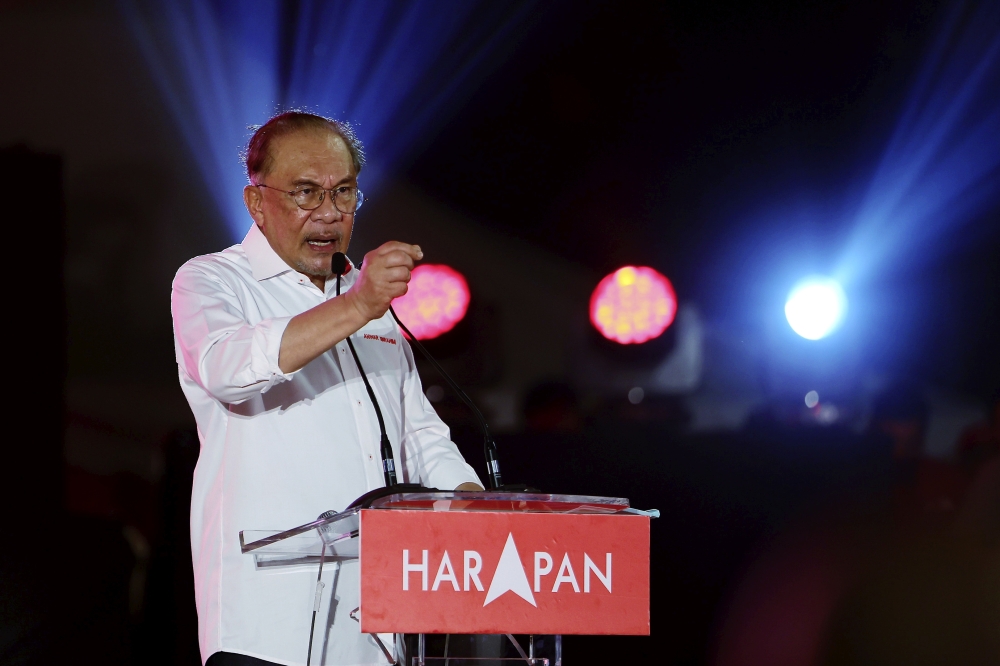
Prime Minister Datuk Seri Anwar Ibrahim is commencing an intensive campaign push through Negeri Sembilan today, with four separate events scheduled across the state designed to energise grassroots support and consolidate backing for his administration. The multiple rallies represent a significant show of political force in a state that has historically served as a bellwether for national sentiment, underscoring the government's determination to maintain momentum in a politically fluid landscape.
The scale and scope of today's itinerary signal that Seremban and surrounding constituencies remain central to the government's broader electoral calculations. By concentrating four events into a single day, Anwar's team is demonstrating intensive engagement with local communities rather than the more measured approach sometimes taken in less strategically important regions. This approach reflects the recognition that Negeri Sembilan, with its mixed urban and rural demographics, provides a microcosm of broader Malaysian political dynamics that extend across class and geographic lines.
For Malaysian observers tracking political momentum, such campaign tours serve multiple purposes beyond their immediate electoral function. They allow party strategists to gauge grassroots sentiment in real time, test messaging that may later be deployed nationally, and strengthen organizational networks that have sometimes atrophied during periods of governance focus. The timing of this inaugural Negeri Sembilan campaign also carries significance given the broader political environment—a moment when the administration faces competing pressures from coalition partners, economic headwinds, and opposition mobilization efforts.
Negeri Sembilan's political composition presents particular challenges and opportunities for any ruling coalition. The state encompasses constituencies with distinct political identities: some strongly aligned with federal government partners, others displaying persistent opposition leanings, and several remaining genuinely competitive. By visiting multiple locations in rapid succession, Anwar's campaign apparatus can address these varied constituencies with tailored messaging while maintaining the appearance of unified, decisive leadership. This granular approach to political campaigning has become increasingly important as voter volatility has increased across Malaysia.
The strategic importance of Anwar's presence cannot be overstated in the current Malaysian political context. As Prime Minister, his physical appearance at campaign events carries symbolic weight that extends beyond typical party political activity—it signals government investment in specific regions and implicitly affirms the government's confidence in local leadership structures. For local elected officials and party machinery, his attendance provides validation and organizational momentum that translates into improved volunteer recruitment and donor enthusiasm.
Regional implications of this campaign push extend beyond state boundaries. Negeri Sembilan's political trajectory influences perceptions across the entire central region of Peninsular Malaysia, affecting how voters in neighbouring states assess the government's political health and future viability. A successful campaign series here may generate positive reverberations in adjacent constituencies, while any perceived weaknesses could have dampening effects on government support across a wider area. This reality ensures that both the government and opposition treat Negeri Sembilan contests with particular strategic attention.
The four-event structure also reflects evolved thinking about campaign efficiency in the digital age. Rather than relying solely on mass rallies, modern political campaigns blend large public events with targeted messaging, social media amplification, and strategic media coverage. Each of today's events will likely generate content for digital distribution, extending their reach far beyond those physically present. This multiplicative effect means the campaign's impact potentially influences voter perceptions throughout the state and beyond, regardless of physical attendance figures.
From an organizational perspective, executing four separate campaign events in a single day demands considerable logistical sophistication. Coordination across multiple venues, ensuring adequate security, arranging transportation and crowd management, and coordinating media coverage all represent significant operational challenges. The government's capacity to execute such an agenda successfully demonstrates the administrative infrastructure supporting the Prime Minister's office and affiliated campaign machinery—an implicit message about institutional competence that voters may consciously or subconsciously register.
For opposition parties operating in Negeri Sembilan, Anwar's intensive campaign presence represents both competitive pressure and strategic opportunity. The opposition will likely counter-program with their own events, attempting to demonstrate comparable organizational capacity and public support. This competitive dynamic typically benefits voters, who gain opportunities to directly engage with multiple political options and test arguments from competing camps. However, the government's ability to mobilize the Prime Minister's presence grants inherent structural advantages in media access and organizational resources.
The domestic economic context adds another layer to this campaign initiative's significance. With Malaysian consumers navigating inflationary pressures and concerns about employment security, Anwar's campaign messaging will likely emphasize government economic management achievements while acknowledging challenges and outlining future recovery plans. How effectively the government articulates economic narratives in settings like Negeri Sembilan will meaningfully influence public confidence in the administration's direction and competence heading into future electoral contests.
Looking forward, today's campaign tour represents the opening phase of what will likely be sustained political engagement with Negeri Sembilan across coming months. The state's electoral significance ensures that both government and opposition will invest substantial resources in voter outreach, candidate development, and constituency organization. For Malaysian voters, this intensifying political engagement offers opportunities to directly assess the government's responsiveness to local concerns and compare its vision with opposition alternatives—a process that ultimately shapes the nation's political trajectory.

