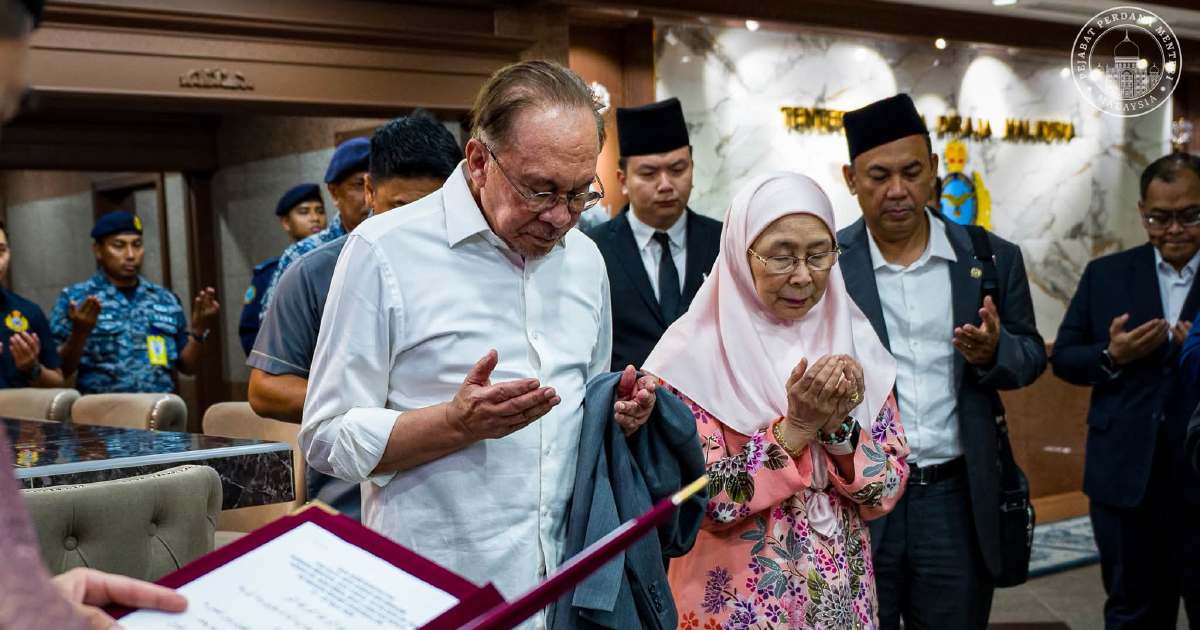
Prime Minister Datuk Seri Anwar Ibrahim has arrived in Bandar Seri Begawan for a two-day working visit centred on attending the 27th Annual Leaders' Consultation, a high-level bilateral engagement that reflects the depth of Malaysia's relationship with its smallest ASEAN neighbour. The visit underscores the continued importance both nations place on high-level dialogue to navigate shared challenges and capitalise on mutual opportunities across political, economic, and cultural dimensions.
The Annual Leaders' Consultation represents one of the most significant institutional mechanisms through which Malaysia and Brunei coordinate on matters of strategic importance. Held annually and alternating between the two capitals, the forum has evolved into an essential platform for the two heads of government to discuss bilateral affairs, regional developments, and shared priorities within ASEAN. The 27th iteration of this consultation highlights the resilience and maturity of a partnership that has weathered various geopolitical shifts over the decades.
Malaysia and Brunei share a complicated geographical and historical relationship that demands constant engagement at the highest levels. The two nations have unresolved maritime boundary questions and competing territorial claims, issues that require careful diplomatic management. The Annual Leaders' Consultation provides a structured setting where Prime Minister Anwar Ibrahim and his Bruneian counterpart can address these sensitivities while simultaneously identifying areas of tangible cooperation that benefit both populations.
Trade and economic cooperation likely feature prominently on the agenda for this round of discussions. Brunei remains a significant trading partner for Malaysia, and bilateral commerce encompasses sectors ranging from petroleum products to manufactured goods. Investment flows between the nations, particularly through regional firms and cross-border initiatives, contribute meaningfully to economic dynamism in both economies. The consultation provides an opportunity to identify bottlenecks in existing trade arrangements and explore new avenues for mutually beneficial commercial engagement.
Energy security represents another critical dimension of Malaysia-Brunei relations. Brunei's substantial oil and liquefied natural gas reserves have historically made it an important supplier to regional partners, including Malaysia. With energy demand across Southeast Asia projected to grow substantially in coming years, and with global energy markets experiencing volatility, discussions on stable and predictable energy partnerships between the two nations take on heightened significance. Supply agreements, exploration partnerships, and strategic coordination on energy policy likely constitute important topics during the consultation.
Beyond economics and resources, security and defence cooperation has deepened between Malaysia and Brunei in recent years. Maritime challenges including piracy, people smuggling, and illegal fishing affect both nations. Joint operations and coordinated surveillance in the Sulu and Celebes Seas have become increasingly important as both countries grapple with transnational threats. The consultation allows for frank assessment of these challenges and recalibration of security partnerships as circumstances evolve.
Cultural and people-to-people linkages provide the human dimension of Malaysia-Brunei ties. Both nations share significant historical and cultural heritage, and substantial numbers of Bruneians work and study in Malaysia while Malaysians maintain long-established communities in Brunei. Educational exchanges, tourism promotion, and cultural programmes facilitate understanding and goodwill that reinforce governmental relationships. These connections often receive less media attention than high-level political negotiations, yet they provide the social foundation upon which state-to-state relations ultimately rest.
The timing of this consultation carries added significance given regional developments within ASEAN. The Association faces multiple pressures including great power competition, cyber threats, transnational organised crime, and climate change impacts that respect no borders. Malaysia and Brunei, as ASEAN members with distinct but complementary interests, benefit from regular strategic conversations that enable coordinated positions within ASEAN forums. Prime Minister Anwar Ibrahim's visit reflects Malaysia's commitment to strengthening institutions that bind Southeast Asian nations together at a moment when regional cohesion faces diverse strains.
For Malaysian stakeholders, the outcome of these consultations merits close attention. Investment communities monitor announcements regarding trade or investment frameworks. Fishing communities track developments in maritime agreements. Energy-dependent industries follow discussions on resource cooperation. The consultation's results, typically communicated through joint statements and ministerial briefings, provide signals regarding governmental priorities and future policy trajectories that ripple through both economies.
Prime Minister Anwar Ibrahim's personal attendance at the consultation demonstrates Malaysia's conviction that senior-level engagement remains irreplaceable despite advances in technology and communication. Video conferences and diplomatic cables cannot substitute for face-to-face discussions where leaders assess each other's sincerity, navigate sensitive issues, and forge personal understandings that facilitate problem-solving during inevitable disagreements. The two-day format allows for the kind of unhurried conversation that produces substantive outcomes.
The 27th Annual Leaders' Consultation encapsulates Malaysia's broader approach to diplomacy in Southeast Asia. Rather than viewing smaller neighbours through a lens of dominance, Malaysia increasingly treats engagement as reciprocal partnership where both parties benefit from cooperation and lose from confrontation. This philosophy, increasingly central to Malaysian foreign policy under Prime Minister Anwar Ibrahim's tenure, positions Malaysia as a constructive force that respects the sovereignty and agency of regional partners while pursuing legitimate national interests.
As Malaysia navigates an increasingly complex regional environment marked by competing strategic pressures and economic uncertainty, maintaining robust bilateral relationships with immediate neighbours becomes more rather than less important. The Brunei consultation, therefore, represents far more than routine diplomatic business. It constitutes a deliberate investment in stability and cooperation at a moment when regional partnerships require constant renewal and reinforcement to remain meaningful and productive.

