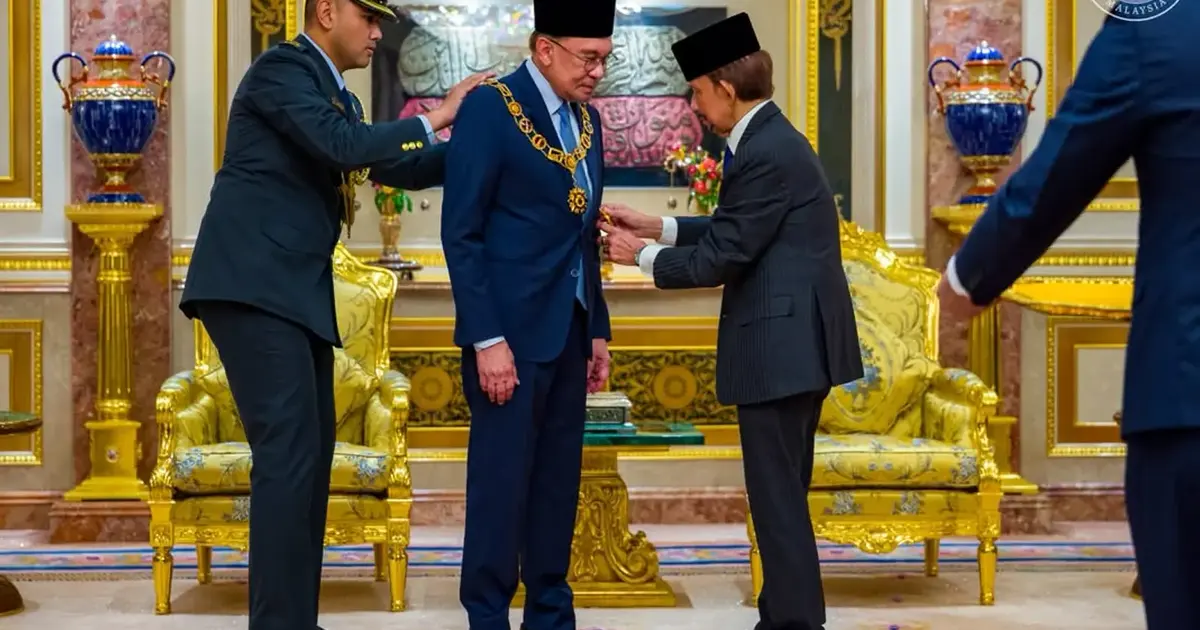
Prime Minister Anwar Ibrahim has received one of Brunei's most distinguished royal honours, an accolade that underscores the deepening bonds between Malaysia and the Sultanate. Sultan Hassanal Bolkiah conferred the Darjah Kerabat Laila Utama Yang Amat Dihormati, commonly abbreviated as D.K., upon Anwar during an official ceremony that reflects the bilateral respect and cooperation between the two neighbouring Southeast Asian nations.
The bestowal of this prestigious decoration carries significant diplomatic weight in the region. Such honours are typically reserved for foreign dignitaries and leaders who have made exceptional contributions to strengthening ties with Brunei or who embody the values the sultanate holds dear. The recognition of Anwar follows his ongoing efforts to consolidate Malaysia's relationships throughout Southeast Asia, particularly with fellow members of the Association of Southeast Asian Nations.
Brunei, as one of the wealthiest nations in Southeast Asia owing to its vast hydrocarbon reserves, maintains a carefully calibrated foreign policy focused on maintaining stability and harmony among its neighbours. The sultanate's honours system reflects this diplomatic strategy, with such awards serving as tangible expressions of goodwill and recognition toward international leaders. Anwar's receipt of this decoration suggests Sultan Hassanal Bolkiah's confidence in the Malaysian leader's direction and commitment to regional cooperation.
The Darjah Kerabat Laila Utama represents one of the pinnacle awards in Brunei's honours hierarchy. Being conferred such a decoration is uncommon and typically requires demonstrated commitment to fostering the country's international relationships or supporting the sultanate's interests and values on the world stage. For Malaysian leadership, acceptance of such honours strengthens the personal diplomatic ties between heads of state and can facilitate smoother cooperation on matters of mutual interest.
Malaysia and Brunei share significant common ground as ASEAN members with shared cultural and religious heritage. Both nations are predominantly Muslim and maintain Islamic governance frameworks, though Brunei's implementation is notably more comprehensive. They also share maritime boundaries and have collaborated on various regional security and economic initiatives. The recognition Anwar has received may signal Brunei's satisfaction with Malaysia's approach to regional issues and bilateral relations under his administration.
The timing of such honours often carries diplomatic significance. Awards conferred during official visits or state ceremonies are frequently linked to broader discussions about cooperation, trade, or diplomatic alignment on regional matters. For Anwar, accepting this decoration from Sultan Hassanal Bolkiah reinforces Malaysia's standing within ASEAN and suggests harmonious relations at the highest levels of government between Kuala Lumpur and Bandar Seri Begawan.
From a Malaysian perspective, such international recognition serves multiple purposes. It enhances Anwar's personal standing as a regional statesman, validates his administration's diplomatic initiatives, and signals to the Malaysian public that the country maintains respected relationships with its neighbours. In the context of ASEAN dynamics, where consensus and mutual respect among member states remain crucial, such public gestures of honour carry weight beyond their ceremonial nature.
Brunei's decision to honour the Malaysian Prime Minister also reflects the sultanate's assessment of regional stability and ASEAN's collective interests. As a smaller nation with significant economic interests, Brunei places considerable emphasis on maintaining cooperative relationships with larger regional players like Malaysia. Such honours can be strategic instruments for ensuring that relationships remain cordial and productive across multiple sectors including trade, maritime security, and cultural exchanges.
The broader context of Malaysia-Brunei relations includes cooperation on various fronts. Both nations have engaged in discussions regarding maritime boundaries, economic partnerships, and participation in regional institutions. Brunei's recognition of Anwar through this decoration may facilitate future cooperation on issues ranging from transnational crime and terrorism to climate change and sustainable development, challenges that affect both nations.
For Southeast Asian observers and analysts, such ceremonies demonstrate the continued importance of personal relationships and protocol in regional diplomacy. While multilateral forums and economic agreements provide the formal structure for cooperation, the recognition accorded to individual leaders through national honours systems remains a meaningful indicator of the health and trajectory of bilateral relationships. Anwar's decoration thus serves as a barometer of Malaysia-Brunei ties during his tenure as Prime Minister.
The honour also underscores the role that ASEAN continues to play in regional identity and cooperation. Despite the community's acknowledged challenges and limitations, the continued emphasis by member states on according recognition to each other's leaders suggests a commitment to maintaining the association's foundational principle of mutual respect and non-interference in internal affairs. Such gestures, though ceremonial in appearance, reinforce the diplomatic norms that keep ASEAN functioning.
Moving forward, this recognition may serve as a foundation for enhanced cooperation between Malaysia and Brunei on emerging regional challenges. Whether in maritime governance, economic integration, or responses to transnational issues, the strengthened diplomatic goodwill represented by such honours can translate into practical collaboration. For Malaysian policymakers and observers, the conferment of this award represents validation of their regional diplomatic approach and an opportunity to deepen partnerships that serve national interests.

