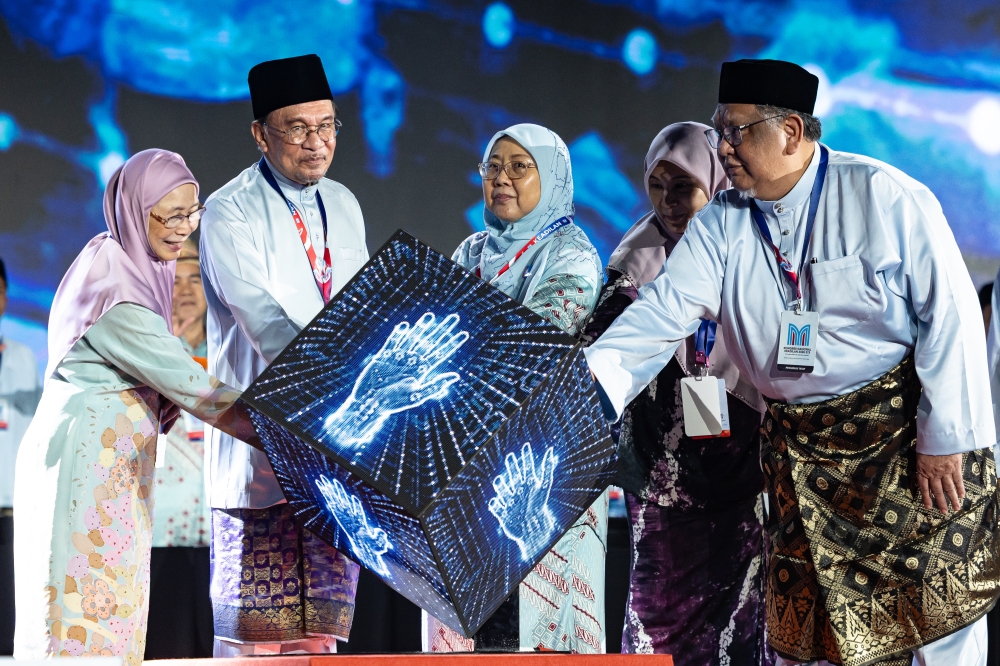
Prime Minister Datuk Seri Anwar Ibrahim has moved to counter mounting criticism about regional budget disparities by emphasizing that his Madani administration has meaningfully expanded federal allocations to Sabah, Sarawak, Kedah and Kelantan. Speaking in Melaka on August 15, the Prime Minister sought to demonstrate that the government's approach to fiscal distribution does not discriminate based on whether states are governed by ruling coalition partners or opposition parties, a distinction that has become increasingly contentious in Malaysia's political landscape.
The assertion addresses a broader narrative that has gained traction among state governments and political commentators, particularly regarding whether Putrajaya maintains equitable funding mechanisms across all regions regardless of partisan alignment. The reality of budget allocation has become a barometer of federal-state relations, influencing development trajectories and public sentiment in states where opposition coalitions hold electoral mandates. Anwar's statement represents an attempt to preempt further accusations of favoritism while simultaneously positioning the Madani government as principled in its commitment to national unity and equitable development.
Sabah and Sarawak occupy unique constitutional positions as East Malaysian states, having joined Malaysia as relatively equal partners with substantial powers retained under the Federal Constitution. Both territories have historically negotiated for enhanced resource flows from Kuala Lumpur, arguing that geographical isolation, developmental deficits, and the demands of administering vast territories justify preferential treatment. The inclusion of these states in Anwar's announcement suggests a deliberate strategy to reinforce federal-state cooperation in Malaysia's easternmost regions, where resource management decisions carry implications for economic diversification and social stability across Borneo.
Kedah and Kelantan present a different configuration entirely. Both states are currently governed by opposition coalitions—Kedah by Perikatan Nasional and Kelantan by PAS, which while technically part of the Federal Government's broader coalition architecture, maintains considerable operational autonomy and has historically maintained adversarial relationships with the federal apparatus. The inclusion of these states in Anwar's budget narrative is particularly significant because increased allocations to opposition-controlled territories serve multiple political functions: they demonstrate magnanimity toward rival administrations, provide empirical counterargument to claims of partisan budgeting, and theoretically insulate the federal government from accusations of using fiscal levers as political weapons.
The Madani government's tenure has been marked by efforts to reframe the political settlement underlying Malaysian federalism. Unlike its immediate predecessor, which emphasised partisan consolidation, the current administration has rhetorically committed to inclusive governance structures that transcend coalition boundaries. This philosophical reorientation, however, must confront entrenched skepticism, particularly among opposition-controlled states that have experienced marginalization during previous administrations and harbor reasonable doubts about the sustainability of equitable treatment as political circumstances shift.
Understanding the mechanics of budget allocation requires appreciating the distinction between revenue allocations to state governments and federal project expenditures within state territories. The former directly enhances state administrative capacity and discretionary spending, while the latter can be characterized as federal infrastructure investment that may or may not translate into expanded state government capabilities. Anwar's assertions require scrutiny regarding which allocation categories have expanded and whether increases represent genuine augmentation relative to population size, development needs, or previous baselines. Without granular fiscal data disaggregated by state and allocation category, public verification remains constrained.
For Malaysian readers, particularly those in East Malaysia and the opposition-governed peninsular states, the implications of federal allocation decisions extend beyond budgetary abstractions. Adequate federal funding enables state governments to invest in healthcare infrastructure, educational facilities, transportation networks, and administrative capacity that directly affect quality of life. In Sabah and Sarawak, where vast geographical areas must be served by limited state budgets, federal supplementation proves critical for maintaining basic service delivery across remote communities. In Kedah and Kelantan, where opposition administrations have faced historical underfunding, genuine allocation increases represent opportunities to demonstrate that electoral choices do not trigger fiscal punishment.
The credibility of Anwar's claims will ultimately depend on transparent publication of comparative fiscal data across multiple budget cycles. Media and civil society scrutiny of allocation decisions serves an important democratic function by preventing governments from using rhetoric to mask partisan budgeting while generating statistical camouflage. The Madani government's willingness to commission independent audits and publish disaggregated budget documentation would substantially strengthen public confidence in assertions about equitable resource distribution.
Regional dynamics across Southeast Asia increasingly feature similar tensions around fiscal federalism and political pluralism. Countries including Indonesia, the Philippines, and Thailand have grappled with resource allocation disputes between central governments and regionally powerful entities. Malaysia's experience navigating these tensions while maintaining constitutional federalism provides instructive precedent for other states managing comparable challenges. Should the Madani government succeed in institutionalizing equitable allocation mechanisms that survive political transitions, it would establish meaningful governance innovation with regional significance.
The timing of Anwar's statement, emerging amid ongoing discussions about the nature of federal-state cooperation under the Madani framework, suggests deliberate positioning ahead of potential budget debates or renewed criticism from opposition-controlled territories. Whether increased allocations represent genuine policy reorientation or tactical budgetary repositioning will become evident through sustained observation of fiscal patterns across multiple budget cycles and comprehensive analysis of allocation documentation. For now, the Prime Minister's assertions establish a benchmark against which subsequent government performance regarding regional equity can be measured and evaluated.

