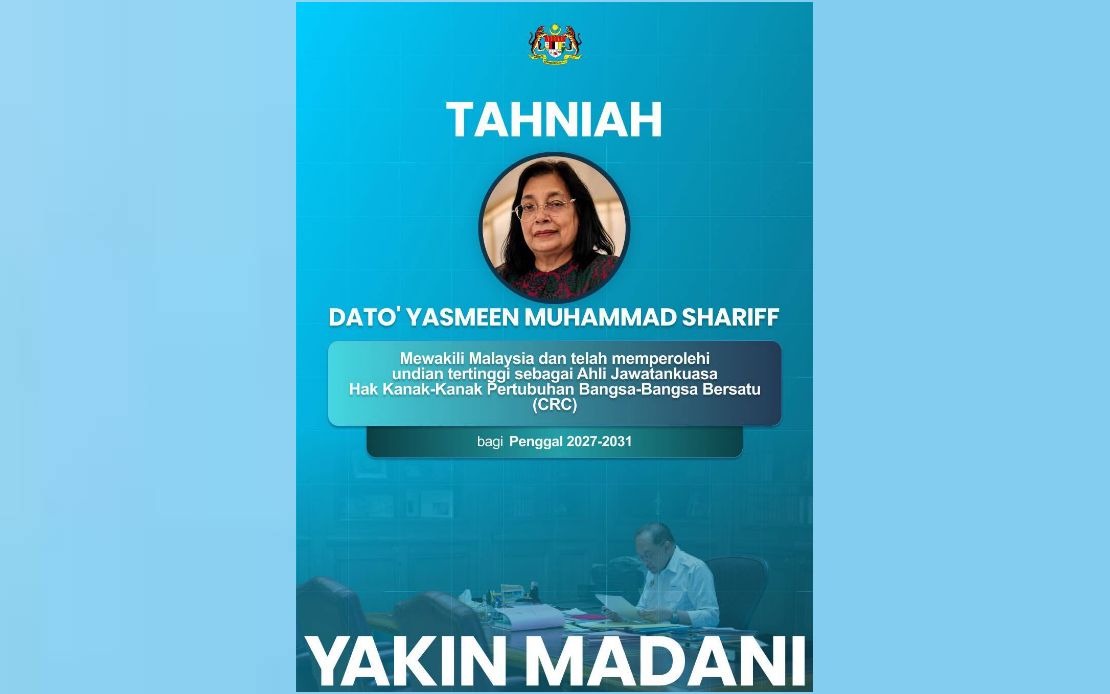
Prime Minister Datuk Seri Anwar Ibrahim has publicly commended Datuk Yasmeen Muhamad Shariff following her successful election to the United Nations Committee on the Rights of the Child, a development the premier characterised as a significant diplomatic achievement for Malaysia. The election, which concluded on Tuesday at UN headquarters in New York during the 21st Meeting of States Parties to the Convention on the Rights of the Child, saw Yasmeen secure 136 votes from 189 participating nations—a commanding endorsement that underscores international recognition of her expertise and credibility.
Anwar's congratulatory remarks, shared on social media, emphasised that the election outcome transcends individual accomplishment, instead representing a broader validation of Malaysia's dedication to advancing children's rights on the global stage. He framed the achievement as evidence of the international community's confidence in the nation's contributions to multilateral engagement, suggesting that such recognition strengthens Malaysia's soft power positioning amid rising competition for influence in global governance structures. The Prime Minister also extended appreciation to the Ministry of Women, Family and Community Development for its support of Yasmeen's candidacy and the broader advocacy efforts that made this success possible.
Yasmeen's appointment to the committee for the 2027-2031 term carries particular significance given her track record in child rights advocacy. This marks her second election to the prestigious body, having previously served from 2013-2017, demonstrating sustained confidence from the international community in her work and judgment. Her return to the committee after a decade reflects not only her personal standing but also Malaysia's consistent engagement with UN mechanisms focused on child protection, welfare, and development issues—priorities increasingly important to regional and global policymakers.
The UN Committee on the Rights of the Child functions as a monitoring mechanism that reviews how nations implement the Convention on the Rights of the Child, the most widely ratified human rights treaty globally. Members serve in their individual capacity as independent experts rather than as government representatives, allowing them to provide impartial assessments of state compliance with international standards. This distinction is crucial for maintaining the committee's credibility and independence, particularly when evaluating sensitive issues related to child labour, trafficking, education, and juvenile justice systems.
As an independent expert on the committee, Yasmeen will participate in examining periodic reports submitted by countries, offering concluding observations and recommendations aimed at strengthening protections for children. Her role will involve engaging with governments, civil society organisations, and affected communities to understand implementation challenges and identify best practices. For Malaysia, her presence on the committee provides both an opportunity to contribute meaningfully to international norm-setting and a platform to showcase domestic progress on child welfare initiatives.
Malaysia's successful placement of a candidate reflects the country's strategic prioritisation of UN engagement and multilateral diplomacy. Southeast Asian nations increasingly recognise that active participation in specialized UN bodies enhances their influence over emerging international standards and policies that ultimately affect their populations. The region faces complex challenges related to child protection, including trafficking networks, educational access disparities, and protection of vulnerable migrant children, making informed committee participation valuable for advancing regionally-relevant solutions.
Anwar's statement additionally signalled Malaysia's broader ambition to elevate its standing in international affairs and secure greater representation in UN bodies. He framed Yasmeen's election as a catalyst for continued advancement, suggesting the government views this as momentum to pursue additional positions in other UN mechanisms and international organisations. Such strategic positioning aligns with Malaysia's middle-power aspirations and its historical role as a constructive voice in global governance forums.
The election outcome also reflects effective diplomatic coordination between Malaysia's UN mission, the Ministry of Women, Family and Community Development, and other stakeholders who collectively supported Yasmeen's candidacy. Securing such a substantial vote margin—136 out of 189—indicates that Malaysia's diplomatic footwork successfully built cross-regional consensus, demonstrating the effectiveness of the country's engagement strategies within the UN system.
For the broader Southeast Asian context, Yasmeen's appointment carries implications for how regional concerns are voiced within UN spaces focused on children's rights. Southeast Asia faces distinct challenges including rapid urbanisation affecting child welfare, labour migration's impact on family structures, and varying levels of child protection infrastructure across nations. An independent expert with regional knowledge and credibility can help ensure that Asia-Pacific perspectives inform global child rights discourse and that recommendations from the committee acknowledge regional realities and capacities.
Looking forward, Yasmeen's 2027-2031 term will coincide with evolving international attention to children's digital rights, mental health, climate-related vulnerabilities, and pandemic-related educational disruptions—issues of acute concern across developing nations. Her participation will shape how these emerging priorities are integrated into the committee's work, potentially influencing Malaysia's own policy frameworks in response to international developments and best-practice recommendations.
The government's emphasis on this achievement also highlights its commitment to women's leadership in international affairs, with Yasmeen's appointment representing recognition of female expertise in policy domains traditionally dominated by male voices. This dimension adds significance beyond the technical accomplishment, aligning with broader Malaysian and UN efforts to ensure gender balance in multilateral governance structures.

