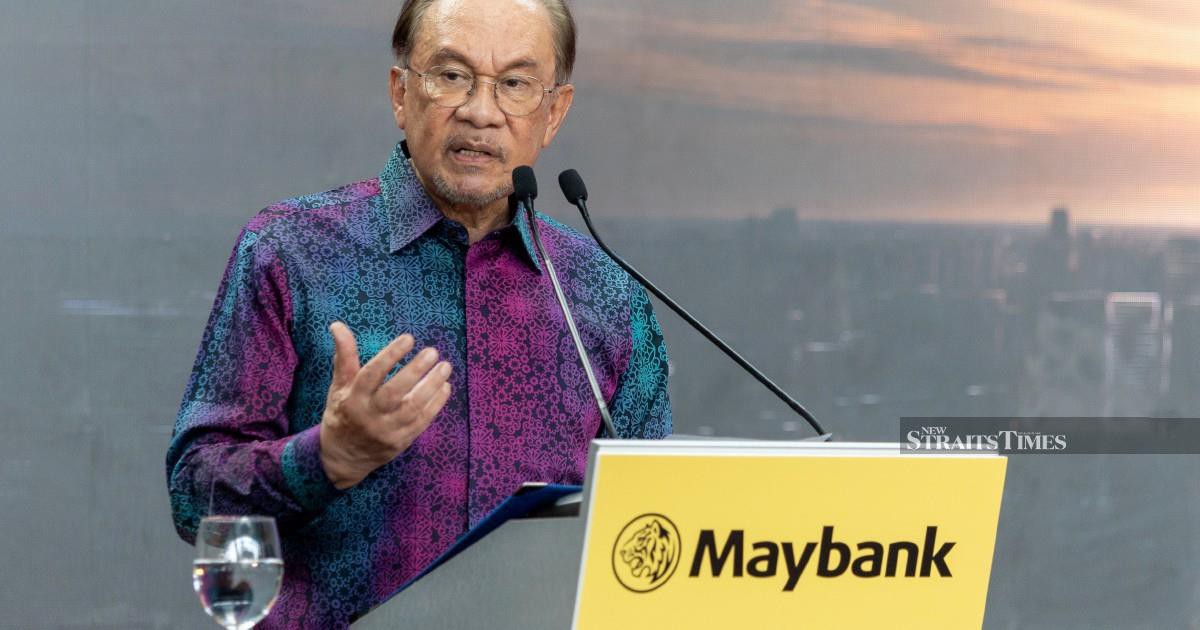
Prime Minister Datuk Seri Anwar Ibrahim has expressed strong appreciation for Maybank's remarkable evolution as it solidifies its standing among Asia's most influential financial institutions. The endorsement reflects the government's recognition of the banking sector's critical role in positioning Malaysia as a competitive hub within the broader Southeast Asian economic framework.
Maybank's journey from a domestic banking entity to a regional powerhouse represents a significant milestone for Malaysian finance. The institution has successfully expanded its footprint across Southeast Asia and beyond, establishing itself as a trusted partner for international and local stakeholders alike. This transformation demonstrates the capacity of Malaysian enterprises to compete effectively on a continental scale, a development that carries broader implications for the nation's economic strategy and competitiveness.
The Prime Minister's commendation underscores the government's commitment to nurturing homegrown financial champions capable of driving economic growth and regional integration. Maybank's expansion has created substantial employment opportunities throughout its operational territories and contributed meaningfully to Malaysia's foreign exchange earnings through its regional operations. The bank's success also strengthens Malaysia's influence within regional financial networks and institutions.
Maybank's position as a leading regional player provides Malaysian businesses with improved access to sophisticated financial services and cross-border transaction capabilities. This infrastructure benefit facilitates local enterprises seeking to expand operations internationally, reducing friction costs and improving competitiveness. For multinational corporations operating within the region, Maybank's comprehensive service offerings deliver operational efficiency and strategic advantages.
The bank's regional prominence also reflects deeper structural strengths within Malaysia's financial sector. The banking industry has demonstrated resilience through economic cycles, maintained prudent risk management standards, and adapted successfully to digital transformation demands. These characteristics position Malaysia's financial institutions favourably compared with counterparts in other developing economies.
Maybank's leadership extends across multiple business segments, including consumer banking, corporate finance, investment services, and treasury operations. This diversification enhances the institution's stability and generates multiple revenue streams, reducing vulnerability to sector-specific downturns. The bank's ability to serve clients across different markets and segments exemplifies sophisticated organisational capability.
Regional economic integration trends have benefited Maybank's expansion strategy significantly. The ASEAN Economic Community framework has created opportunities for financial institutions to streamline cross-border operations and offer integrated services to multinational clients. Maybank has positioned itself strategically to capitalise on these opportunities, expanding its network across member economies.
The bank's technology investments and digital capabilities have been instrumental in its competitive advancement. Maybank has embraced fintech innovations, mobile banking platforms, and data analytics to enhance customer experiences and operational efficiency. These investments align with broader global trends toward financial services digitalisation and position the institution advantageously for future market developments.
Maybank's corporate governance standards and regulatory compliance practices have earned recognition from international financial authorities and rating agencies. Maintenance of these elevated standards has strengthened stakeholder confidence and supported the bank's ability to raise capital in international markets at competitive terms. This reputation benefits not only Maybank but enhances Malaysia's credibility within global financial communities.
The bank's commitment to sustainable finance and environmental, social, and governance principles reflects evolving global expectations for institutional responsibility. Maybank's integration of ESG considerations into business operations aligns with international standards and positions the institution positively among environmentally and socially conscious investors. This orientation also demonstrates Malaysian financial leadership's engagement with contemporary economic imperatives.
Maybank's regional success generates positive externalities for Malaysia's broader economic agenda. The institution's prominence attracts international talent and investment flows, enhances the nation's profile within financial networks, and demonstrates the viability of Malaysian business models within competitive regional contexts. These developments contribute to an ecosystem supporting continued economic diversification and development.
Looking forward, Maybank's regional platform provides foundation for deepening financial interconnections throughout Southeast Asia. As regional economies integrate further and capital mobility increases, institutions like Maybank will facilitate these processes while capturing value from intermediation activities. The bank's continued evolution will likely shape Malaysia's financial sector trajectory for years ahead.
The Prime Minister's acknowledgment of Maybank's transformation reflects recognition that Malaysia's economic future depends on developing globally competitive institutions capable of capturing value throughout regional and international markets. Maybank exemplifies this capability, validating strategic approaches to nurturing financial sector champions and underscoring the government's commitment to supporting institutional development that advances national economic objectives.

