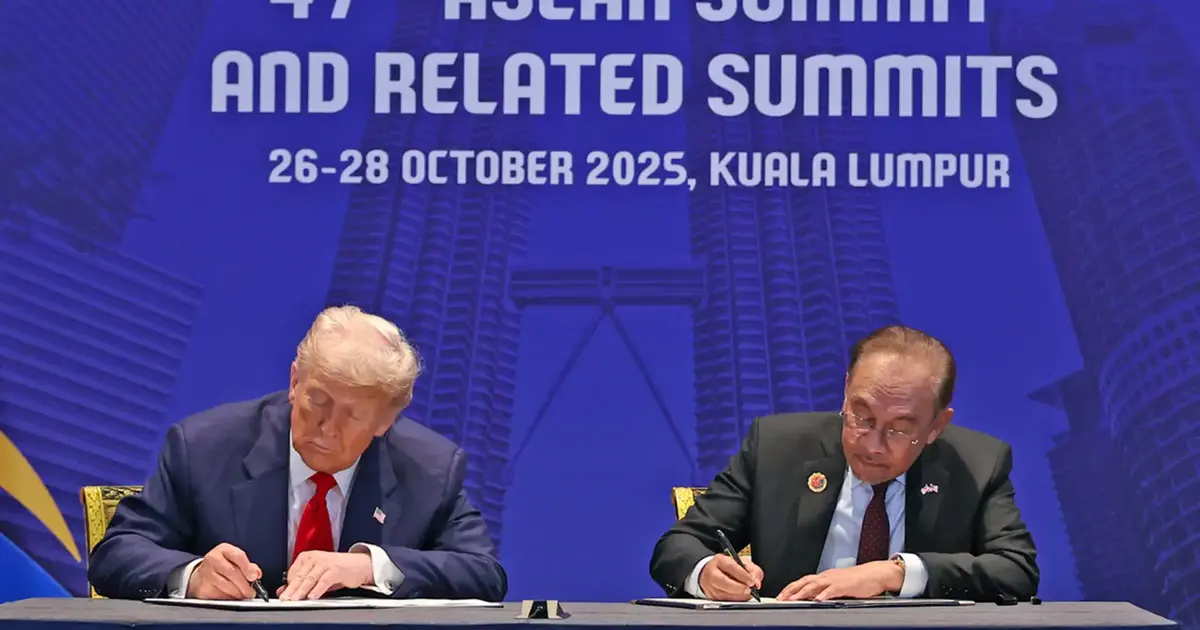
The administration of Prime Minister Anwar Ibrahim is taking aggressive legal steps to prevent opposition lawmakers from mounting a sustained parliamentary challenge to the recently negotiated Malaysia-US reciprocal trade agreement. The government has submitted an application seeking to have the MPs' lawsuit dismissed outright, signalling its determination to defend the deal against judicial scrutiny that could complicate bilateral economic negotiations.
The opposition MPs' legal strategy reflects deeper concerns within Parliament about executive authority over major trade commitments and the extent to which such agreements should face legislative review before implementation. Their lawsuit represents one of the most significant parliamentary pushbacks against a trade deal in recent Malaysian history, raising questions about democratic oversight mechanisms for high-stakes economic policy.
Despite the government's bid to strike out the case, the opposition lawmakers have escalated their campaign by filing a separate constitutional application. This application specifically requests that the Federal Court examine fundamental questions about the constitutional framework governing how Malaysia enters into reciprocal trade agreements with foreign nations. The move circumvents lower court procedures and takes their challenge directly to Malaysia's apex judicial body.
Constitutional referrals of this nature are relatively uncommon in Malaysian legal practice and signal that the opposition views this matter as involving questions of significant constitutional importance. The Federal Court would need to determine whether existing parliamentary procedures for ratifying trade agreements align with constitutional requirements for legislative oversight. Such a determination could have ramifications far beyond this single agreement, potentially reshaping how future trade deals are validated.
The Malaysia-US trade pact carries substantial economic implications for Southeast Asia's third-largest economy. As a reciprocal agreement, it potentially affects tariff structures, investment protections, and market access across multiple sectors. For Malaysian businesses engaged in regional trade, the outcome of this legal dispute could influence how quickly and comprehensively the agreement takes effect, directly impacting supply chains and competitive positioning.
The government's aggressive legal posture reflects confidence in its constitutional position but also acknowledges the seriousness with which the opposition is pursuing this challenge. By seeking to strike out the case, the administration aims to avoid prolonged litigation that could delay implementation and complicate Malaysia's relationship with the United States at a time when regional economic cooperation remains strategically important.
The intersection of trade policy and constitutional law has become an increasingly contentious arena across democratic nations. Malaysia's experience mirrors comparable disputes in other countries where legislatures have sought greater involvement in negotiating or ratifying trade agreements. The tension reflects legitimate questions about how much executive discretion is appropriate when negotiating deals that affect domestic economic arrangements and employment patterns.
Opposition voices have argued that Parliament should exercise meaningful review of reciprocal trade agreements before implementation, particularly when such deals involve tariff modifications or regulatory harmonisation that affect domestic industries. Their legal challenge essentially contests whether the current executive-dominated procedure satisfies constitutional requirements for democratic accountability and legislative participation in matters affecting the national economy.
The timing of this dispute is significant for regional trade dynamics. Southeast Asian economies are increasingly active in negotiating bilateral and regional trade agreements as part of broader geopolitical positioning. How Malaysia's courts ultimately resolve questions about constitutional requirements for trade agreement ratification could influence not only future US negotiations but also Malaysia's approach to similar agreements with other major trading partners including China, the European Union, and ASEAN neighbours.
If the Federal Court accepts the constitutional referral and issues a judgment requiring enhanced parliamentary procedures for future trade agreements, the Malaysian government may face procedural obligations that could slow deal-making and complicate executive flexibility in international negotiations. Conversely, if the court upholds the government's position, it would reaffirm executive primacy in foreign economic policy, though this outcome might not eliminate ongoing parliamentary dissatisfaction with trade arrangements.
The political dimensions of this dispute extend beyond constitutional technicalities. Opposition MPs view the challenge as asserting Parliament's proper institutional role against executive overreach, while the government portrays the challenge as unnecessary obstruction of beneficial economic policy. This fundamental disagreement about institutional roles reflects broader tensions in Malaysia's political system regarding the balance between executive efficiency and legislative oversight.
As both applications proceed through Malaysia's legal system, the government and opposition remain locked in competing visions of how trade policy should operate within the constitutional framework. The outcome will likely determine not just the fate of the Malaysia-US agreement, but also establish precedents that shape how Malaysia navigates international economic engagement for years to come.

