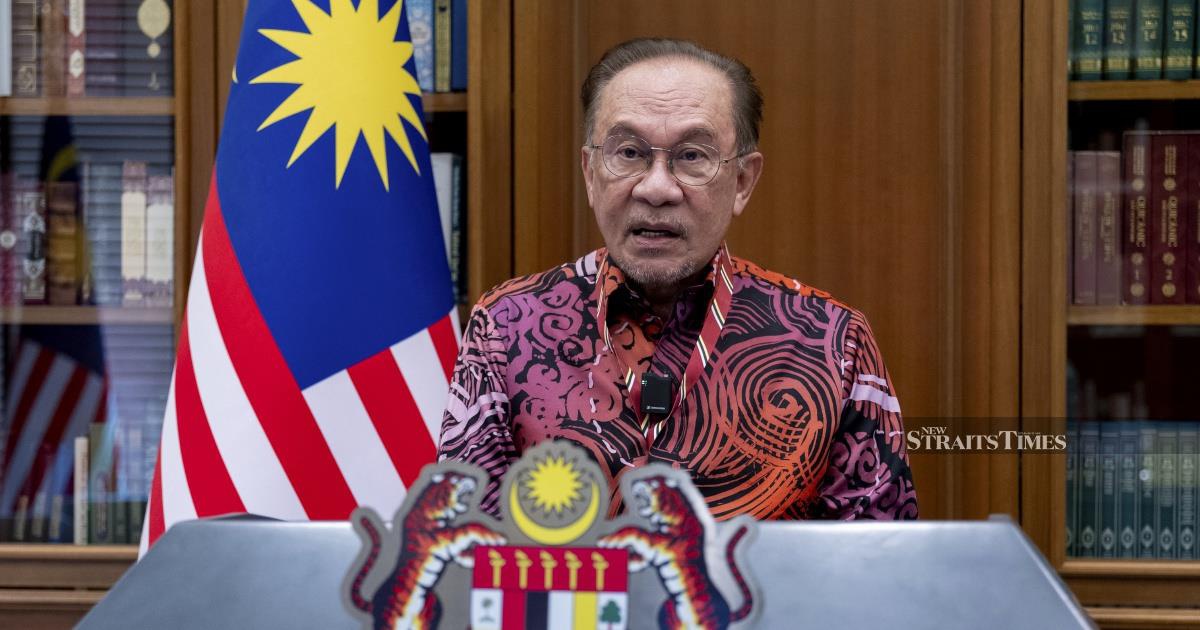
Prime Minister Datuk Seri Anwar Ibrahim has conveyed official congratulations to the Chinese government marking the 105th founding anniversary of the Chinese Communist Party, a gesture that reflects the ongoing diplomatic engagement between Kuala Lumpur and Beijing across political and institutional channels.
The milestone, commemorated annually on July 1st, holds significant symbolic weight within China's political calendar as it marks more than a century since the party's establishment in 1921. Such acknowledgements from foreign leaders, particularly those heading Southeast Asian nations, have become customary diplomatic practice, serving as a formal recognition of a major trading partner's institutional anniversaries and the legitimacy of its governing structures.
Malaysia and China maintain one of the most substantive bilateral relationships in the region, extending across multiple domains including trade, investment, infrastructure development, and strategic cooperation. The two nations have deepened their engagement particularly through the Belt and Road Initiative, which has facilitated substantial Chinese investment in Malaysian ports, rail networks, and industrial projects. This economic interdependence creates a natural imperative for Malaysian leadership to acknowledge significant anniversaries and maintain cordial institutional relationships.
Anwar's message arrives at a juncture when Malaysia is carefully calibrating its regional positioning amid broader geopolitical shifts in Asia. The prime minister has consistently advocated for pragmatic economic partnerships while seeking to strengthen ties with multiple major powers. China's role as Malaysia's largest trading partner and a crucial source of foreign direct investment makes such diplomatic courtesies routine components of Malaysia's broader foreign policy framework.
The timing of anniversary acknowledgements carries particular resonance in Southeast Asian politics, where leaders navigate delicate balances between maintaining relationships with major powers while preserving strategic autonomy. Malaysia's approach has generally emphasised economic pragmatism and institutional respect, avoiding unnecessary diplomatic tensions while pursuing national interests through multilateral and bilateral channels.
China's development since the Communist Party's founding has transformed it into a global economic powerhouse and a defining influence on regional stability and prosperity. For Malaysia, managing this relationship effectively remains central to achieving economic growth objectives, particularly given Beijing's significant presence across critical sectors including manufacturing, telecommunications, energy, and finance. The formal recognition of institutional milestones represents a baseline expectation in contemporary state-to-state relations.
Anwar's administration has inherited a complex set of bilateral commitments from previous governments, including several major infrastructure projects jointly undertaken by Malaysian and Chinese entities. Maintaining positive diplomatic messaging serves to sustain momentum across these initiatives while signalling to Chinese policymakers Malaysia's continued interest in deepening mutually beneficial cooperation.
The gesture also reflects broader Southeast Asian diplomatic practice, where anniversary congratulations from regional leaders have become standard protocol. Through such messages, Malaysia reinforces its position as a reliable and respectful partner that values institutional relationships and recognises shared interests in regional stability and economic development.
Looking forward, Malaysia's strategic partnership with China will likely continue evolving as both nations navigate technological innovation, climate transition, and shifting global trade patterns. Maintaining formal diplomatic courtesy through such acknowledgements helps preserve the institutional goodwill necessary for advancing cooperative agendas across these complex domains.
For Malaysian observers and policymakers, Anwar's message underscores the government's commitment to pursuing pragmatic engagement with major regional and global powers. This approach seeks to maximise economic benefits from diversified partnerships while maintaining strategic coherence within Malaysia's broader foreign policy orientation. The anniversary congratulation, while ceremonial in nature, carries significance within the intricate landscape of state-to-state diplomacy that shapes Malaysia's regional role and economic prospects.

