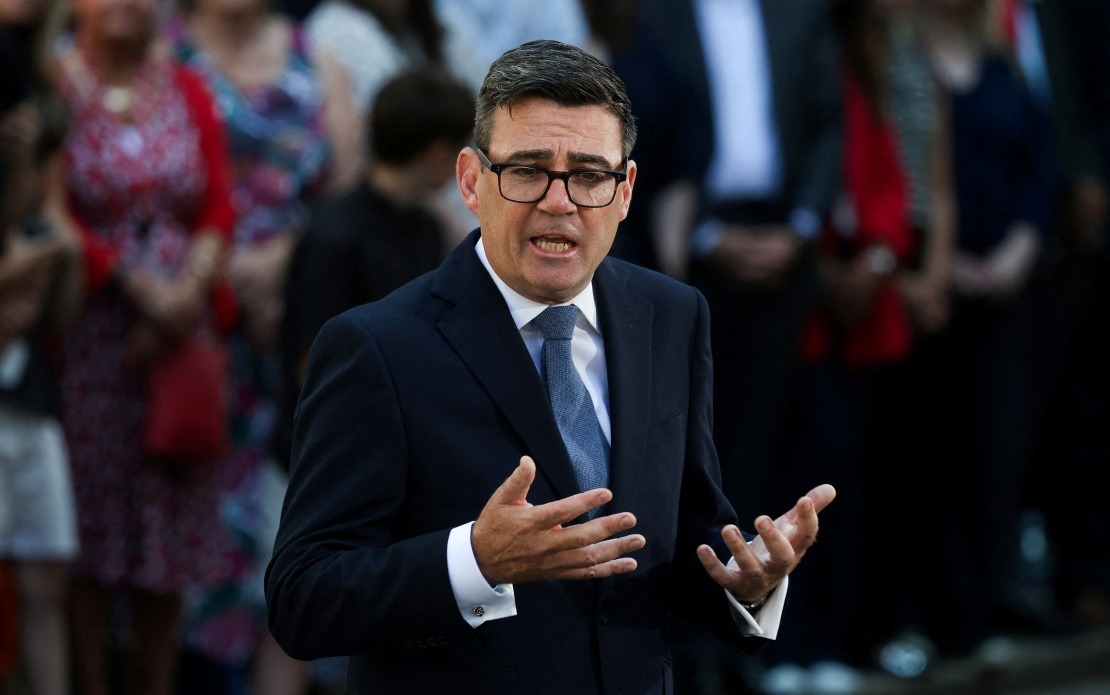
Prime Minister Datuk Seri Anwar Ibrahim has welcomed Andy Burnham's elevation to the office of United Kingdom Prime Minister, using the occasion to reaffirm Malaysia's commitment to strengthening diplomatic and economic ties with Britain. In a statement shared via social media, Anwar emphasised his readiness to collaborate with the newly appointed British leader across multiple sectors, signalling that the change in UK leadership presents an opportune moment for both nations to recalibrate their partnership and pursue shared strategic interests.
The Malaysian Prime Minister identified several key areas for enhanced bilateral engagement, positioning digital commerce as a priority alongside artificial intelligence adoption and digitalisation initiatives. Beyond economic cooperation, Anwar underscored the importance of advancing joint efforts in clean energy transition and defence collaboration, reflecting broader regional and global concerns about sustainable development and security architecture in an increasingly interconnected world. These proposed focal points suggest that Malaysia views its relationship with Britain not merely as a legacy partnership rooted in historical ties, but as a dynamic framework capable of addressing 21st-century challenges.
Anwar seized the opportunity to commend Burnham for publicly acknowledging Britain's initial inadequacy in responding to the Gaza humanitarian crisis, characterising the incoming Prime Minister's candour as demonstrating moral clarity at a time when Western nations have faced criticism for their positions on the conflict. By spotlighting this aspect of Burnham's record, Anwar signalled that Malaysia values principled leadership on Middle Eastern affairs, a matter of considerable significance to Malaysian Muslim-majority society and the broader Muslim world. The Prime Minister's statement that this recognition represents "a welcome and important first step" suggests he views it as establishing common ground on questions of humanitarian responsibility and international justice.
The timing of Anwar's diplomatic gesture carries particular significance given that 2025 will mark seven decades since Malaysia and the United Kingdom established formal diplomatic relations. The Prime Minister framed this forthcoming milestone as a natural juncture at which both nations should reaffirm their foundational commitment to partnership while mapping out an agenda suited to contemporary realities. This rhetorical framing transforms what might be routine diplomatic courtesy into a substantive statement about Malaysia's desire to modernise and deepen an association that has existed since independence.
Burnham's path to Number 10 followed an accelerated timeline that underscores significant flux within British politics. He assumed leadership of the Labour Party on Friday before his formal appointment as Britain's seventh Prime Minister in a decade took place on Monday, following Keir Starmer's resignation at Buckingham Palace. This rapid succession reflects ongoing instability within Westminster politics, a context that Malaysian policymakers must navigate as they seek to advance bilateral agreements and long-term initiatives. The frequency of UK Prime Minister changes in recent years presents both challenges and opportunities for Malaysian diplomacy.
Anwar also extended appreciation to his predecessor in dealings with the UK leadership, former Prime Minister Keir Starmer, crediting him with substantial contributions to strengthening Malaysia-UK relations during his tenure. This gesture of respect toward the outgoing British leader reflects diplomatic protocol while acknowledging that relationship-building occurs incrementally across administrations. By publicly thanking Starmer, Anwar reinforces the notion that Malaysia-UK cooperation transcends individual personalities and rests upon institutional foundations that can withstand changes in political leadership.
For Malaysia, the elevation of a Labour government leader carries implications for several policy areas. Labour's traditional emphasis on multilateralism, workers' rights, and climate action aligns broadly with Malaysia's stated commitments to sustainable development and regional cooperation frameworks. The proposed Digital Trade Agreement represents particularly significant potential, as it could position Malaysian technology firms and digital enterprises for enhanced access to British and European markets, while British investment in Malaysian digital infrastructure could accelerate local innovation ecosystems.
The focus on artificial intelligence and digitalisation reflects global trends that Malaysia must navigate strategically. As both nations grapple with AI governance, data protection, and digital sovereignty, bilateral collaboration could yield frameworks applicable to broader Southeast Asian contexts. Malaysia's position as a significant technology hub within the region means that innovations emerging from Malaysia-UK partnerships could influence digital standards and practices across ASEAN, elevating Malaysia's role as a thought leader in regional technological development.
Defence cooperation constitutes another dimension worthy of examination. The UK maintains strategic interests throughout the Indo-Pacific region, while Malaysia sits at the intersection of major shipping routes and regional security dynamics. Enhanced defence collaboration could include intelligence-sharing, military training exchanges, and naval cooperation, strengthening Malaysia's defence capabilities while reinforcing British commitments to regional stability in an era of growing great-power competition.
Clean energy cooperation addresses shared climate commitments embodied in international agreements. Malaysia's transition toward renewable energy sources and its participation in carbon reduction initiatives align with Britain's net-zero targets. Joint ventures in offshore wind technology, solar energy development, or green hydrogen production could position both nations as leaders in sustainable energy transition within their respective regions, while generating economic benefits through technology transfer and investment flows.
Anwar's diplomatic overture to Burnham also reflects Malaysia's broader strategy of maintaining robust relationships with major Western powers while preserving strategic autonomy. By promptly engaging with the new British leadership and articulating a forward-looking agenda, Malaysia demonstrates its interest in partnership while clearly signalling its priorities and values. This proactive approach contrasts with passive reception of new government administrations, positioning Malaysia as an active stakeholder capable of shaping bilateral relationships according to its national interests.

