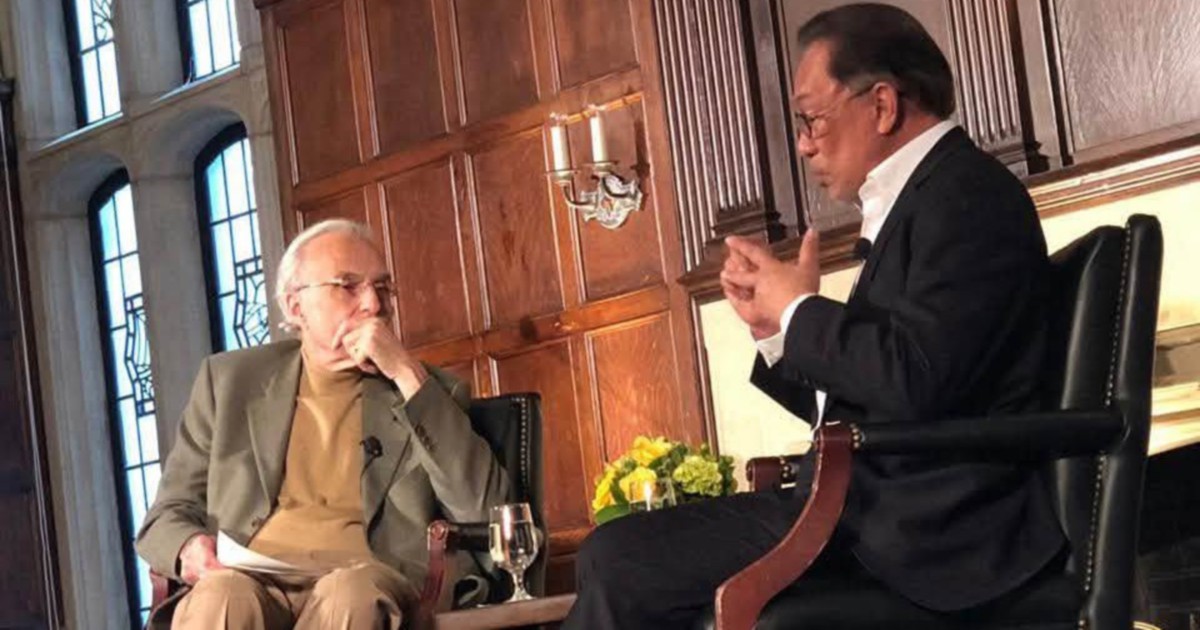
Prime Minister Datuk Seri Anwar Ibrahim has expressed his deepest condolences following the passing of Professor John L. Esposito, a scholar whose influence on Islamic studies and East-West understanding extended across academic institutions, policy circles, and interfaith movements worldwide.
Esposito's death marks a significant loss to the international academic community, particularly within Islamic scholarship circles where his contributions shaped how Western institutions and policymakers approached the study of Islam. Throughout his career, he became recognised as one of the most influential voices bridging cultural and religious divides, a contribution that resonates deeply within Malaysia's own multicultural and multifaith context.
The timing of his passing comes amid renewed global interest in Islamic thought and interfaith dialogue, areas where Esposito dedicated much of his scholarly work. His frameworks for understanding Islam and Muslim societies became foundational texts in universities across North America, Europe, and increasingly in Asia-Pacific institutions seeking to develop nuanced perspectives on religious and cultural studies.
Esposito's scholarly trajectory began when Islamic studies was still a relatively nascent field in Western academia. His willingness to engage substantively with Islamic theology, philosophy, and contemporary Muslim political movements—while maintaining rigorous academic standards—distinguished him from many of his contemporaries. Malaysian universities and research institutions have drawn extensively on his analytical frameworks when developing their own Islamic studies programmes and interfaith initiatives.
Beyond the academy, Esposito's work influenced policy development in multiple countries. His research on Islam and democracy, Islam and modernity, and the diversity within Islamic thought challenged prevailing stereotypes and provided decision-makers with empirically grounded perspectives. For Malaysia, a nation balancing Islamic governance principles with democratic pluralism and multireligious coexistence, such scholarship offered valuable comparative insights.
His role in founding and directing major institutes dedicated to Islamic-Christian relations demonstrated a commitment to practical dialogue that extended beyond theoretical frameworks. These institutions became gathering places for scholars, religious leaders, and policymakers seeking to move beyond adversarial framing of Islam and the West—a mission that remains urgently relevant in contemporary geopolitics.
Esposito's influence on generations of scholars, many of whom are now leading Islamic studies programmes in Asia-Pacific universities, ensures that his intellectual legacy will continue shaping how institutions approach religious scholarship and interfaith engagement. Malaysian scholars who studied under his guidance or built upon his theoretical contributions now hold influential positions in local universities and research centres.
The scholar's passing also underscores broader conversations within Southeast Asia about the future direction of Islamic intellectual thought. As the region becomes increasingly influential in global Islamic discourse, the frameworks Esposito helped establish—emphasising intellectual rigour, historical complexity, and pluralistic interpretation—remain vital reference points for academics developing indigenous Southeast Asian Islamic scholarship.
Esposito's work frequently acknowledged the diversity within Islam and Muslim-majority societies, recognising that Muslims themselves held vastly different theological interpretations, political ideologies, and social visions. This nuance proved particularly relevant in the Malaysian context, where Islamic jurisprudence, practice, and social application vary significantly across different communities and institutions.
In the broader geopolitical landscape, Esposito's career illustrated how serious, credible scholarship on Islam could contribute to reducing misunderstandings between predominantly Muslim and predominantly Christian-secular societies. His publications reached beyond academic circles to influence public intellectual discourse, demonstrating that rigorous religious scholarship need not remain confined to universities but could meaningfully engage public understanding.
PM Anwar's expression of condolences reflects recognition of Esposito's contributions to international understanding of Islam during a period when such scholarship remained contentious and politically loaded. As Malaysia itself navigates questions of Islamic identity, governance, and its position within global Muslim networks, the loss of such a prominent scholarly voice represents a diminishment of critical intellectual resources available to the international community.
Esposito's extensive body of work—comprising numerous books, edited volumes, and research projects—will continue serving as foundational material for students, scholars, and policymakers seeking comprehensive, historically grounded understanding of Islam and Islamic civilisations. His academic legacy ensures continued engagement with the questions he spent his career examining: how Islamic thought evolves, how Muslim societies balance tradition and modernity, and how genuine dialogue across religious and cultural boundaries remains possible.

