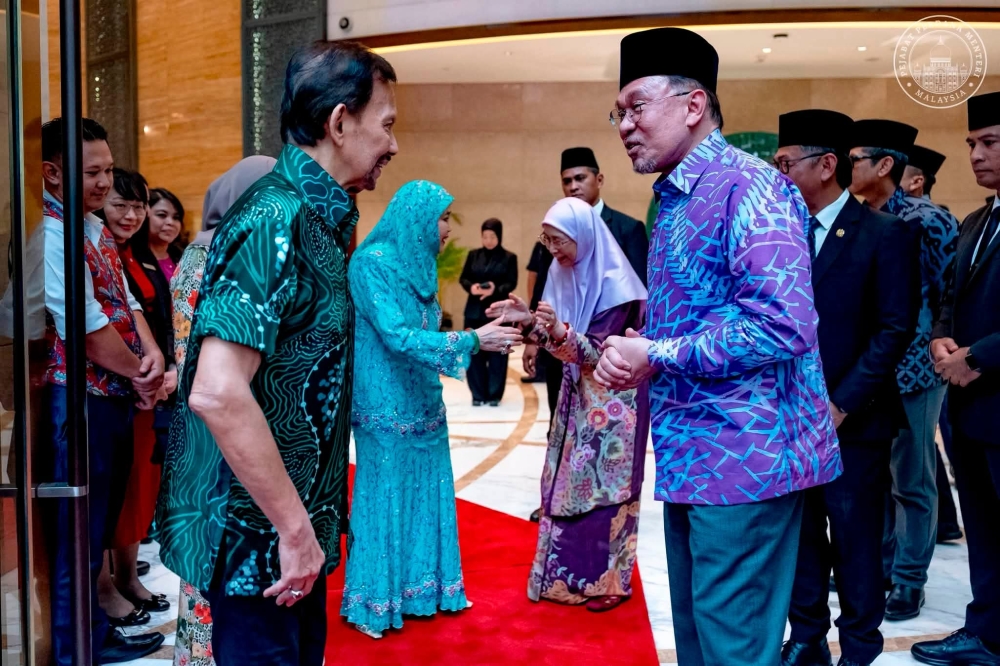
Prime Minister Datuk Seri Anwar Ibrahim has sent birthday congratulations to Brunei's reigning monarch, using the occasion to underscore Malaysia's commitment to nurturing the bilateral relationship between Kuala Lumpur and Bandar Seri Begawan. The gesture, delivered on July 15, reflects the customary diplomatic courtesies that punctuate Southeast Asian statecraft while signalling the priority both governments accord to their shared interests across multiple domains.
The exchange of birthday wishes between heads of state and senior government figures serves as a barometer of international relations, particularly within ASEAN where personal relationships between leaders often shape the tenor and substance of broader cooperation. Anwar's message to the Sultan came at a moment when Malaysia and Brunei are navigating complex challenges spanning trade, maritime security, and regional stability. The Prime Minister's comments indicate that despite occasional policy divergences, both nations remain committed to maintaining cordial and mutually beneficial engagement.
Malaysia and Brunei share intricate ties rooted in historical, cultural, and religious commonalities. The two predominantly Muslim nations maintain close coordination within ASEAN forums and cooperate extensively through mechanisms such as the ASEAN Regional Forum and the East Asia Summit. Beyond multilateral platforms, bilateral engagement encompasses trade relationships, educational exchanges, tourism flows, and defence cooperation that collectively underpin the stability and prosperity of the wider region.
The timing of Anwar's gesture carries particular significance given ongoing regional dynamics. Southeast Asia faces mounting pressures from great power competition, with the United States, China, and India all vying for influence across the Indo-Pacific. Within this context, intra-ASEAN relationships become all the more crucial, as smaller nations seek to maintain strategic autonomy while deepening partnerships with trusted neighbours. Malaysia's emphatic reaffirmation of ties with Brunei signals a commitment to solidarity among smaller ASEAN members.
Economic dimensions feature prominently in the Malaysia-Brunei relationship. Though Brunei's economy remains dominated by petroleum and liquefied natural gas exports, both nations have sought to diversify trading partnerships and explore complementarities in manufacturing, services, and tourism sectors. Malaysian investments in Brunei and vice versa have grown incrementally, though considerable untapped potential exists for deeper integration of supply chains and business networks. Enhanced economic ties could benefit both populations, particularly younger generations seeking employment and entrepreneurial opportunities across the border.
Defence and security cooperation represents another pillar of bilateral relations. Both countries maintain structured military-to-military dialogue and participate in joint exercises within the framework of ASEAN defence initiatives. Given maritime challenges in the South China Sea and ongoing counterterrorism operations in Southeast Asia, coordinated security responses become increasingly vital. Malaysian and Bruneian defence establishments work together to address transnational threats including piracy, smuggling, and extremist activities that threaten regional stability.
Cultural and people-to-people exchanges further cement the Malaysia-Brunei bond. Educational partnerships enable Malaysian and Bruneian students to pursue higher learning in each other's institutions, fostering generational links that transcend official diplomacy. Tourism flows in both directions contribute to mutual understanding and economic benefit, though both nations recognise untapped potential in marketing their combined attractions to international visitors. Religious and cultural organisations across both countries frequently collaborate on initiatives promoting inter-faith understanding and Islamic scholarship.
Anwar's message arrives amid his administration's broader effort to enhance Malaysia's regional standing following domestic political transitions. The Prime Minister has prioritised restoring diplomatic relationships and recalibrating Malaysia's international posture after years of tumultuous domestic politics disrupted foreign policy continuity. Reaffirming ties with immediate neighbours like Brunei forms a cornerstone of this repositioning strategy, demonstrating Malaysia's reliability as a partner and commitment to ASEAN solidarity.
Looking forward, Malaysia and Brunei would benefit from identifying new avenues for cooperation aligned with 21st-century challenges. Climate change and energy transition present opportunities for joint research and technology partnerships, particularly given both nations' interest in sustainable development. Digital economy initiatives could harness innovation to strengthen trade and financial linkages. Additionally, cultural heritage preservation and promotion of Islamic civilisation could position both countries as regional custodians of values and traditions important to Southeast Asian Muslim communities.
The birthday exchange, while ceremonial in nature, encapsulates the ongoing negotiations and understandings that characterise mature bilateral relationships. For Malaysia's leadership, maintaining strong ties with Brunei reinforces the nation's position within ASEAN and the broader Asia-Pacific, ensuring access to diplomatic channels and cooperative frameworks essential for advancing national interests. For readers across Malaysia, understanding such gestures illuminates how government-to-government relations translate into tangible benefits spanning security, economic opportunity, and regional influence that ultimately affect ordinary citizens' lives and prospects.

