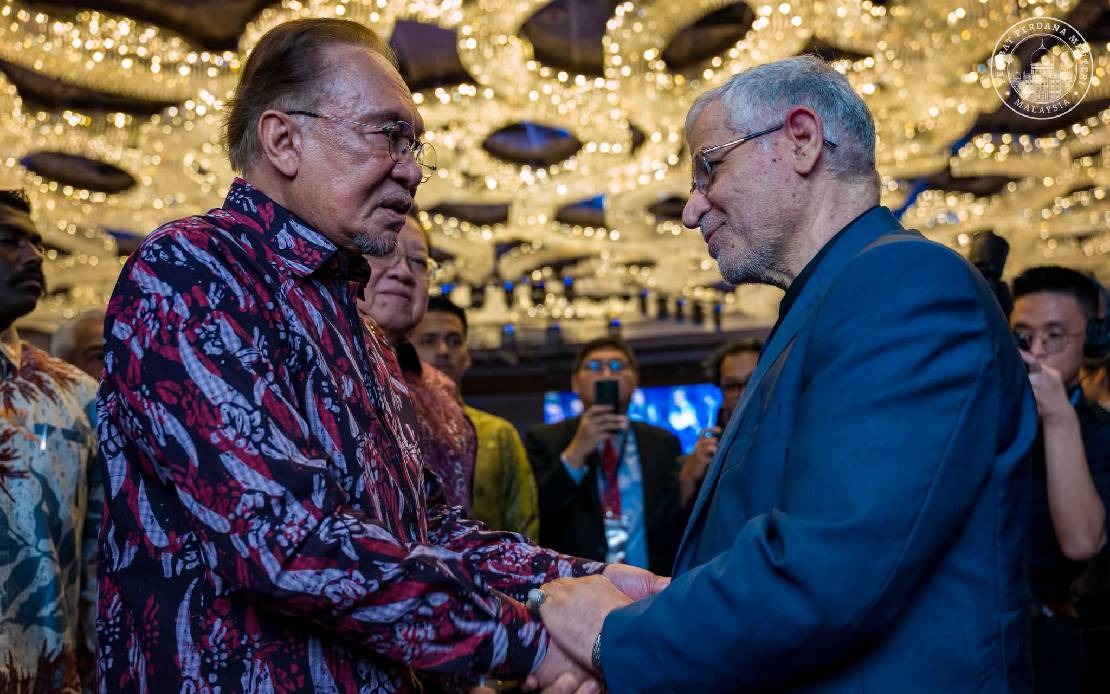
Prime Minister Datuk Seri Anwar Ibrahim has conveyed his regret to the Iranian government for missing the funeral and memorial events honouring Supreme Leader Ayatollah Ali Khamenei, communicating his apologies through direct engagement with Tehran's diplomatic envoy during a regional conference in Kuala Lumpur. The apology was relayed during a meeting with Iranian Ambassador to Malaysia Valiollah Mohammadi at the 39th Asia-Pacific Roundtable conference, with Anwar taking to Facebook to publicly acknowledge the matter and explain the reasoning behind his non-attendance. The move underscores the diplomatic significance Malaysia places on its relationship with Iran, a strategically important nation in the Middle East with which Malaysia maintains extensive bilateral ties across trade, cultural, and political dimensions.
The Prime Minister's inability to participate in the ceremonies, which constitute one of the most significant state events in the Iranian calendar, reflected pressing domestic obligations that demanded his presence in Malaysia during that period. Rather than leaving the nation's affairs unattended, Anwar opted to dispatch a senior representative capable of honouring the occasion with appropriate gravitas and ceremonial dignity. Agriculture and Food Security Minister Mohamad Sabu was entrusted with this responsibility, tasked with attending the full spectrum of commemorative activities and conveying Malaysia's formal condolences to the Iranian leadership and population at large. The appointment of a cabinet-level minister reflects Malaysia's commitment to demonstrating respect for Iran despite the Prime Minister's logistical constraints.
Ayatollah Ali Khamenei, who had served as Iran's Supreme Leader since 1989 and wielded considerable influence across the Middle East and beyond, passed away on February 28 at his residence in Tehran following what Iranian authorities attributed to a joint military operation by the United States and Israel. His death represented a transformative moment in Iranian politics and regional geopolitics, ending a reign spanning more than three decades during which he consolidated authority and shaped Iran's foreign policy trajectory. The Supreme Leader's passing triggered an extended period of national mourning and official commemoration, with the Iranian government organising an unprecedented series of ceremonies to honour his legacy and mark the transition of power within the Islamic Republic's religious and political hierarchy.
The state funeral arrangements span a full week, commencing on July 4 with extensive processions throughout Iran's major cities and concluding with the interment at Mashhad's Imam Reza Shrine on July 9. The duration and geographical scope of these ceremonies reflect both Khamenei's stature within the Iranian system and the broader significance accorded to the Supreme Leader position as the highest authority in Iran's theocratic governance structure. Funeral processions are planned for Tehran and Qom, Iran's two most politically and spiritually significant cities, before the final burial takes place at one of Shia Islam's holiest pilgrimage sites. Such elaborate funeral protocols underscore the ceremonial importance of the Supreme Leader's role and the religious dimension that permeates Iran's political institutions.
For Malaysia, navigating the complexities of engagement with Iran requires careful diplomatic balancing, particularly given the country's diverse international relationships and its need to maintain constructive ties across the broader Middle Eastern region. The dispatch of a ministerial-level representative carries symbolic weight, signalling Malaysia's respect for the deceased leader and acknowledgment of Iran's importance within Malaysia's foreign policy calculations. As a Muslim-majority nation with significant Islamic institutional frameworks, Malaysia has long maintained formal diplomatic relations with Iran and shares common interests in regional stability, Islamic cooperation through bodies like the Organisation of Islamic Cooperation, and economic exchange. The funeral attendance thus serves multiple diplomatic purposes beyond mere ceremonial obligation.
Anwar's public acknowledgment of his absence and the articulation of his regrets demonstrate an understanding of diplomatic protocol and the importance of managing state-to-state relations with sensitivity and transparency. By personally explaining his inability to attend rather than allowing the matter to pass without comment, the Prime Minister demonstrated proactive engagement with a key relationship and respect for Iranian sensibilities. The Facebook post functioned as both a public record of Malaysia's formal position and a direct communication channel ensuring that the Iranian government and public understood the reasoning behind the Prime Minister's non-attendance. Such transparent communication helps prevent misunderstandings that could otherwise fester and damage bilateral relations.
The timing of Anwar's statement during the Asia-Pacific Roundtable conference itself bears significance, as this gathering represents one of the region's most important strategic dialogues bringing together government leaders, policymakers, and strategic analysts from across Asia and beyond. Utilising this platform to address the Iranian situation allowed Anwar to communicate Malaysia's commitment to responsible international engagement and demonstrated that even within a packed schedule of regional diplomatic engagements, Malaysia prioritises its relationships with Middle Eastern partners. The conference provided an opportunity to discuss not only the ceremonial matter but potentially broader aspects of Malaysia-Iran relations and regional security concerns affecting both nations' strategic interests.
Since Khamenei's death, regional observers have focused considerable attention on Iran's internal political transition and the succession implications for Middle Eastern geopolitics. As the Supreme Leader occupies the highest constitutional position in Iran's dual executive structure, the succession process involves complex negotiations within Iran's clerical establishment and affects not only internal governance but also Iran's foreign policy direction and regional behaviour. For Malaysia and other regional actors, monitoring these developments and maintaining stable channels of communication proves essential for regional predictability and the protection of Malaysian interests across the Middle East. Anwar's engagement on this matter, therefore, extends beyond ceremonial courtesy to encompass broader strategic awareness.
The representation provided by Minister Mohamad Sabu carries its own diplomatic implications, as the Agriculture and Food Security portfolio, while not traditionally considered a foreign affairs position, positioned the minister as a capable communicator of Malaysia's goodwill and a member of the senior government hierarchy empowered to engage meaningfully with Iranian officials. The minister's attendance at the ceremonies creates opportunities for substantive bilateral conversations beyond the formal proceedings, potentially addressing shared concerns around food security, agricultural cooperation, and trade matters of mutual interest. Such multilayered diplomatic engagement ensures that Malaysian representation serves multiple functional purposes while maintaining appropriate protocol and respect for the occasion's solemn character.

