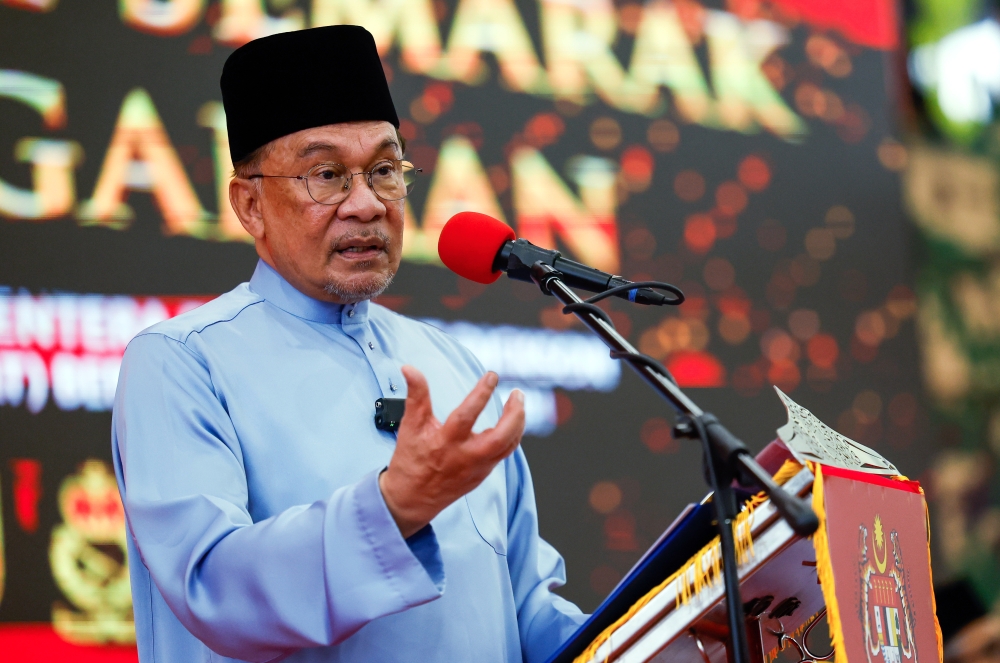
Prime Minister Anwar Ibrahim provided an explanation for why the Royal Commission of Inquiry report into Lembaga Tabung Haji has not been made public, citing concerns that premature disclosure could trigger widespread panic among account holders and destabilize the institution. Speaking in Port Dickson on Wednesday, Anwar indicated that keeping the findings confidential was a deliberate strategic decision designed to protect the financial stability of Malaysia's largest Islamic financial institution and maintain public confidence in the pilgrimage fund.
Tabung Haji, which manages savings for millions of Malaysians intending to perform the Hajj pilgrimage, has faced significant scrutiny in recent years following various allegations of mismanagement and financial irregularities. The establishment of the RCI reflected public concern about how the institution handles depositor funds and whether proper governance standards have been maintained. The decision to commission an independent inquiry signaled acknowledgment that transparency regarding the fund's operations was necessary, yet the subsequent withholding of findings from public view has created a paradoxical situation where the remedy for loss of confidence itself becomes a source of suspicion.
Anwar's rationale touches on a fundamental tension in financial regulation and public trust. Releasing detailed findings of investigative inquiries into financial institutions can indeed prompt reactive behavior among account holders who may rush to withdraw savings if they perceive institutional weaknesses. This phenomenon, known as a bank run, can become self-fulfilling—initial withdrawals triggered by alarming revelations can accelerate institutional deterioration regardless of whether the underlying financial position is actually sound. The government's concern appears grounded in historical precedent and the specific vulnerability of Tabung Haji, which serves predominantly middle and lower-income Malaysians whose savings often represent years of careful accumulation for religious pilgrimage.
Yet the confidentiality approach presents its own complications for governance and democratic accountability. Malaysian citizens who have entrusted substantial personal savings to Tabung Haji arguably possess a legitimate interest in understanding what an independent commission discovered about how their money has been managed. The withholding of findings creates an information vacuum that speculation and rumors readily fill, potentially undermining confidence more effectively than straightforward disclosure could. When citizens cannot access official information about institutions managing their assets, they must either accept uncertainty or seek alternative sources that may prove less reliable.
The Tabung Haji situation reflects broader challenges facing Malaysia's financial regulators and policymakers as they navigate the competing imperatives of stability and transparency. International financial standards increasingly emphasize disclosure and accountability as essential to maintaining genuine public confidence, distinct from mere absence of panic. Institutions that enjoy trust do so partly because stakeholders understand their operations and governance structures sufficiently to assess their reliability. Conversely, institutions that function through information asymmetries—where officials know conditions that ordinary account holders cannot access—ultimately remain vulnerable to trust collapse once relevant facts become known.
Tabung Haji's particular significance in Malaysian society amplifies these concerns. The institution manages funds essential to fulfilling one of Islam's five pillars, making it not merely a financial repository but an instrument through which Malaysian Muslims practice their faith. Its governance therefore carries religious as well as financial dimensions. Any genuine or perceived mismanagement affects not only economic security but also spiritual expectations and community relationships. This multi-layered importance means that confidence in Tabung Haji cannot rest solely on absence of crisis; it requires demonstrable competence and integrity in fund management.
The government's position also raises questions about who ultimately bears responsibility for deciding what information the public requires. While regulators and officials may possess expertise in assessing what disclosures might trigger instability, this expertise does not necessarily translate into wisdom regarding what society needs to know about institutions managing critical public assets. Democratic governance generally rests on assumptions that informed citizens, even if they occasionally react in ways officials find suboptimal, ultimately make better decisions than officials operating without public accountability or oversight.
Moving forward, Malaysian policymakers might consider graduated disclosure approaches that acknowledge legitimate public interest while managing potential volatility. Rather than complete confidentiality or full unfiltered release, authorities could communicate key findings in measured ways designed to inform account holders while maintaining institutional stability. Such approaches would require careful coordination with financial regulators and communication specialists, but they might offer a middle path between the current opacity and the hypothesized panic of complete disclosure.
The broader context involves rebuilding confidence in Malaysian financial institutions after various governance controversies in recent years. Tabung Haji specifically has faced multiple challenges, and a confidential RCI report that never reaches public view simply defers reckoning rather than resolving underlying concerns. For the institution to move forward with restored public confidence, stakeholders will eventually need assurance that whatever issues the RCI identified have been genuinely addressed through concrete reforms and verifiable improvements in governance and fund management. Indefinite confidentiality serves neither accountability nor genuine stability.

