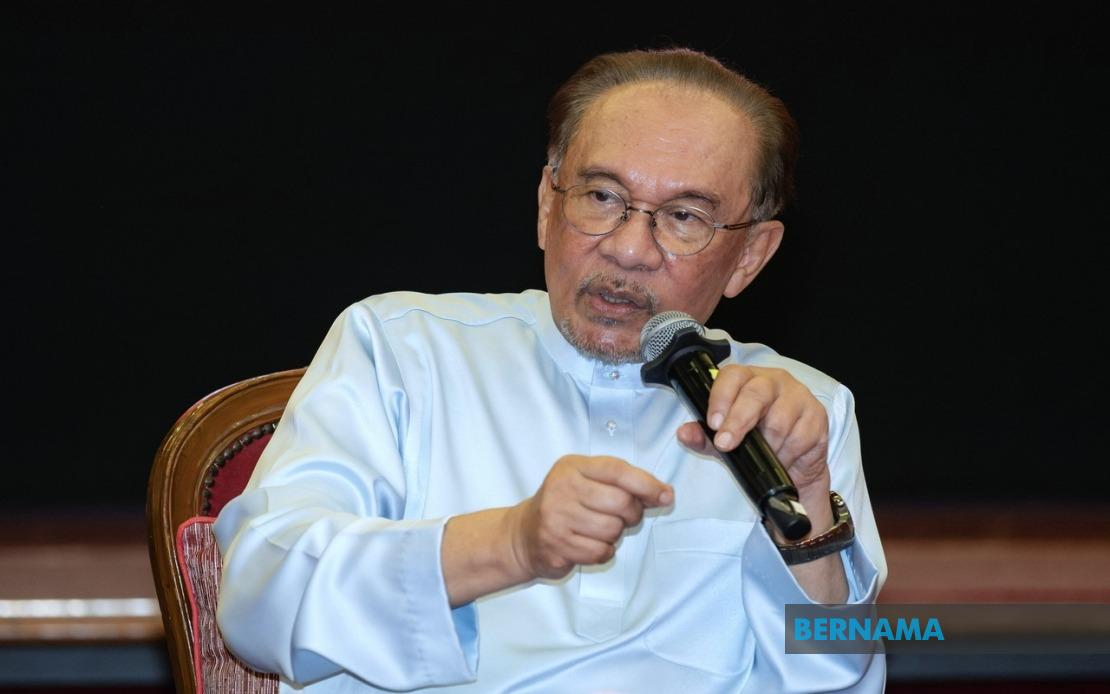
Prime Minister Datuk Seri Anwar Ibrahim has escalated Malaysia's investment crisis in Indonesia to the highest diplomatic level, writing directly to President Prabowo Subianto to seek intervention on the Federal Land Development Authority's troubled holdings in PT Eagle High Plantations Tbk. The development underscores the severity of what has become one of Felda's most significant financial liabilities, with exposure potentially reaching RM2.5 billion against recovery prospects of merely RM200 million. The move marks an unusual step for an organisation traditionally insulated from high-level political attention, signalling that Anwar views the matter as requiring presidential-level assistance to navigate Indonesia's judicial system.
Felda's involvement with PT Eagle High Plantations stems from investment decisions made during a previous management era, when the land settlement authority committed substantial capital to the Indonesian palm oil venture. The investment became problematic as financial performance deteriorated and disputes emerged, leading to protracted legal battles in Indonesian courts. Currently trapped in litigation, Felda has been unable to recover funds or achieve meaningful returns, creating a persistent drain on the agency's balance sheet and constraining its capacity to fund routine operations and settler welfare programmes.
Anwar's diplomatic intervention reflects growing urgency about the financial exposure. By communicating directly with Prabowo, the Prime Minister is attempting to circumvent conventional legal channels and appeal for executive-level assistance in resolving what has become essentially a stalled commercial dispute. The RM2.5 billion potential loss represents roughly the equivalent of Felda's entire annual development budget in some years, making the recovery outcome critical to the organisation's long-term viability and its ability to fulfil commitments to settlers and workers across multiple states.
The Prime Minister articulated the investment's strategic importance during a rare engagement with Felda senior staff at Hotel Tenera in Bangi, where he met with chairman Tan Sri Ahmad Badri Mohd Zahir and director-general Datuk Dr Suzana Idayu Wati Osman. Rather than obscuring the financial realities, Anwar deliberately disclosed the scale of potential losses to frontline management, emphasising that operational staff across Pahang, Johor and other settlement zones needed clarity on institutional challenges beyond their direct responsibility. His approach suggests a conviction that transparency about inherited problems builds institutional resilience more effectively than concealment or minimisation.
Anwar's messaging focused on distinguishing between accountability and blame, a critical distinction within Felda's hierarchical structure where many career managers had no involvement in the problematic investment decisions. He stressed that while governance failures and investigation processes remain serious matters requiring separate handling, the fundamental task now involves all management tiers developing realistic understanding of constraints they will operate within during recovery efforts. This framing appears designed to maintain morale among personnel while preventing narratives suggesting that governance scrutiny represents vendetta against particular individuals or cohorts.
Beyond the immediate Indonesia dispute, Anwar used the engagement to outline complementary recovery initiatives. The government is committed to accelerating welfare projects that have traditionally faced resource constraints, including home repair funding for managers and settlers rather than deferring such improvements to next fiscal year. This suggests recognition that Felda's institutional health depends partly on rebuilding confidence among its workforce through tangible improvements in living standards and working conditions, particularly in rural communities where alternative economic opportunities remain limited.
The strategic context of Anwar's intervention involves Malaysia's broader relationship with Indonesia under Prabowo's administration. Since assuming office, the new Indonesian president has signalled openness to addressing bilateral issues through direct communication, making a personal appeal on a commercial dispute potentially more viable than it would have been under previous leadership. However, the success of Anwar's letter remains uncertain, given that PT Eagle High Plantations' legal disputes may involve multiple Indonesian stakeholders with competing interests, requiring Prabowo to navigate complex domestic considerations while accommodating Malaysia's request.
Felda's vulnerability extends beyond this single investment to encompass deeper institutional challenges that periodic governance initiatives alone cannot resolve. The agency historically operated as a semi-autonomous fiefdom generating its own revenue streams through plantation operations, but that model has eroded as global commodity prices volatilised and land availability for expansion contracted. The Indonesia exposure epitomises the risks that emerged when Felda management attempted to replicate past success formulas in unfamiliar international operating environments without the regulatory protections and political support available domestically.
For Malaysian investors and stakeholders in Southeast Asian commercial expansion, Felda's experience carries cautionary implications about the complexities of operating plantations across borders. Political transitions, regulatory inconsistencies, and judicial unpredictability in neighbouring jurisdictions can transform seemingly sound commercial ventures into protracted dispute situations. Malaysia's business community increasingly operates throughout the region, and Felda's challenge illustrates how even state-backed entities with government support can face difficulties when international disputes collide with differing legal frameworks and enforcement mechanisms.
The diplomatic approach also reflects evolving Malaysian governance philosophy under Anwar's administration, which has emphasised transparency and high-level problem acknowledgement rather than attempting to obscure institutional difficulties. By publicly confirming communication with Prabowo and detailing financial exposure figures, Anwar signals commitment to honest reckoning with inherited challenges, potentially building domestic credibility even while seeking external assistance. This contrasts sharply with historical patterns where Malaysian authorities often minimised disclosure of comparable difficulties, hoping that restricted information access would constrain political criticism.

