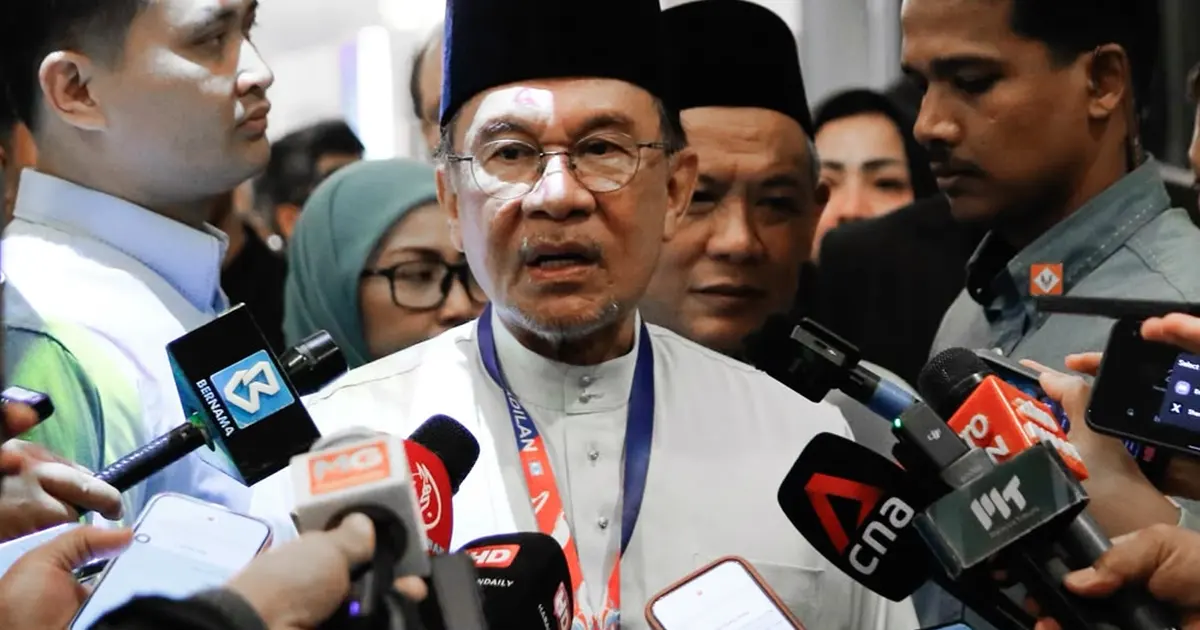
Prime Minister Anwar Ibrahim has pushed back against implications that strain exists in his relationship with Deputy Prime Minister Zahid Hamidi, clarifying that remarks made by former Umno Youth chief Khairy Jamaluddin reflect only the latter's personal standpoint rather than any institutional tension within the ruling coalition. The premier's response came after KJ aired views in a podcast that some observers interpreted as suggesting discord between the two senior leaders, prompting Anwar to set the record straight during recent engagements with media and coalition partners.
Anwar's intervention underscores the delicate balance required in managing Malaysia's complex multiparty government, which depends on cooperation between established parties with sometimes competing interests and historical rivalries. The coalition that brought Anwar to power in November 2022 represents an unusual alliance uniting Pakatan Harapan components with Umno and its traditional partners, a configuration that frequently draws public scrutiny over potential fractures. By directly addressing KJ's podcast comments, the prime minister appears intent on demonstrating solidarity and preventing rumours from destabilizing the coalition at a time when economic recovery and policy implementation remain pressing priorities.
KJ, who stepped down from his Umno Youth leadership position and has maintained a relatively independent profile within the party, made observations that some political analysts read as critical of the administration's direction or decision-making processes. His podcast appearance generated considerable discussion in Malaysian political circles, with some viewing his remarks as a veiled critique of Anwar's governance or alliance management. However, Anwar's characterization of KJ's views as merely representing different angles on complex issues reflects a more diplomatic interpretation, one that suggests differences of opinion are natural within any coalition and do not automatically signify governmental dysfunction.
The prime minister emphasized that he and Zahid maintain a functional working relationship necessary for steering the country forward. This assertion carries significance given that Zahid, as deputy prime minister and Umno vice-president, commands substantial influence within both government and party structures. Should genuine friction develop between these two figures, it would potentially destabilize the coalition and complicate legislative efforts. By publicly affirming their partnership, Anwar seeks to reassure cabinet colleagues, parliamentary members, and the broader business and investor community that leadership remains coherent and committed to shared objectives.
The episode highlights how Malaysian politics continues to be shaped by personality-driven narratives and how media, particularly podcasts and social platforms, now amplify individual voices beyond traditional gatekeeping mechanisms. KJ's willingness to speak candidly on podcasts has earned him a reputation as an unfiltered voice within Umno, sometimes contrasting with the more measured public positions of senior party leadership. This dynamic creates situations where personal commentary by prominent figures can be misread or extrapolated into broader conclusions about government stability, requiring leadership clarification.
Anwar's framing of the disagreement as stemming from differing perspectives also reflects a leadership approach emphasizing pragmatism and inclusivity. By avoiding defensive rhetoric and instead acknowledging that coalition members may hold varying viewpoints on specific matters, the prime minister implicitly validates a pluralistic decision-making environment. This contrasts sharply with more authoritarian management styles and suggests Anwar is attempting to cultivate a governing culture where disagreement, when managed appropriately, does not automatically translate into political conflict.
For Malaysian observers, the episode serves as a reminder that despite coalition partners sharing government, they retain distinct organizational cultures, membership bases, and strategic interests. Umno's presence in government alongside Pakatan Harapan represents a significant realignment from Malaysia's decades-long political structure, and such alignments require ongoing negotiation and relationship management. The fact that these dynamics occasionally surface through figures like KJ is perhaps inevitable, though potentially manageable if senior leaders like Anwar and Zahid maintain public displays of unity.
The international dimension deserves consideration as well. Foreign investors, regional partners, and international observers closely monitor Malaysian political stability as an indicator of governance reliability and economic policy consistency. Public disagreements or perceived fractures within the top leadership can unsettle confidence, potentially affecting foreign direct investment, credit ratings, or bilateral relations. By swiftly addressing concerns about his relationship with Zahid, Anwar sends reassuring signals to these constituencies that Malaysia's government remains coherent and capable of executing policy.
Looking ahead, the coalition will likely face further test cases requiring unity and compromise. Upcoming budgets, electoral preparations, and potential policy divergences between partners will inevitably generate moments where individual figures voice alternative views. How Anwar and his coalition manage these instances—balancing transparency and internal debate against maintaining public confidence in government—will substantially shape perceptions of his premiership's sustainability. The prime minister's measured response to KJ's comments suggests an attempt to set a precedent: differences exist and may occasionally surface, but they need not threaten the broader coalition project.

