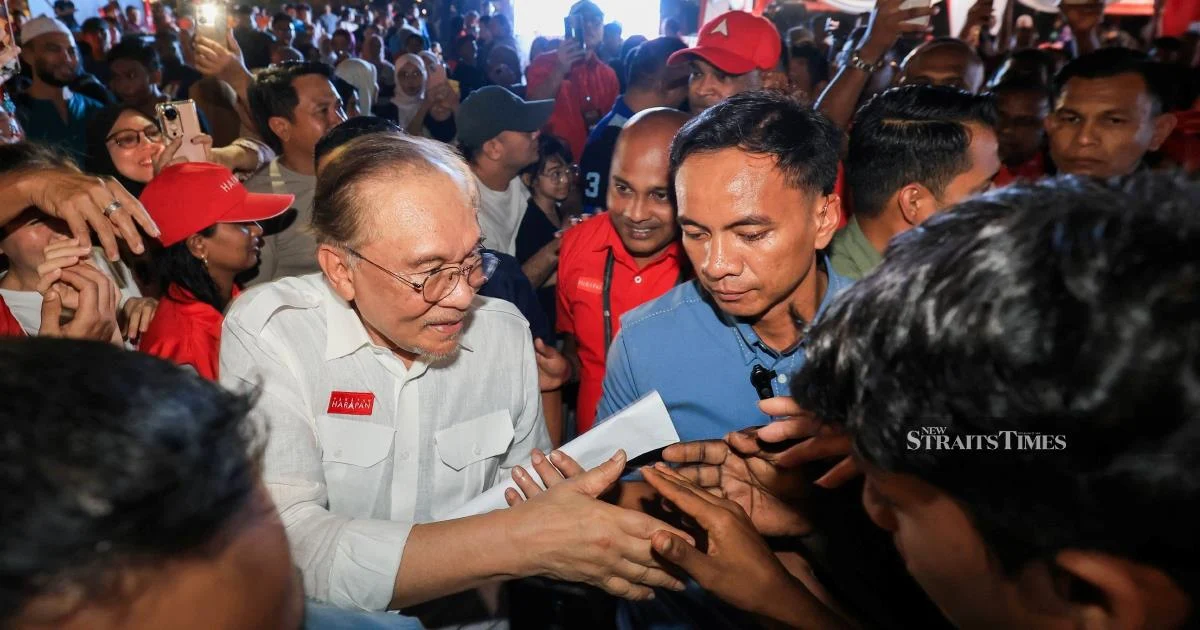
Prime Minister Datuk Seri Anwar Ibrahim has rebuffed growing pressure for a premature dissolution of Parliament, reaffirming his conviction that the ruling coalition maintains the necessary democratic legitimacy to discharge its governing responsibilities without seeking a fresh electoral mandate.
The statement comes as speculation persists in political circles about the sustainability and durability of the fragile multiparty coalition that brought Anwar to power. Questions about the strength of the government's numerical position in the Dewan Rakyat have periodically surfaced since the formation of the unity administration, with critics questioning whether the coalition commands sufficient confidence among parliamentarians to withstand the full term without facing a crisis that could trigger early dissolution.
Anwar's assertion that the government possesses a mandate reflects the position that electoral backing granted to the coalition in the most recent general election provides the requisite authority for governance. This approach contrasts with arguments from some quarters that deteriorating political conditions or loss of parliamentary support might justify calling voters back to the polls for a fresh expression of popular will.
The Malaysian political landscape has historically been marked by fluid coalition arrangements, where shifts in party allegiances or parliamentary mathematics can rapidly alter the balance of power. The unity government itself represents a departure from conventional Malaysian politics, bringing together parties from traditionally opposing camps to govern collaboratively. This arrangement, while providing stability compared to the immediate aftermath of the 2022 election, has required constant management to prevent fractures from destabilizing the administration.
Speculation about early elections carries implications for policy planning and legislative agenda. A government preoccupied with electoral positioning may find it difficult to pursue unpopular but necessary economic reforms, while the certainty of a full term allows for longer-term strategic thinking and implementation. Anwar's insistence on maintaining the current parliamentary term thus signals an intention to pursue governance without the distractions of imminent electoral cycles.
The political opposition has naturally seized on intermittent questions about coalition stability as evidence of underlying weakness, though such tactics are conventionally employed by incumbent parties seeking to depict themselves as under siege. The opposition's calls for dissolution reflect both genuine political strategy and familiar rhetorical patterns in Malaysian parliamentary discourse.
From a Southeast Asian perspective, Malaysia's experience with coalition governments offers instructive lessons about the viability of multiparty arrangements without resorting to supermajority dominance by a single party. Whether the unity model can sustain itself through a complete five-year cycle remains an open question that affects not only domestic governance but also Malaysia's regional standing and policy consistency.
Economic considerations also weigh on the election question. Early polls would disrupt the government's pursuit of fiscal consolidation, infrastructure projects, and investment initiatives that require policy continuity. The costs of conducting elections, combined with the campaign-related suspension of normal governmental functions, create practical arguments against premature dissolution from an administrative perspective.
Anwar's firmness on this matter may also reflect sensitivity to accusations that the unity government lacks independent legitimacy beyond expedient coalition mathematics. By asserting the mandate, the Prime Minister positions the administration as a stable, purposeful governing force rather than a temporary arrangement held together by necessity. This framing becomes particularly important as the government seeks to implement difficult economic measures that demand public confidence in leadership stability.
The question of electoral timing will likely resurface periodically as Malaysia's fractious political landscape encounters the inevitable tensions that emerge within any coalition government. However, Anwar's declaration suggests he intends to maintain the government's course without pivoting toward early elections, betting that the unity coalition can navigate its remaining parliamentary term despite ongoing internal strains.
For Malaysian businesses and investors, Anwar's commitment to completing the current term offers welcome assurance about policy continuity, though the government's ability to maintain this trajectory depends on sustaining the delicate consensus among coalition partners. Regional governments and international partners similarly benefit from the clarity that comes with a government determined to complete its constitutional term rather than seeking electoral renewal prematurely.

