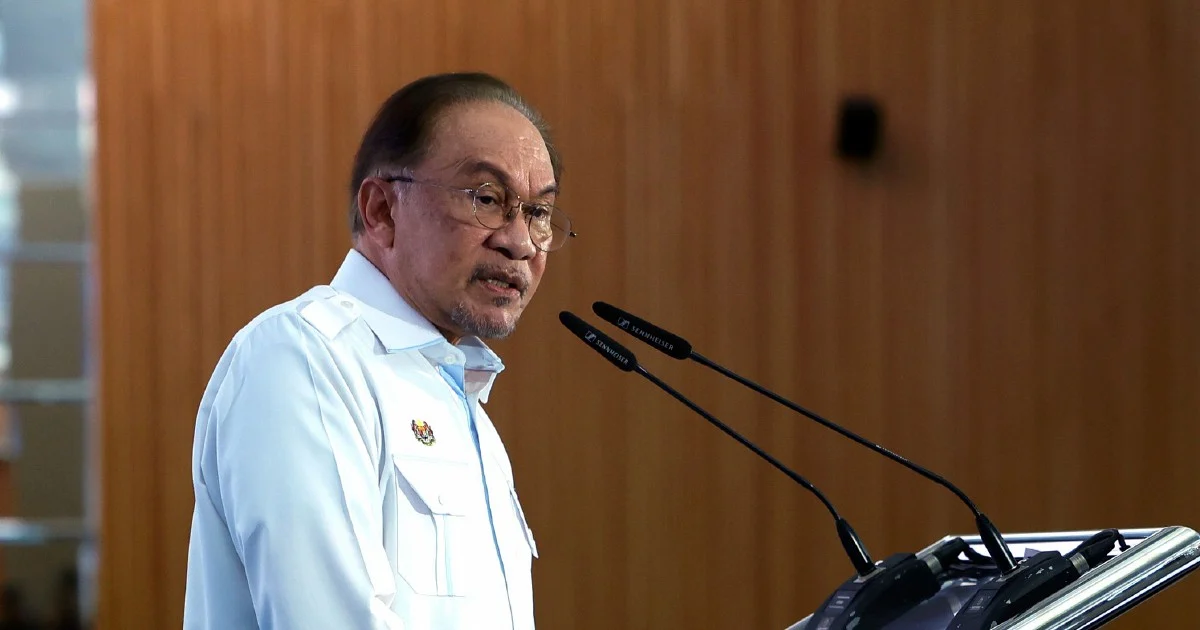
Prime Minister Datuk Seri Anwar Ibrahim has pushed back against criticism that federal development allocations are distributed unequally across Malaysia's states, maintaining that the government's allocation mechanisms are designed to ensure fairness and accountability throughout the country.
The dismissal of these allegations comes at a time when several state governments and opposition figures have raised concerns about the distribution of development resources. Such claims have become increasingly prominent in recent years, with questions emerging about whether economically weaker states receive adequate federal support or whether political considerations influence funding decisions. Anwar's response suggests the federal administration views these accusations as unfounded and potentially politically motivated.
The issue of federal development allocations carries significant weight in Malaysia's federal structure, where the distribution of resources between Kuala Lumpur and the states shapes economic opportunities, infrastructure development, and public services. States with smaller revenue bases depend heavily on federal transfers, making the allocation formula a matter of intense scrutiny. In a multi-ethnic, geographically diverse federation like Malaysia, ensuring perceived equity in resource distribution is crucial for maintaining political stability and interstate harmony.
The Prime Minister's assertion of fairness in the allocation process reflects the government's confidence in its mechanisms for determining which states receive what development funding. The federal budget process typically employs formula-based approaches that consider factors such as population size, development needs, and existing infrastructure levels. By rejecting accusations of unfairness, Anwar is implicitly defending both the methodology and the transparency of these distribution systems.
For Malaysian taxpayers and citizens, the question of equitable development funding is more than technocratic—it directly affects the quality of roads, schools, hospitals, and other public infrastructure they access. States that feel disadvantaged in the allocation process may struggle to deliver basic services, potentially creating regional imbalances in economic opportunity and quality of life. This is particularly relevant for Malaysia's more rural and less developed states, which may depend entirely on federal transfers to finance major projects.
The political dimension of development allocation disputes is equally significant. Opposition-controlled states and governments critical of federal policies may claim they are deliberately starved of resources as punishment, while the federal government counters that allocations follow objective criteria. These narratives can become entrenched during electoral cycles, influencing how voters perceive both state and federal administrations. Anwar's direct response suggests the government is keen to counter perceptions that it favours certain states over others on partisan grounds.
From a governance perspective, the transparency and defensibility of allocation formulas matter enormously. If states and the public understand how development funds are calculated—and if independent observers can verify that the process is indeed equitable—then disputes may be resolved through discussion rather than festering as sources of political friction. Conversely, if allocation decisions appear arbitrary or politically tinged, they undermine public trust and can fuel resentment that extends beyond the specific financial issue at hand.
The federal government's need to repeatedly affirm the fairness of its allocations suggests that public confidence in the system may not be as solid as officials would prefer. When allegations of unfairness persist despite official denials, it often reflects deeper concerns about institutional credibility or previous instances where allocation decisions appeared politically motivated. The Prime Minister's dismissal may reassure some observers, but it is unlikely to fully satisfy those who harbour structural doubts about the system's impartiality.
Malaysia's experience with development allocation disputes mirrors challenges faced by other federal systems, where tensions between central and regional governments over resource distribution are endemic. The difference in Malaysia is that these tensions intersect with historical rivalries between states and concerns about ethnic and regional equity. The allocation formula thus becomes a proxy for larger questions about how federal power is exercised and whether all parts of the nation are treated equally.
For states already receiving lower per capita federal allocations, particularly those governed by opposition parties, Anwar's assertion provides little reassurance without accompanying evidence or reform. These governments may point to specific projects they claim were delayed or underfunded compared to projects in coalition-controlled states. Substantive engagement with such complaints—whether through detailed explanations of allocation decisions or reforms to enhance transparency—would likely be more persuasive than outright dismissals.
Moving forward, the credibility of federal allocation systems may depend less on prime ministerial assertions and more on whether the government voluntarily increases transparency and oversight mechanisms. Publishing detailed allocation data, establishing independent bodies to review distribution, or allowing external audits could help shift perceptions from those questioning the system's integrity. Addressing the root causes of allocation disputes rather than simply denying their validity would demonstrate genuine confidence in the process's fairness.
The broader implications extend to Malaysia's economic development agenda. If regional disparities in federal support persist or widen, they risk creating pockets of underdevelopment that drag on overall national productivity and growth. Equitable development funding supports inclusive growth, helping ensure that opportunities are distributed across the country rather than concentrated in a few developed urban centres. This reinforces why the fairness of allocations is not merely a political question but an economic imperative.
Ultimately, Anwar's response marks one moment in an ongoing debate about resource distribution that will likely continue in subsequent state and federal budget cycles. Whether this dispute is definitively resolved depends not just on official statements but on tangible actions that demonstrate commitment to transparent, equitable allocation of development resources across all of Malaysia's states and territories.

