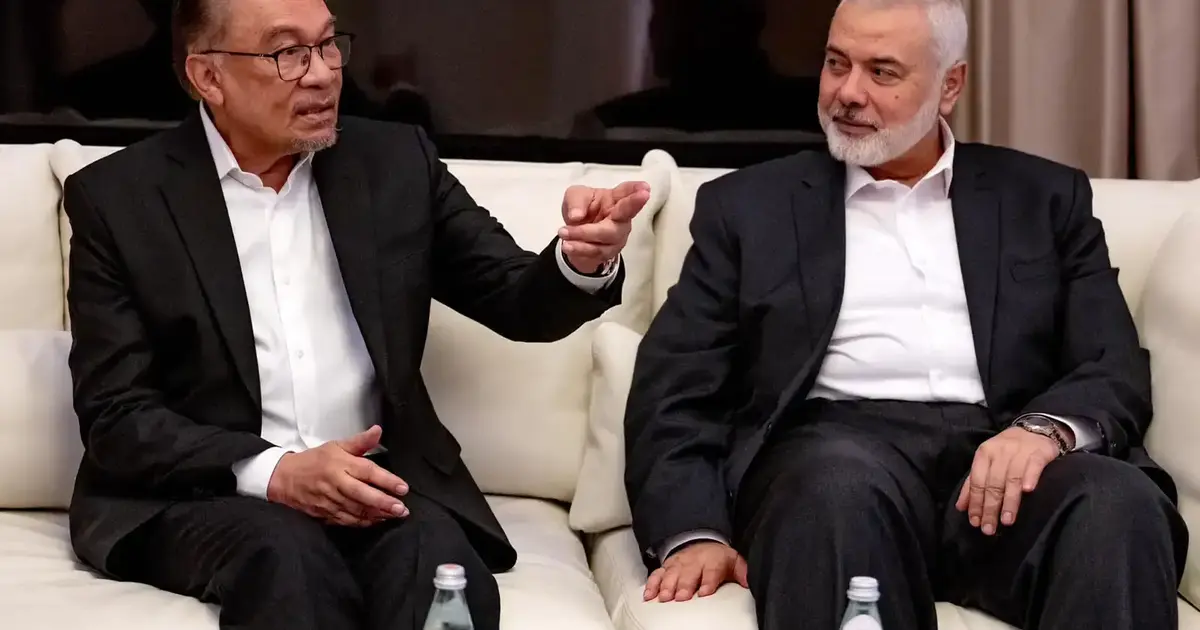
Prime Minister Anwar Ibrahim has categorically rejected allegations suggesting that members of the Palestinian militant organisation Hamas conducted training activities within Malaysian territory, characterising such claims as entirely without foundation. The denial comes amid renewed scrutiny of Malaysia's diplomatic and security relationships, particularly following recent geopolitical developments involving Middle Eastern actors and Western powers.
Anwar's dismissal of these assertions represents a clear attempt to distance Malaysia from any association with Hamas operations or infrastructure. The timing of the denial is significant, arriving at a moment when Malaysia seeks to position itself as a responsible international actor committed to counterterrorism frameworks and regional stability. Such claims, if allowed to circulate unchallenged, could potentially undermine Malaysia's bilateral relationships and complicate its standing within multilateral security arrangements.
The prime minister has also taken the step of disclosing that he personally informed United States President Donald Trump about a previous encounter he had with a senior Hamas official. This proactive communication strategy suggests an effort to manage the narrative surrounding Malaysia's engagement with contentious regional actors, ensuring that Washington has full context regarding the nation's past diplomatic interactions. By voluntarily sharing this information with the American leadership, Anwar appears intent on demonstrating transparency and forestalling any misunderstandings that could arise from incomplete intelligence assessments.
The disclosure regarding the past meeting with a Hamas leader raises questions about the nature and purpose of such diplomatic contact. Malaysia, with its significant Muslim-majority population and historical emphasis on the Palestinian cause, has maintained complex relationships with various Palestinian factions over decades. These connections reflect both the country's cultural and religious identification with Palestinian concerns and its broader foreign policy orientation within the Non-Aligned Movement framework. However, contemporary international counterterrorism norms place significantly tighter constraints on official engagement with organisations designated as terrorist entities by major powers.
Anwar's approach of directly briefing Trump suggests an understanding that American concerns regarding Hamas activities carry considerable diplomatic weight and cannot be dismissed lightly. The Biden administration, and now the Trump administration, have maintained stringent policies regarding Hamas, particularly following events in Gaza. By ensuring that the US president is fully apprised of Malaysia's past interactions with Hamas representatives, Anwar appears to be signalling that any such contact occurred within a specific historical context and does not represent ongoing operational engagement or ideological alignment.
The emergence of these allegations also highlights the broader challenge facing Malaysia in navigating its identity as a Muslim-majority nation with genuine concerns about Palestinian welfare, while simultaneously operating within international security frameworks increasingly defined by counterterrorism priorities. Other Southeast Asian nations face similar tensions, though Malaysia's specific geopolitical position and its historical vocal support for Palestinian causes have sometimes attracted particular scrutiny from Western intelligence and security perspectives.
The baselessness of these training claims, as Anwar asserts, would presumably mean that Malaysian territory has not served as a venue for militant instruction or operational planning. If substantiated, such involvement would represent a serious breach of Malaysia's international obligations under various counterterrorism conventions and would fundamentally contradict the government's stated commitment to preventing extremist activities. The categorical nature of Anwar's denial therefore carries significant implications for Malaysia's security credibility and its reliability as a partner in regional and international counterterrorism cooperation.
From a regional perspective, Malaysia's position on these matters influences how other Southeast Asian governments and the broader international community assess the region's counterterrorism landscape. Countries like Indonesia, Thailand, and the Philippines have all experienced direct threats from militant organisations, making them particularly attentive to any evidence of external training or support networks operating within their neighbourhood. A credible denial from Malaysia's top leadership, backed by appropriate security assurances, helps maintain the region's collective security posture and prevents unnecessary escalation of tensions.
The decision to brief Trump on past diplomatic contacts with Hamas representatives demonstrates sophisticated crisis management and a recognition that proactive disclosure often works better than reactive denial. This approach allows the US administration to incorporate Malaysian explanations into its own threat assessments, rather than relying solely on intelligence reports that may lack contextual nuance. It also establishes a direct channel of communication regarding sensitive matters, which can prevent misunderstandings that might otherwise damage bilateral relations.
Anwar's statements will likely satisfy Malaysian domestic audiences concerned about protecting the nation's international reputation, while simultaneously attempting to reassure Washington that Malaysia operates within acceptable parameters of security cooperation. However, the persistence of such allegations suggests that certain international actors or intelligence services remain unconvinced or are deliberately maintaining pressure on Malaysia regarding its relationships with Hamas and other Palestinian organisations. Whether this represents genuine security concerns or geopolitical manoeuvring remains an open question.
The broader context of these claims and denials underscores the complex balancing act required of Malaysia's leadership in an era of heightened security consciousness and polarised international positions on Middle Eastern conflicts. Malaysia must reconcile its traditional support for Palestinian causes with the contemporary reality that most major powers classify key Palestinian actors as terrorist organisations, making unconstrained engagement diplomatically and operationally risky.

