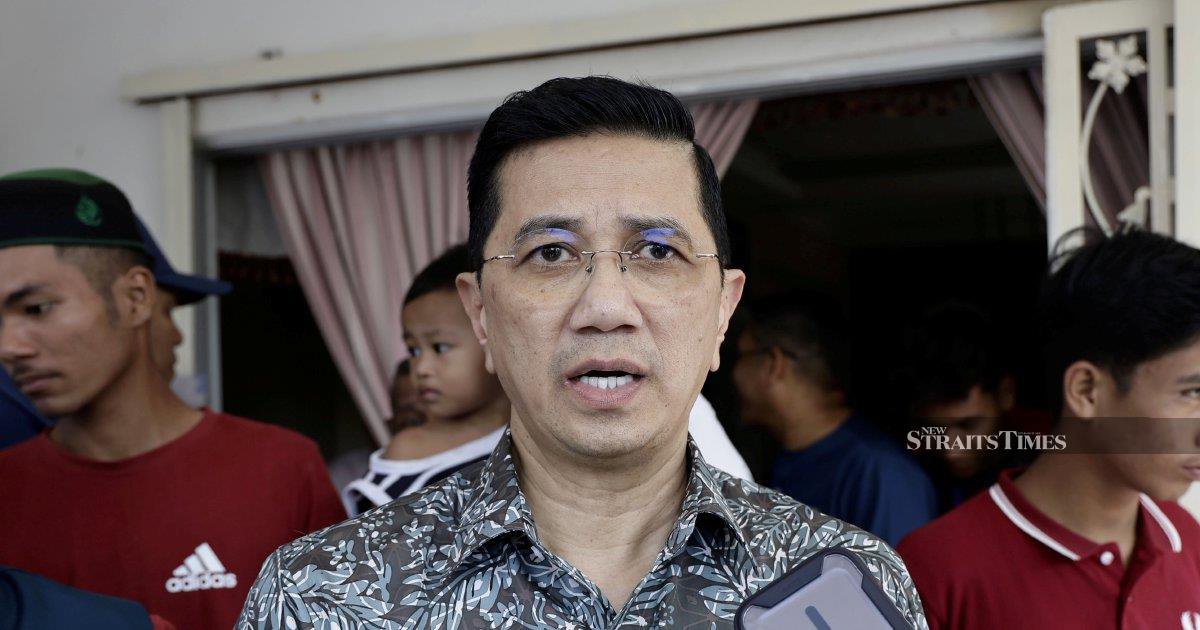
Prime Minister Datuk Seri Anwar Ibrahim has publicly questioned the reasoning behind former PKR deputy president Datuk Seri Mohamed Azmin Ali's categorical rejection of rejoining the party, casting doubt on whether such an offer had even been extended. Speaking on the matter, Anwar appeared dismissive of Azmin's announcement, suggesting that the former politician's refusal to return may be more of a symbolic gesture than a response to genuine circumstances.
The exchange marks another chapter in the fraught political relationship between the two senior figures, whose fortunes have diverged sharply since their earlier alignment within PKR's leadership structure. Azmin, who served as deputy president during a formative period in the party's recent history, has maintained a significant distance from the organisation following his departure, a separation that appears to have hardened into what observers view as a permanent political schism.
Azmin's public statement ruling out a PKR comeback came amid ongoing speculation about potential coalition adjustments and party realignments within Malaysia's complex political landscape. His announcement was framed as a definitive position, yet Anwar's response suggests scepticism about whether such a scenario—Azmin's return—was ever genuinely on the table. The Prime Minister's characterisation implies that Azmin's refusal may be a preemptive strike rather than a response to concrete circumstances.
The broader context involves the considerable distance that has grown between the two politicians since their previous partnership. When Azmin held the deputy presidency, PKR was navigating turbulent territorial waters, with internal factions competing for influence and direction. The departure of senior figures like Azmin created fault lines that continue to shape the party's dynamics today, with the issue of potential reconciliation remaining politically charged.
For Malaysian observers tracking intra-party developments, the Anwar-Azmin dynamic reflects deeper tensions within PKR about its identity and leadership succession. Anwar's current position as Prime Minister has consolidated his authority, yet questions persist about the party's cohesion and its ability to retain members of significant political stature. Azmin's continued distance serves as a reminder that PKR, despite its role in the current federal coalition, remains vulnerable to defections and leadership disputes.
Azmin's refusal to consider return carries implications beyond simple party politics. It signals his commitment to an independent political trajectory, one that may include repositioning within the Dewan Rakyat or alternative coalitional arrangements. His stance resonates with other former PKR figures who have similarly chosen to chart separate courses, creating a persistent cluster of experienced politicians outside the party's fold.
The timing of this exchange also merits consideration within Malaysia's electoral calendar and coalition dynamics. With potential electoral contests on the horizon and shifting voter sentiment across the peninsula, party leadership remains preoccupied with maintaining internal stability and external alliances. Azmin's separation from PKR represents a permanent loss of political capital that the party struggles to recoup, particularly given his regional influence and previous organisational authority.
Anwar's dismissive response may also be calculated to demonstrate confidence within PKR's current configuration. By questioning whether an invitation was even necessary to reject, the Prime Minister frames the party as sufficiently strong without needing to restore figures who have departed. This rhetorical move serves dual purposes: it insulates PKR from appearing desperate for reconciliation whilst simultaneously portraying Azmin's position as irrelevant to the party's forward trajectory.
The Azmin situation exemplifies broader challenges confronting PKR as it matures into a governing party. Organisations transitioning from opposition politics to coalition responsibility often struggle with personnel retention and internal satisfaction. Senior figures accustomed to prominent roles may feel marginalised when their influence diminishes, leading to departures that create permanent structural weaknesses. PKR's experience with both Azmin and other high-profile exits reflects these typical pressures.
From a Southeast Asian perspective, PKR's internal management carries weight for Malaysia's political stability and regional standing. The party's capacity to maintain unity whilst governing influences investor confidence and international perceptions of democratic governance. Continued high-profile disputes, whilst endemic to coalition politics, require careful calibration to avoid projecting images of chaos or mismanagement to external audiences.
Moving forward, the Anwar-Azmin dynamic appears set to remain a sideshow rather than a central concern for PKR's operations. However, each public exchange reinforces perceptions that meaningful reconciliation is impossible, entrenching divisions that span organisational, personal, and ideological dimensions. For Malaysia's political observers, these moments reveal the human contours beneath institutional frameworks, demonstrating how personal relationships and professional ambitions continue shaping the nation's political architecture even as formalised structures evolve.

