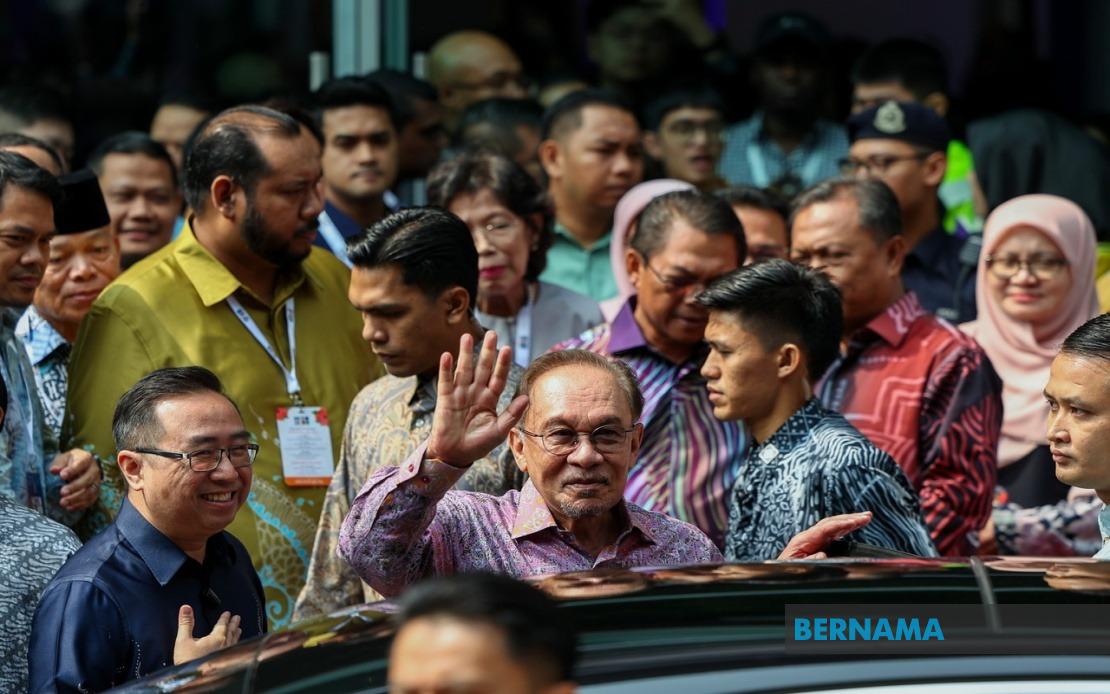
Prime Minister Anwar Ibrahim has distanced himself from reports that his party, PKR, extended an invitation to former deputy president Mohamed Azmin Ali to rejoin its ranks. Speaking at the National Innovation and Commercialisation Expo (NICE) 2026 at the Kuala Lumpur Convention Centre (KLCC), Anwar indicated he had received no briefing on such an overture, responding tersely when questioned about the matter.
The timing of Anwar's statement is significant, coming just days after Azmin, now serving as secretary-general of Parti Pribumi Bersatu Malaysia (Bersatu), publicly declared his unwillingness to return to PKR regardless of any appeals from the party leadership. Azmin's categorical rejection of a possible reunion represents a symbolic closure on a relationship fractured by bitter intra-party disputes that had played out across Malaysian politics for years. His defection and subsequent roles in rival coalitions had marked one of the most prominent rifts within the federal government's supporting parties.
The apparent disconnect between Anwar's denial and ongoing recruitment efforts within PKR circles underscores the complexity of managing a large multiethnic coalition party with diverse factions and autonomous decision-making structures. While the Prime Minister claims ignorance, lower-ranking party officials or factional leaders may have engaged in recruitment drives independently, creating a situation where the party's stated position differs from ground-level activity. This pattern reflects broader challenges facing PKR as it attempts to consolidate internal unity while simultaneously expanding its parliamentary representation.
Beyond Azmin, PKR's outreach programme has reportedly attracted other former members. Kamarudin Jaffar, who previously represented Bandar Tun Razak, and Mansor Othman, the former Nibong Tebal MP, have been identified as potential returnees to the party. These recruitment targets represent individuals with established electoral credentials and parliamentary experience, suggesting PKR's strategy focuses on recovering seasoned politicians rather than pursuing new grassroots activism. Such approaches typically aim to strengthen the party's bench strength ahead of future electoral cycles and consolidate control over key constituencies.
More notably, former PKR vice-president Dr Xavier Jayakumar has already confirmed his readiness to rejoin the party, signalling that some senior figures maintain viable pathways back to the organisation. Jayakumar's confirmed return contrasts with Azmin's emphatic rejection, highlighting the varied calculations different leaders make regarding factional allegiances and career prospects. The diversity of responses reflects personal relationships, ideological compatibility, and perceptions of future opportunities within respective parties.
Anwar's public disavowal of knowledge regarding Azmin's invitation may reflect broader efforts to avoid the appearance of desperation in pursuing former colleagues, particularly one as prominent and controversial as Azmin. Acknowledging active recruitment of someone who departed acrimoniously could undermine narratives of party strength and voluntary unity. Instead, characterising any outreach as spontaneous grassroots enthusiasm or the work of individual faction leaders allows the Prime Minister to maintain plausible deniability while preserving party dignity.
The reinvitation campaign also carries implications for PKR's positioning within the broader Pakatan Harapan coalition and its relationship with other government partners. As Malaysia's political landscape remains fractious, with numerous party-hopping incidents and coalition realignments, PKR's efforts to expand its parliamentary footprint become strategically important for maintaining government stability. Recovering experienced MPs or attracting new ones from opposing parties strengthens PKR's negotiating position within Cabinet discussions and policy-making processes.
From a regional perspective, these manoeuvres reflect the endemic instability characterising Southeast Asian coalition politics, where party discipline remains weak and individual politicians' career calculations frequently override ideological consistency. Malaysia's Westminster-style system incentivises defections and factional realignments by offering ministerial portfolios and government resources to politicians switching allegiances. This structural feature explains the constant churn of party memberships and the fluidity of alliance boundaries that confuse external observers.
The episode also reveals tensions between PKR's formal leadership structures and informal power networks that operate across the organisation. If Anwar genuinely remained uninformed about Azmin overtures, it suggests either communication breakdowns within the party hierarchy or deliberate autonomy granted to factional leaders pursuing their own recruitment strategies. Either interpretation raises questions about centralised command and the actual authority Anwar exercises over party machinery, particularly in peripheral constituencies where local organisers may operate with considerable independence.
Looking forward, Anwar's denial appears designed to manage expectations and avoid amplifying stories of failed recruitment attempts. By claiming ignorance, he sidesteps validation of reports that depicted PKR as actively courting figures from rival coalitions and potentially inviting accusations of poaching or destabilising other parties. This rhetorical manoeuvre allows PKR to continue quiet recruitment while maintaining official positions of focusing on internal strengthening rather than external expansion.
The incident encapsulates the challenges facing Malaysia's ruling coalition as it attempts maintaining parliamentary majorities through a combination of ideological appeals and transactional incentives. With general elections potentially several years distant, PKR and its coalition partners must navigate ongoing defections, factional disputes, and competitive pressures from opposition parties simultaneously recruiting similar figures. The outcome of these largely invisible negotiations will significantly influence which parties emerge strongest in future electoral contests.

