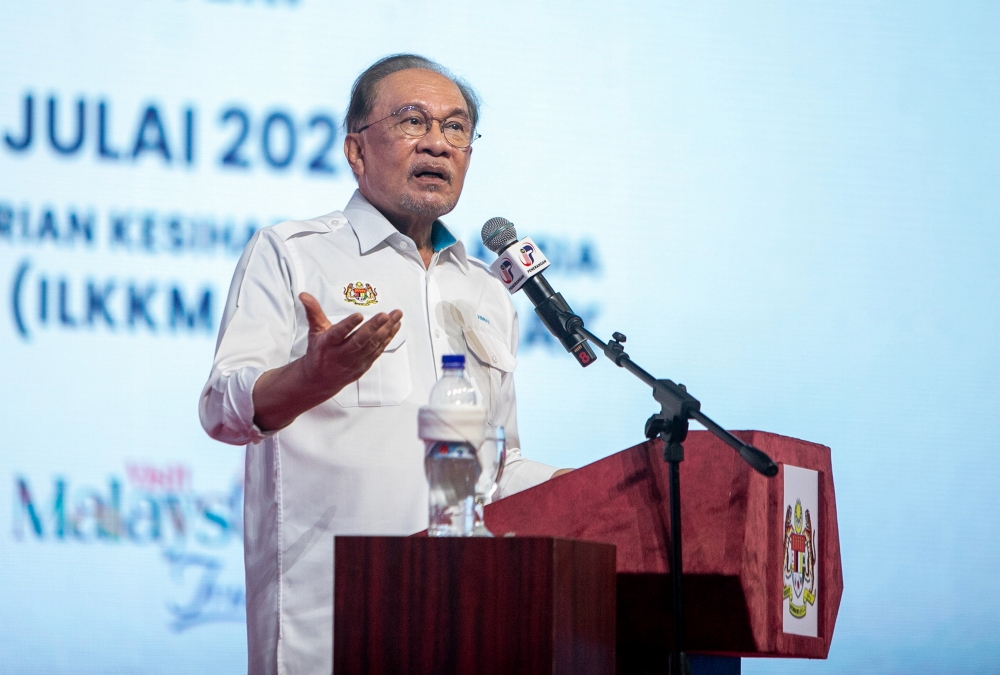
Prime Minister Datuk Seri Anwar Ibrahim has mounted a robust defence of the government's fuel pricing mechanism, articulating a fundamental tension between providing immediate relief to consumers and maintaining long-term economic stability. Speaking in Kajang, Anwar posed a direct challenge to critics of the current policy: who would ultimately shoulder the financial burden if subsidies were expanded beyond their current levels? This framing reorients the debate from short-term affordability concerns toward intergenerational fiscal responsibility, a rhetorical strategy that underscores the administration's conviction that restraint in fuel pricing, however politically difficult, represents the only sustainable course.
The Prime Minister's intervention reflects growing pressure within Malaysian political circles to expand fuel subsidies, a demand that resurfaces whenever pump prices rise or inflation erodes household incomes. Anwar's response signals that the Cabinet has determined the government's fiscal envelope cannot accommodate such expansion without triggering a cascade of consequences: reduced spending on healthcare, education, and infrastructure, or alternatively, accumulating deficits that burden future administrations. This calculation carries particular weight in Malaysia's context, where decades of subsidy commitments have already constrained budgetary flexibility and contributed to recurring fiscal deficits.
The government's current fuel pricing framework reflects a delicate balance. Rather than maintaining fixed subsidies that absorb volatility in global energy markets, the system incorporates periodic adjustments that allow retail prices to move closer toward international benchmarks while incorporating targeted support for vulnerable populations. This approach differs markedly from the pre-2008 era, when Malaysia maintained comprehensive subsidies that ultimately became fiscally unsustainable. The historical lesson remains relevant: subsidies that shield consumers from price signals often become entrenched political commitments, progressively absorbing larger shares of the budget until they crowd out other investments.
Anwar's framing of subsidy expansion as a debt accumulation mechanism speaks to Malaysia's evolving fiscal constraints. Federal government debt has climbed substantially over recent decades, limiting the room for discretionary spending increases. Every ringgit allocated to expanded fuel subsidies represents a ringgit unavailable for other priorities or debt service. This zero-sum dynamic becomes particularly acute when global energy prices spike, forcing the government to choose between absorbing losses through its budget or allowing prices to adjust. By articulating the debt consequence explicitly, Anwar attempts to reframe subsidy restraint not as indifference to consumer hardship, but as prudent stewardship that protects future generations from unsustainable obligations.
The political economy of fuel subsidies in Malaysia extends beyond macroeconomic considerations. Fuel prices influence transportation costs, which ripple through supply chains and affect the pricing of food, goods, and services accessed by ordinary Malaysians. Subsidy expansion might temporarily moderate these downstream effects, but the fiscal deterioration it triggers could eventually force more severe adjustment measures: tax increases, service reductions, or currency depreciation. Anwar's rhetorical move—asking "who will pay for it?"—invites citizens to consider these second-order consequences rather than focusing solely on the pump price they observe at filling stations.
Regionally, Malaysia's approach to fuel pricing reflects trends visible across Southeast Asia. Countries including Indonesia and Thailand have grappled with similar tensions between subsidy politics and fiscal sustainability. Indonesia's experience with energy subsidies illustrates the risks: decades of below-cost fuel pricing created massive fiscal drains, ultimately necessitating abrupt and painful price liberalisation. By articulating the fiscal logic underpinning current policy, Anwar positions Malaysia as learning from these cautionary examples rather than repeating them.
However, the government's defence of restraint exists in tension with immediate political realities. Low-income households and transport operators genuinely face pressures from elevated fuel costs, and abstract arguments about intergenerational equity carry limited weight for families struggling with monthly budgets. The challenge for policymakers lies in reconciling the fiscal imperative for pricing discipline with targeted support mechanisms that address genuine hardship. Whether current assistance programs—including cash transfers and subsidies for specific consumer groups—adequately address this gap remains contentious.
Anwar's intervention also signals Cabinet resolve to resist pressures for subsidy expansion that periodically emerge from coalition partners or constituencies facing economic stress. Maintaining this stance requires consistent messaging and demonstrated commitment to alternative support mechanisms. The alternative—allowing subsidies to expand incrementally in response to political pressure—would replicate the fiscal deterioration Malaysia experienced in earlier decades, ultimately necessitating more severe adjustment measures.
Looking forward, the sustainability of Malaysia's fuel policy depends partly on factors beyond government control: global energy market dynamics will continue influencing crude prices and the fiscal pressures they create. More importantly, it depends on whether policymakers can sustain the political discipline required to avoid subsidy creep while simultaneously demonstrating that the benefits of fiscal restraint—resources available for healthcare, education, and infrastructure—justify the costs borne by households and businesses contending with higher fuel prices. Anwar's public defence of current policy suggests the government has concluded this explanation is essential to maintaining support for an uncomfortable but ultimately necessary stance.

